
LONGVIEW, Texas (KLTV) — Despite her experience as a registered nurse, Jamesha Ross was still unprepared for the rare and terrifying medical emergency she faced after her fifth pregnancy.
Ross has more than 20 years of experience as a nurse and is certified in many areas within the medical field. She spoke about her own experiences in dealing with postpartum depression and postpartum psychosis, an experience similar to what Lindsey Clancy claims occurred in the trial that is making headlines across the nation.
“It was just stress after stress after stress,” Ross said, noting the condition only affects roughly one or two out of every 1,000 women.
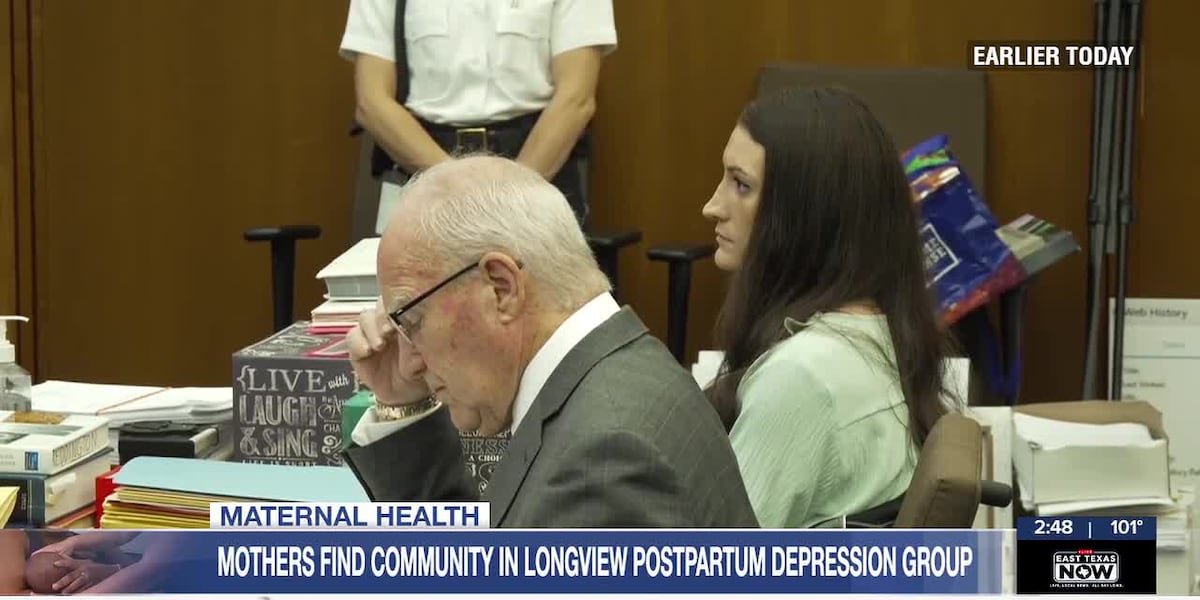
Clancy is a Massachusetts mother currently on trial for three counts of first-degree murder in the 2023 strangulation deaths of her children: Cora, 5; Dawson, 3; and Callan, 8 months. Clancy’s defense team is arguing that she faced similar medical emergencies that Ross describes in her interview.
Ross spoke about various symptoms she faced after complications surrounding the birth of her baby, and how stress inducers in her life exacerbated the symptoms of depression and psychosis both during and after her pregnancy.
These symptoms included:
- Paranoia
- Hallucinations
- Insomnia
- Uncontrollable body movements
- Stress
Ross urged mothers in similar circumstances to advocate for themselves, saying:
“The reason why I wanted to come and talk about this is because I wanted to let mothers know that they are not alone and that they can speak up if something seems abnormal,” Ross said. “The most important thing is to not be afraid to speak up. It’s going to be scary. If it happens to you, it’s going to be scary.
Resources you can use:
Maternal Mental Health in Tyler: 100 Independence Pl #201, Tyler, TX 75703 – (903) 805-0531
National Maternal Mental Health Hotline: 1-833-TLC-MAMA
Local Mental Health Authority Crisis Line: Harrison/Gregg County 800-832-1009 & Smith County 877-934-2131
More about Jamesha’s story and signs of postpartum depression and psychosis:
Nearly 10 to 20 percent of mothers are diagnosed with postpartum depression, but experts from the National Library of Medicine estimate up to half of those who suffer are never diagnosed.
Signs of postpartum depression present differently but can include intense anger, sadness or anxiety, changes in sleep or eating, and trouble bonding with the baby.
“If I hadn’t sought help, then only God knows what would’ve happened to me, or my children and my family,” Jamesha Ross, a nurse and mother who experienced postpartum depression and psychosis said.
After giving birth to her fifth child in 2022, Ross said she experienced postpartum depression and psychosis due to stress factors that occurred before and during her pregnancy.
“I had lost both my parents eight months apart,” Ross said. “Bought a new house, which is a happy stress, but your body doesn’t know the difference.”
Ross said she had a high-risk pregnancy, which led to an emergency delivery.
“I was like the perfect candidate for this to happen to,” she said.
Once her daughter was born, Ross experienced insomnia and hallucinations.
“I looked in the mirror. I thought I saw my mom, who had already passed,” Ross said. “My baby smelled like rotten flesh to me, which was a hallucination. I wanted her close to me, but her scent made me nauseous.”
Ross was going days without sleeping, worried about protecting her baby.
“I noticed I had some paranoia, which is one of the symptoms that differentiates between postpartum depression and psychosis,” she said.
One to two women out of every 1,000 births are affected by postpartum psychosis.
Even with 20 years of nursing experience, Ross said she was in the dark.
“I guess because it’s so rare, we weren’t educated about it, so I was learning as I went,” Ross said. “Sometimes you have to advocate for yourself. And so I went to a local hospital, and I want to make it clear that postpartum psychosis is a medical emergency.”
After treatment, she said her psychosis subsided, and a year later, her anxiety had decreased.
Around the same time in Massachusetts, in an unrelated case, Lindsay Clancy was charged with the murder of her own three children, bringing up more national discussion about postpartum psychosis.
“It could happen to anybody,” Ross said. “I mean, look at me and Lindsay. We’re both educated nurses, had children before, and this hadn’t happened to us. It literally can happen to anybody.”
Every case of postpartum depression and psychosis is different, but Ross said the first step is the same.
“If it happens to you, it’s going to be scary. You don’t want people to think you’re crazy. You don’t want your child taken away. But you have to speak up,” she said.
Ross now works as a medical case manager, focusing on postpartum mothers. She connects women to therapy, medical care and other resources in an effort to advocate for others, as she did for herself.
Copyright 2026 KLTV. All rights reserved.