
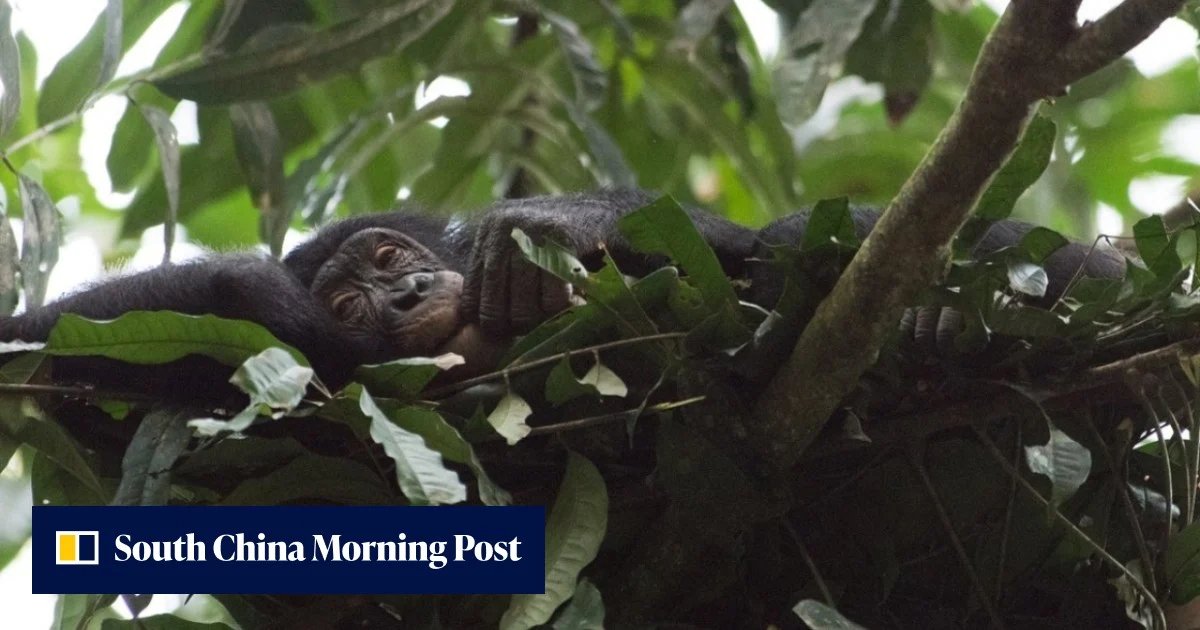
For most people, bedtime is a routine matter of turning off the lights and hoping for eight hours of rest. For David R Samson, an associate professor of evolutionary anthropology, it often means venturing deep into the wild or far back in evolutionary time.
Whether sleeping high in the forest canopy to study chimpanzees or joining the Hadza tribe in remote Tanzania, Samson’s Indiana Jones-style fieldwork exposes the ancient roots of human slumber.
As director of the Sleep and Human Evolution Lab at the University of Toronto Mississauga in Canada, Samson studies how human sleep evolved – from our primate ancestors to modern life. His book, The Sleepless Ape: The Story of Sleep in Human Evolution, highlights this work.
His chief argument is that humans evolved to need less sleep than other primates, and that was the foundation for humanity’s position as the dominant species on our planet.
“My primary research question has been, ‘What has made humans unique?’” Samson says in a recent In Vivo podcast.
Humans are unique in a lot of different ways, Samson notes in the podcast, pointing to our exceptionally large brains relative to our body size and our reliance on complex social cooperation. And despite lacking sharp claws or massive canine teeth, humans evolved into the planet’s dominant species and have managed to live, adapt and thrive in every natural environment and ecosystem on Earth.