
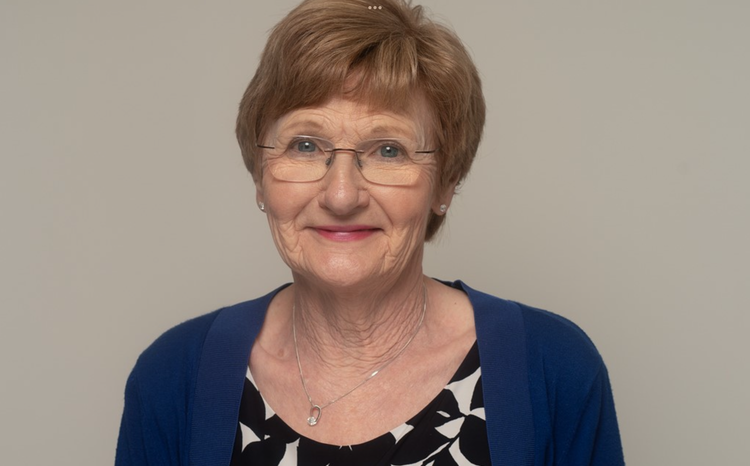
Dame Babara Hakin, chair of the Health Tech Alliance (Credit: Health Tech Alliance)
NHS organisations and suppliers must work more closely to turn promising health tech pilots into scalable solutions, writes Dame Barbara Hakin, chair of the Health Tech Alliance
The Health Tech Alliance, a collaboration between healthcare and the technology industry, is “absolutely committed” to the adoption of technologies which are “unequivocally of benefit to patients and the taxpayer”, according to Dame Barbara.
But the former deputy chief executive of NHS England warns that promising pilots are not enough to unlock the “large amounts of money” required to scale technology solutions and says that local organisations and suppliers have to do more.
Are you satisfied with the progress that has been achieved over the past year in realising the 10 year plan’s vision for digital?
I think the 10 year health plan really did paint a great vision, a great direction for the NHS, but it is a long road to get digital technology adopted in the NHS.
Some of that is because the systems and processes are slower than they ought to be. But it’s also because we need considerable safeguards when using digital technology and because budgets are heavily devolved out and are not held centrally.
The centre can help people to establish proof of concept and get going, but once you come to scaling there is always going to be a scenario whereby people with new technologies will have to work with local organisations.
There are certain areas where there is no doubt it would be helpful to have more of a steer from the centre about what might be expected of local organisations, but in the final analysis, the money is out on the front line.
The Health Tech Alliance published a detailed roadmap to transform technology procurement in July 2025. How close are we to procurement becoming an enabler of technologies to improve patient outcomes and reduce the long-term costs of healthcare?
Everyone wants to see value-based procurement rolled out. I do think that’s where we’re going. We’ll see it more and more – but I don’t think it’s something you can just switch on overnight because it’s quite a complex process.
We’ve had big IT procurements that have gone wrong because they were rushed. With value-based procurement, taking time to make sure we get it right, seems reasonable.
To be honest, you probably can’t do everything with value-based procurement. There will be some things that are procured in a more traditional way. It’s a question of working out which things lend themselves to value-based procurement and are the easiest to do.
How can health tech suppliers and NHS organisations move away from a transactional relationship to one of genuine collaboration?
Clearly, at the Health Tech Alliance we think it’s essential to have that collaboration. We like to think we have done something to foster that.
I think we are seeing a mindset shift, with people recognising that industry is one of the solutions that the NHS has to look to, and therefore bringing industry in earlier. There is a need for a lot more collaboration, but both sides need to work out how they can make that happen.
The NHS might be able to say what problems it would like to be solved, but it doesn’t have the expertise that industry does to understand exactly what those solutions might be
Industry can be working on a technology that doesn’t necessarily match a problem. On the other hand, the NHS might be able to say what problems it would like to be solved, but it certainly doesn’t have the expertise that industry does to understand exactly what those solutions might be.
So how do we get people walking the walk together, so that the NHS can start to articulate what it’s trying to deal with, and industry can offer solutions, and then collectively – collaboratively – they can walk down the same route?
In the HTA we’ve put a lot of time and energy into bringing people together. Industry members and NHS members are used to getting together once a month and working through solutions.
Why is scaling innovative technologies so difficult in the NHS and how can we avoid being stuck in the ‘promising pilot’ phase?
It all comes back to the money. In a state-funded system, in times of economic prosperity you do well, in times of austerity you do badly. NHS funding hasn’t increased dramatically for some considerable while.
We also have the problem that the NHS is funded on a one-year basis. Put that together [with economic austerity] and it’s very difficult for buyers. They might recognise something is a really good idea, but can they be sure they’re going to get a return on investment quickly enough? With some of these technologies, the return comes over several years, not one.
There’s an inevitability that pilots will get off the ground. It’s a small non-recurrent budget. Whereas once you scale, you’re into large amounts of money
The other big problem is it isn’t always easy for the NHS to release the return. There may be something which is very good for patients, and which reduces the use of resources, but an NHS organisation might not be able to get rid of staff or close a ward. Industry needs to always be cognisant of how they can help the NHS to see the return they’re going to get.
It’s always easier to identify the small amounts of money that you need to pilot or to pump prime something – there’s an inevitability that those pilots will get off the ground. It’s a small non-recurrent budget. Whereas once you scale, you’re into large amounts of money.
Two things need to happen: the NHS needs to be better at sharing and understanding what’s worked well. But industry needs to be better at providing the evidence and not thinking that a small pilot or anecdotal benefit is sufficient.
Can the UK become a global powerhouse for health tech?
We have some of the ingredients that should make us a world leader, not least because we have a single NHS, we’ve got data on millions and millions of patients. It’s all connected. But there are two sides to the coin.
There’s no doubt that it’s often much easier in other countries to get traction with technology because of the way the money flows. In the US the money absolutely does follow the patient.
I haven’t got a magic solution that suddenly puts the NHS in a different position. I wish I had.