
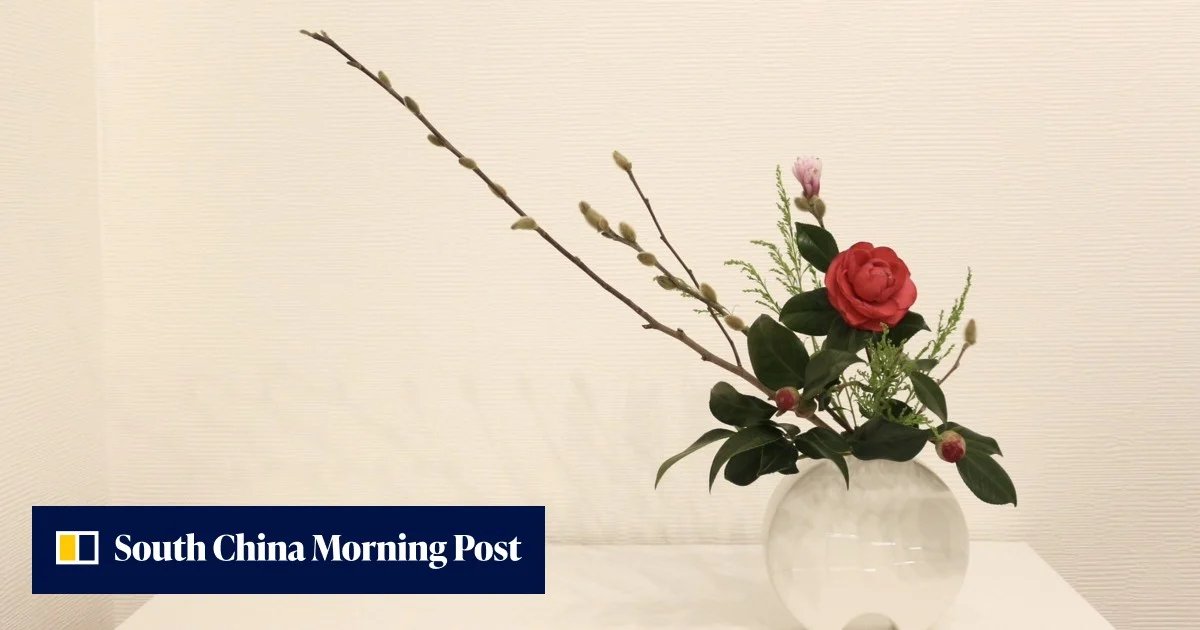
Ikebana, the Japanese art of arranging flowers, is a form of expression that dates back more than 500 years. It continues to blossom quietly – not only with traditionalists, but also with newcomers who find its blend of creativity and mindfulness to be restorative.
Ikebana can be a bit like solving a puzzle, except there is no fixed answer. Because each flower and human individual is different, there are multiple solutions.
“There’s a ‘detox’ purifying factor and a healing,” says Hiroyuki Okada, 40, who began taking lessons in ikebana about seven years ago. He now teaches ikenobo, the oldest of three major ikebana schools.
Okada, who also teaches backflips to anyone who wants to learn, usually wears silver chains and jeans, although he wears a nice kimono when he formally demonstrates his arrangements. He considers himself typical of those drawn to ikebana today, people looking for joy, purpose or solace from the daily grind or pain of modern life.