
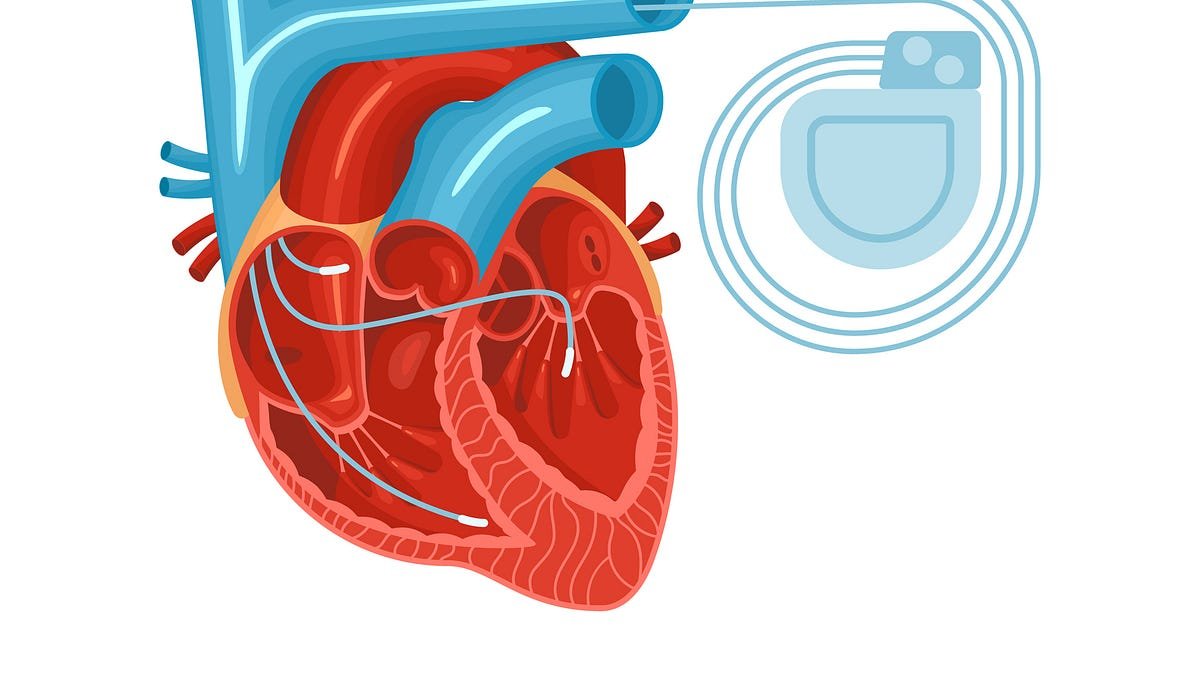
I recently delivered a client presentation for investors interested in how Section 232 tariffs could affect investments in this sector. Estimates suggest the global medical device market will grow from $680 billion to $1.2 trillion by 2035! Medical devices include pacemakers, hip implants, stents, surgical robots, catheters, glucose monitors, and many other products that provide access to life-saving medical devices for many Americans.
Section 232 tariffs on U.S. medical devices could become a new risk factor for healthcare-focused investors in this space and even for companies that don’t operate directly in it. Unlike other Section 232 tariffs that affected steel and aluminum, these tariffs will impact a wide range of low-tech to high-tech medical device products.
Additionally, companies across biotechnology, medical technology, healthcare services, diagnostics, surgical equipment, and related industries that are exposed to the economics of the entire healthcare supply chain can be affected. The reason is straightforward. A tariff can work its way through companies, hospital customers, reimbursement systems, cash flows, and valuations, ultimately affecting companies that use medical devices. The key question for investors is not simply whether medical devices will be subject to tariffs, but how the policy will be structured: which products and countries it will cover, what exemptions will be available, and how quickly companies can adjust their supply chains.
The U.S. Department of Commerce initiated its medical device investigation on September 2, 2025, covering personal protective equipment, medical consumables, and medical equipment, including devices. The Bureau of Industry and Security continues to list the investigation among its Section 232 proceedings and is expected to reach a decision by the end of 2026. Under Section 232 of the Trade Expansion Act of 1962, the Commerce Department is examining whether imports are occurring in quantities or under circumstances that threaten to impair U.S. national security. If the administration determines that such a threat exists, the President may take action to reduce such imports by imposing tariffs sometime from mid-to-late 2027.
The scope of this investigation is important. Medical technology is not a single industry with a single supply chain. The range of affected products spans from relatively simple consumables to highly sophisticated equipment. According to the U.S. Food and Drug Administration (FDA), 62% of all medical devices used in the United States are imported, and foreign dependence is especially significant for some categories of medical supplies. The strategic argument supporting Section 232 is that excessive dependence on foreign production could create a vulnerability during a pandemic, geopolitical conflict, or other national emergency. In contrast, the U.S. Department of Commerce argues that complete domestic production of medical supplies is unfeasible because production and labor costs are lower in Asia.
From a healthcare investment viewpoint, the primary transmission channel is margin compression. Imagine a company that sells advanced medical devices to hospitals and imports a key component. If a 25% tariff is imposed, the company’s costs won’t necessarily increase by 25% of the final price. Instead, the effect depends on how much of the product’s cost that component makes up, the company’s negotiation power with suppliers, inventory levels, transportation expenses, currency fluctuations, and whether the tariff costs can be passed on to customers. Consequently, a device with 40% imported parts could experience a very different financial impact than one with just 5%.
The ability to pass those costs through matters. Medical-device manufacturers generally sell to healthcare systems, where purchasing contracts, reimbursement arrangements, and hospital budgets can limit how quickly prices can change. Healthcare providers may face significant procurement-cost increases because they cannot immediately pass higher equipment and supply costs through existing reimbursement arrangements. As a result, a manufacturer could find itself caught between higher input costs and customers who are unwilling or unable to accept proportionately higher prices.
That creates a second transmission mechanism for investors centered on valuation. Suppose an innovative medical-device company previously expected to reach profitability in three years. A new tariff could increase manufacturing costs, require additional working capital, reduce gross margins, and force the company to spend money relocating production. The company may still possess the same underlying intellectual property and address the same medical need, but its expected future cash flows will likely change with the imposition of Section 232 tariffs. Here, the relevant issue for a medical-device company may not be simply “there is a tariff.” It is whether the tariff changes the company’s earnings trajectory, cash-burn rate, financing requirements, and eventual exit valuation.
The third transmission mechanism is capital allocation. Medical-device companies that would otherwise devote cash to research and development, clinical trials, product launches, or sales expansion will now have to invest in supply-chain redesign. The supplied research suggests that tariff costs could divert corporate resources from R&D and clinical development to manufacturing changes, logistics, customs analysis, legal work, and exemption applications. For an investment manager focused on healthcare innovation, this will force a company to decide whether the tariff will cause a temporary earnings problem or a longer-term innovation problem. A company that spends $20 million adapting its supply chain may survive the tariff. A company forced to delay an important clinical program because it must divert funds to pay tariffs or find ways to mitigate them is likely to see its long-term valuation deteriorate.
The pharmaceutical experience offers one indication of how the medical-device tariff framework could evolve. The administration has already used Section 232 in the pharmaceutical sector and established a structure that includes a 100% tariff for certain patented pharmaceuticals and pharmaceutical ingredients, while providing a lower 20% rate for qualifying companies with approved plans to onshore production. The pharmaceutical proclamation also contains zero-tariff treatment for specified products and mechanisms under which tariff treatment can change depending on agreements and onshoring commitments.
Such a precedent will make a completely uniform medical-device tariff the only possible outcome. A differentiated system, involving product categories, countries, exemptions, or onshoring commitments, is another possibility. This creates several scenarios for healthcare investors.
Scenario I
In this scenario, the government imposes meaningful tariffs but also creates potential tariff exemptions or lower tariff rates. Highly specialized devices that cannot be easily produced domestically could receive special treatment, while more standardized products with good domestic alternatives could face higher tariffs.
This would allow companies willing to make binding domestic investment commitments to receive lower tariffs. The pharmaceutical framework shows that such differentiated treatment is administratively feasible. For an investor operating in this space, this would transform tariff exposure from a simple country-risk calculation into a company-by-company underwriting exercise. Two companies competing in the same medical-device market could have dramatically different outcomes if one has a predominantly domestic manufacturing footprint while the other depends on imported components. The investment process would therefore need to examine not only revenue growth, gross margins, intellectual property, and competitive positioning, but also the origin of every component used to manufacture the medical device.
Scenario II
This scenario would set high tariffs with narrower exemptions. In that environment, the first-order effect would be substantially greater pressure on margins. Companies would have three basic choices: absorb the tariff, pass it through to customers, or redesign the supply chain. In practice, most companies would likely opt for a combination of all three. They might temporarily accept lower margins, negotiate higher prices with customers as contracts expire, increase inventory before implementation, renegotiate supplier prices, and simultaneously move production toward lower-tariff jurisdictions or to the United States.
Scenario III
This scenario would place greater emphasis on domestic incentives rather than tariffs alone. Policymakers could determine that the national-security objective is better achieved through investment incentives, procurement preferences, reimbursement adjustments, tax incentives, workforce development, or accelerated regulatory processes, rather than imposing the same tariff on every imported device. From an investor’s perspective, this scenario could create different winners and losers: companies with the capital and expertise to expand U.S. production could benefit from these incentives. In contrast, smaller companies might find the cost of establishing domestic capacity prohibitive.
Scenario IV
The last scenario would impose a more complicated hybrid system in which tariffs vary by product, country of origin, manufacturing location, and corporate commitments. This may be the most important scenario for health care investors to prepare for, not because its ultimate adoption is certain, but because the pharmaceutical precedent shows how Section 232 policy can become highly granular. The investment implication is that headline tariff rates may become far less informative than the effective tariff rate an individual company faces.
What Are Some Possible Mitigation Strategies
The first step for an investor is to create a tariff-exposure map for every relevant company in their existing portfolio or prospective investment. That analysis should identify the country of manufacture, the country of origin of major components, contract manufacturers, critical suppliers, customs classifications, the percentage of cost represented by imported inputs, existing inventory, and the contractual ability to adjust prices. The objective is to convert a policy risk into an estimated dollar impact on gross profit, EBITDA, free cash flow, and financing needs.
The second mitigation strategy is supply-chain diversification. A company that depends on a single overseas supplier for a critical component faces considerably more risk than a company with multiple qualified suppliers. However, diversification in medical devices is not comparable to switching vendors for an ordinary consumer product. Manufacturing processes may require validation, regulatory review, quality assurance, and potentially FDA-related approvals. These regulatory and operational requirements constrain production shifts and therefore do not always occur seamlessly. Investors should therefore place greater weight on companies that already have alternative suppliers or a credible transition plan.
Third, companies can seek exemptions or favorable treatment where the policy ultimately permits it. The provided material outlines three broad approaches: company-specific onshoring commitments, petitions based on urgent U.S. healthcare needs, and restructuring supply chains toward preferred or lower-tariff trading partners. These mechanisms should not be treated as guaranteed outcomes. Their availability, eligibility requirements, and economic value will depend on the final medical-device rules. Nevertheless, investors should identify which portfolio companies may have such flexibility.
Fourth, investors could reevaluate how they value such companies. One important factor is whether a company can maintain its gross margin and avoid margin compression after reviewing multiple cost scenarios. Of course, that will depend on whether the effective tariff is lower or higher and how much of the tariff burden can feasibly be passed on to customers.
Which Companies Are Likely to be Most or Least Impacted?
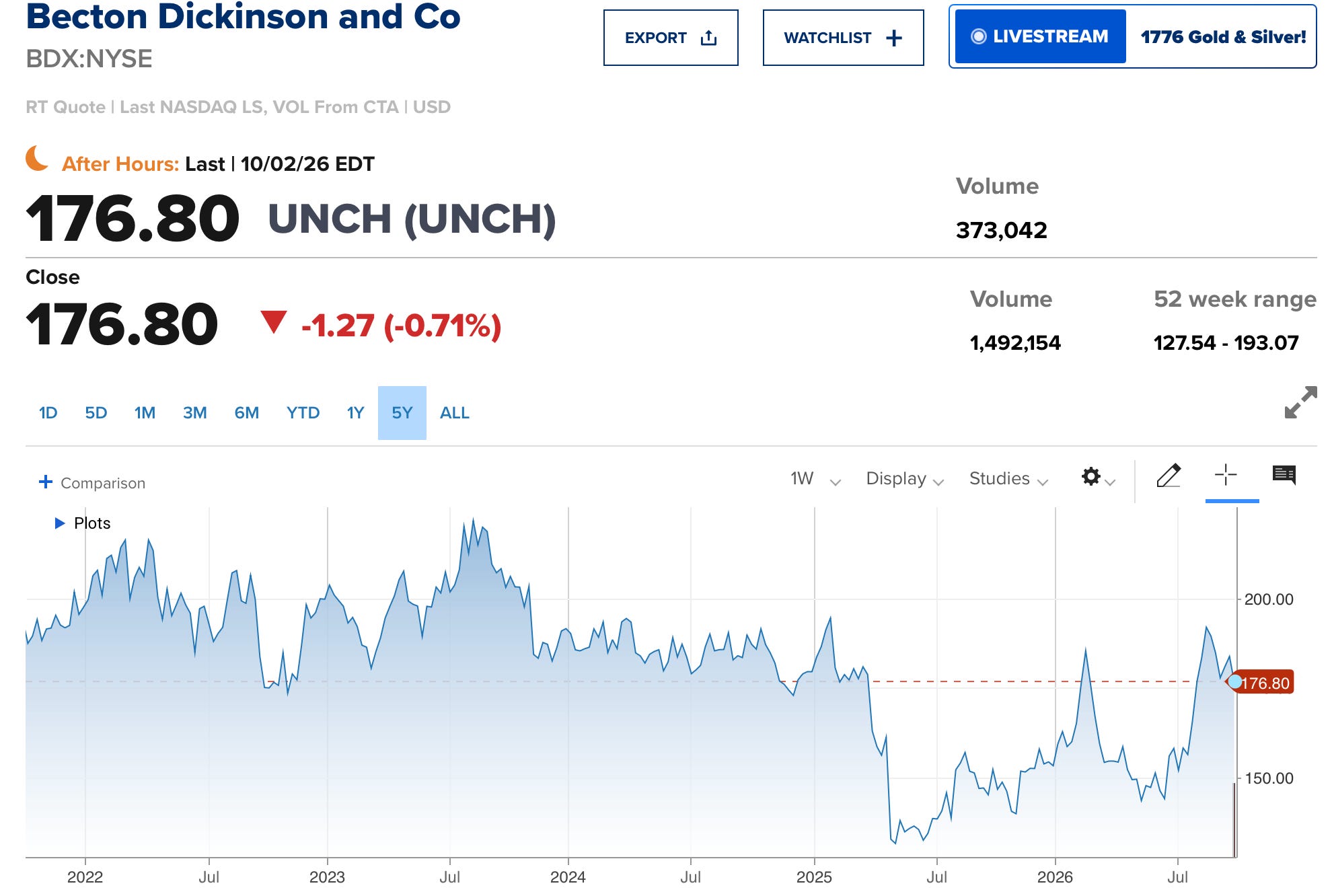
Below is a list of what some analysts have ranked as the most and least vulnerable companies due to Section 232 tariffs. At the top of the list of vulnerable companies is Becton Dickinson and Co., a low-margin company that sells high-volume medical device consumables and relies heavily on inexpensive overseas plastics, outsourced assembly operations, and Asian manufacturing facilities.
The company’s stock price took a severe hit when the Section 232 device investigations were announced last year, but since then it has recovered on the view that the firm might find a way to mitigate those tariffs. In June 2026, CNBC’s Jim Cramer said the company’s stock price had dropped to a level that made it a compelling buy!
Source: CNBC
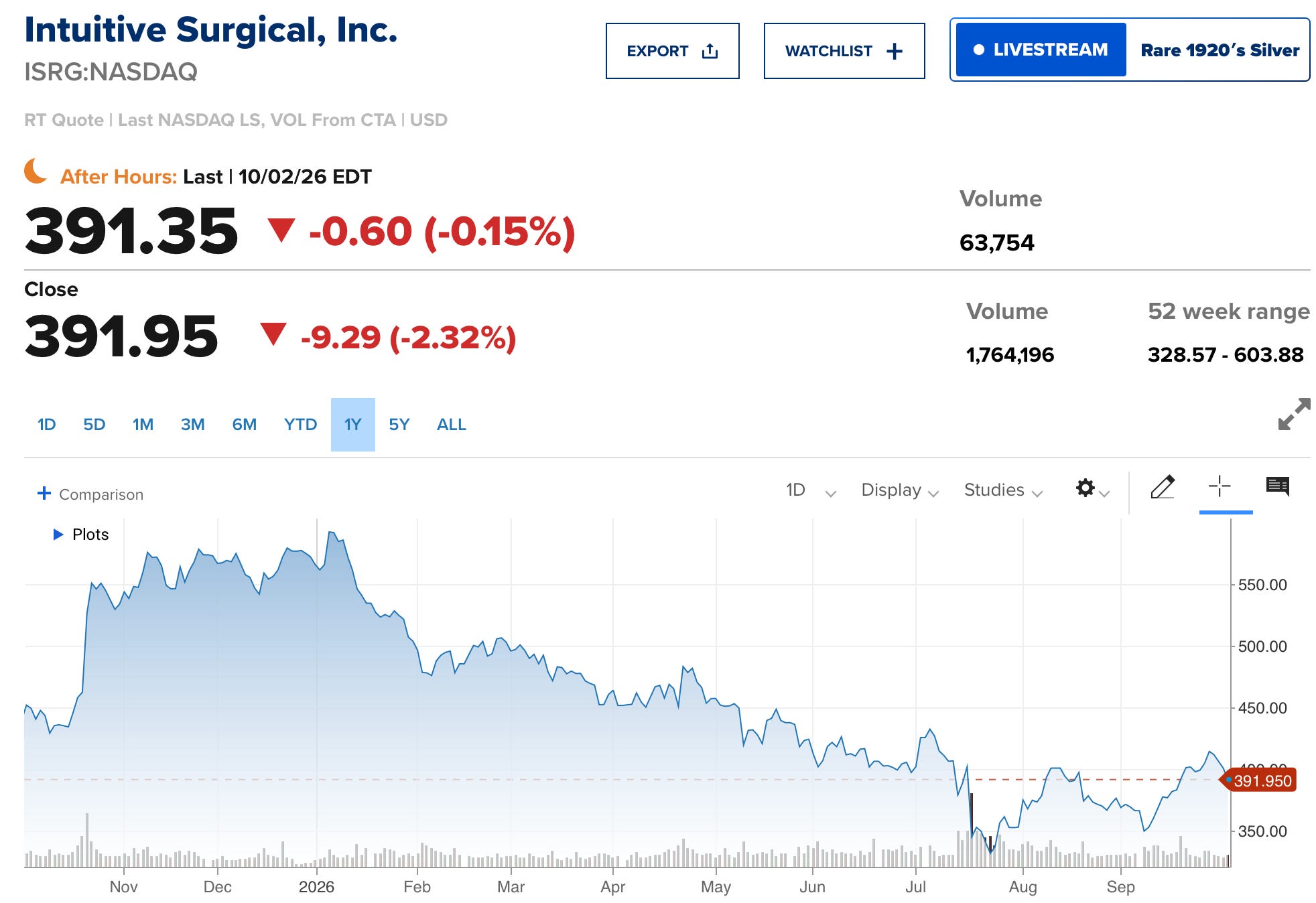
In contrast, investors often view Intuitive Surgical as least vulnerable because its high profit margins may allow it to absorb some costs. Additionally, because of its highly specialized technology, investors hope it can secure “Urgent U.S. Health Need” exemptions.
Although the company’s stock price is down in 2026, equity analysts have attributed the weakness to structural headwinds in the healthcare industry rather than to the potential negative impact of Section 232 tariffs.
Summary and Concluding Thoughts
Healthcare investors should view Section 232 medical-device tariffs as a potential shift in the industry’s economics rather than simply another tax expense. A more important question will be how much of the cost the company will absorb, how much customers ultimately pay, how quickly supply chains can adapt, how much capital must be invested domestically, and whether scarce corporate resources will need to be diverted from innovation to supply-chain restructuring.
For healthcare-focused investors, preparation matters more than predicting the precise final tariff. Firms that understand their supply chains, have quantified their exposure, and maintain alternative sourcing options will be better positioned to survive Section 232 tariffs. Other factors to consider while planning for multiple tariff scenarios are whether the company might qualify for a tariff exemption.
The main message for healthcare investors is that a medical-device tariff is unlikely to affect every company in the space equally, even when companies sell similar products. The ultimate economic impact will depend on supply-chain architecture, pricing power, regulatory flexibility, domestic manufacturing capacity, access to capital, and adaptability.
That means investors should identify which companies are more structurally exposed and review each company’s potential mitigation strategy to determine how these companies might be affected by different Section 232 tariff scenarios.
Finally, investors with a broader healthcare-services portfolio should understand that higher medical-device costs from tariffs will not stop at the manufacturer. Tariffs may prompt hospitals to delay equipment purchases, postpone capital projects, renegotiate contracts, or face greater operating-cost pressure. These pressures may affect hospital margins, procurement costs, capital equipment purchases, and ultimately healthcare delivery. An investor with exposure to healthcare providers, payers, or healthcare-services companies therefore needs to consider these second-order effects, even when those companies are not directly involved in importing medical devices.