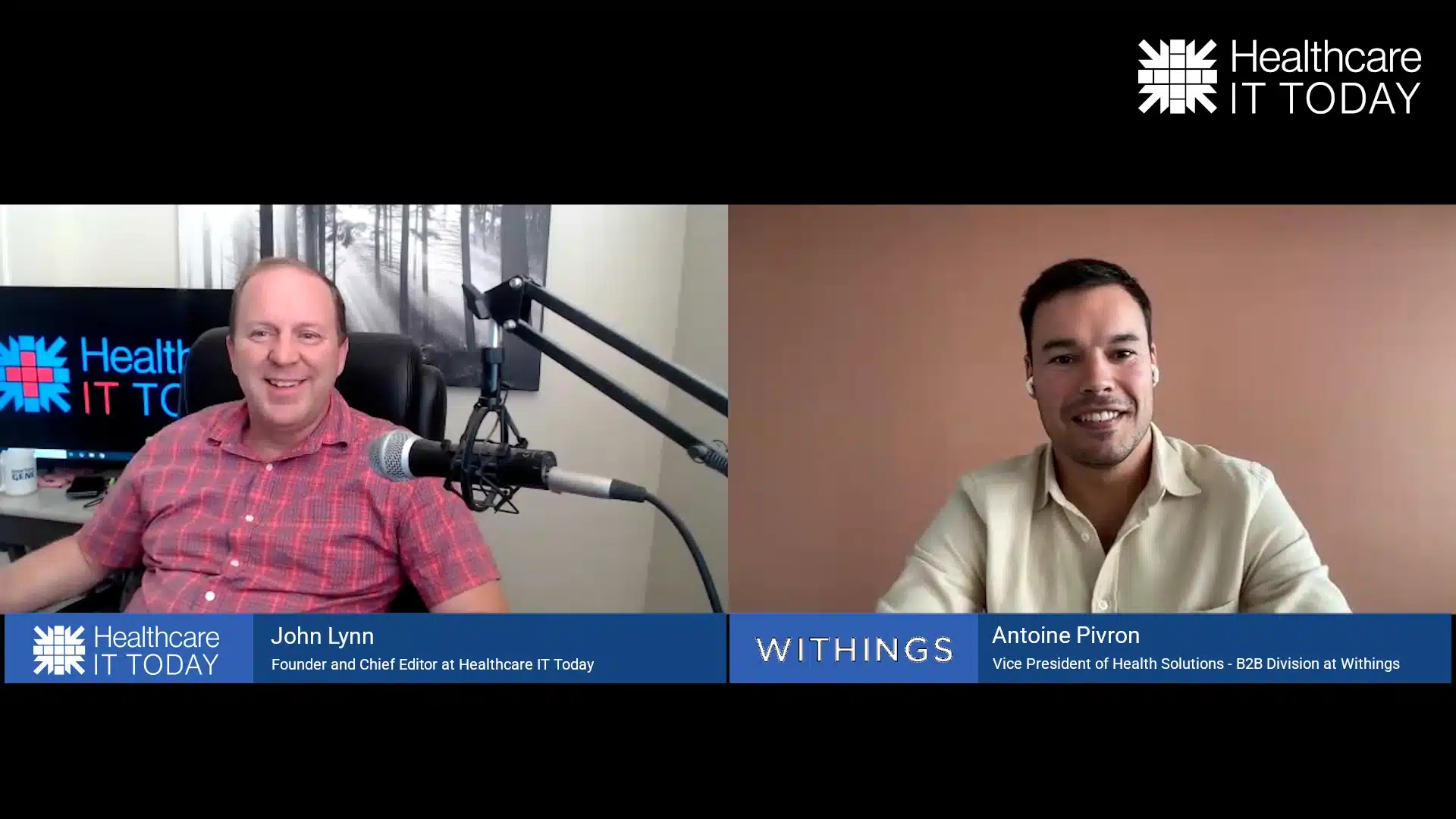
Withings has moved far beyond weight measurement with a wide range of devices to measure wellness. In our recent extensive interview, Antoine Pivron, Vice President of Health Solutions at Withings’s B2B Division, explains that Withings is years ahead of the health care industry—and more and more, its customers are too. “With or without permission from the system,” he says, there is a shift from reactive, fee-for-service care to longitudinal monitoring of chronic conditions.
Much of our interview is spent discussing one of their recent products, the Body Scan 2, which measures more than 60 biomarkers related to your health. In the consumer market, it can recommend when the user might benefit from a service such as a cardiologist, nutritionist, or sleep clinic.
In the B2B market, the same device is suggested by the health care provider. It requires some setup by the patient, but is preprogrammed to deliver data to the clinician, who can then share important information with the patient. In fact, Pivron says, a patient who is anxious about his weight can turn off the display.
Among the data collected is body composition (fat versus muscle), hypertension, and pulse wave velocity. The data is particularly useful for people taking GLP-1 medications. The device is also useful to keep people who come off of GLP-1s to continue on some kind of health program. Withings works hard on patient engagement, which is aided by its predictive capabilities.
AI is used both in the consumer app and during product development itself. In the app, it can answer questions about health by drawing on trends in the patient’s data. During product development, it significantly speeds up the development of risk measurements and product features.
Pivrons says that Withings’ partners used to be mostly weight loss programs, but more and more the partners are cardiometabolic health programs. This statistic shows the maturation of consumer devices in serious medical use cases.
Pivron, who is based in France, says that (the fame of its universal health care system notwithstanding), doctors are still committed to the fee-for-service model. Consequently, there is less emphasis on chronic conditions than in the U.S., and in turn there is less adoption of technology such as Withings devices. Therefore, Withings engages in a lot of education in the health care field. Meanwhile, many of its consumers are moving forward on their own.
Watch our interview with Antoine Pivron from Withings to learn more.
Learn more about Withings: https://www.withings.com/
Listen and subscribe to the Healthcare IT Today Interviews Podcast to hear all the latest insights from experts in healthcare IT.
And for an exclusive look at our top stories, subscribe to our newsletter and YouTube.
Tell us what you think. Contact us here or on Twitter at @hcitoday. And if you’re interested in advertising with us, check out our various advertising packages and request our Media Kit.
Get Fresh Healthcare & IT Stories Delivered Daily
Join thousands of your healthcare & HealthIT peers who subscribe to our daily newsletter.