
Teladoc Health raised its 2026 outlook after better-than-expected third-quarter results, as BetterHelp’s insurance pivot gained traction and Integrated Care profitability improved.
The virtual care company posted declining revenue but still beat Wall Street on both revenue and profit. Teladoc Health’s Q3 beat drove shares up nearly 27% Thursday after the company reported Q3 earnings Wednesday after market close.
Teladoc Health faces near-term pressure as it transitions its virtual mental health business, BetterHelp, from a cash pay model to an in-network, insurance-covered model.
The company’s consolidated revenue was $605 million, down 3.4% year-over-year but towards the high end of management’s guidance range, as solid performance in the integrated care business and strong BetterHelp insurance growth was partially offset by ongoing headwinds in BetterHelp’s cash pay revenue, Chief Financial Officer Michael Grasher, who joined the company in August, told investors and analysts on the company’s Q3 earnings call Wednesday.
The company reported third-quarter adjusted EBITDA of $79.4 million, up roughly 14% year-over-year and compared to the $67.7 million consensus target. Teladoc reported a net loss of $26.9 million, or a loss per share of 15 cents, versus Street expectations for a loss of 22 cents.
“As we consider the market more broadly as a company, we continue to see opportunities for virtual care to play an increasing role in addressing key challenges in healthcare,” Teladoc Health CEO Chuck Divita said during the call.
As a scaled virtual care company, Teladoc’s technology and services help address rising healthcare costs, expand access, improve chronic disease and mental health care and ease pressure on providers and the broader healthcare system, Divita said.
The BetterHelp segment brought in revenue of $207 million, down 13% year-over-year. BetterHelp commercial insurance revenue exceeded expectations, coming in at $32.1 million, versus management’s forecast of $25 million to $31 million. BetterHelp cash-pay revenue was down approximately 25% year-over-year, coming in at $174 million in Q3.
BetterHelp’s pivot to an in-network insurance model is gaining momentum with 27,000 covered sessions per week in Q3, an annualized run rate above $140 million and more than 11,000 credentialed therapists, Divita told analysts and investors. That compares to the $110 million annualized run rate from weekly sessions referenced in Teladoc’s second-quarter earnings call.
In Q3, 36% of acquired U.S. users came from insurance, up approximately 8 percentage points from the second quarter, according to executives. The company added over 3,000 therapists to the network during the quarter.
“We believe expanding insurance access can help create a more durable position for BetterHelp over time,” he said.
The company expects continued growth in 2027 as it expands provider capacity, improves therapist engagement and grows utilization of BetterHelp’s services, Grasher said.
Teladoc is targeting a $200 million annualized BetterHelp insurance run rate by end of 2027.
“While there is more work ahead, this was a solid quarter driven by execution, and continued progress across our key strategic priorities,” Grasher said.
Teladoc Health continues to invest in its core business, integrated care, which brought in $399 million in Q3 revenue, up 2% year-over-year and adjusted EBITDA of $74.9 million, up 13% year-over-year. Adjusted EBITDA margin reached 18.8%, and Grasher noted on the call that the Q3 margin expansion occurred despite the ongoing mix shift toward visit-based arrangements.
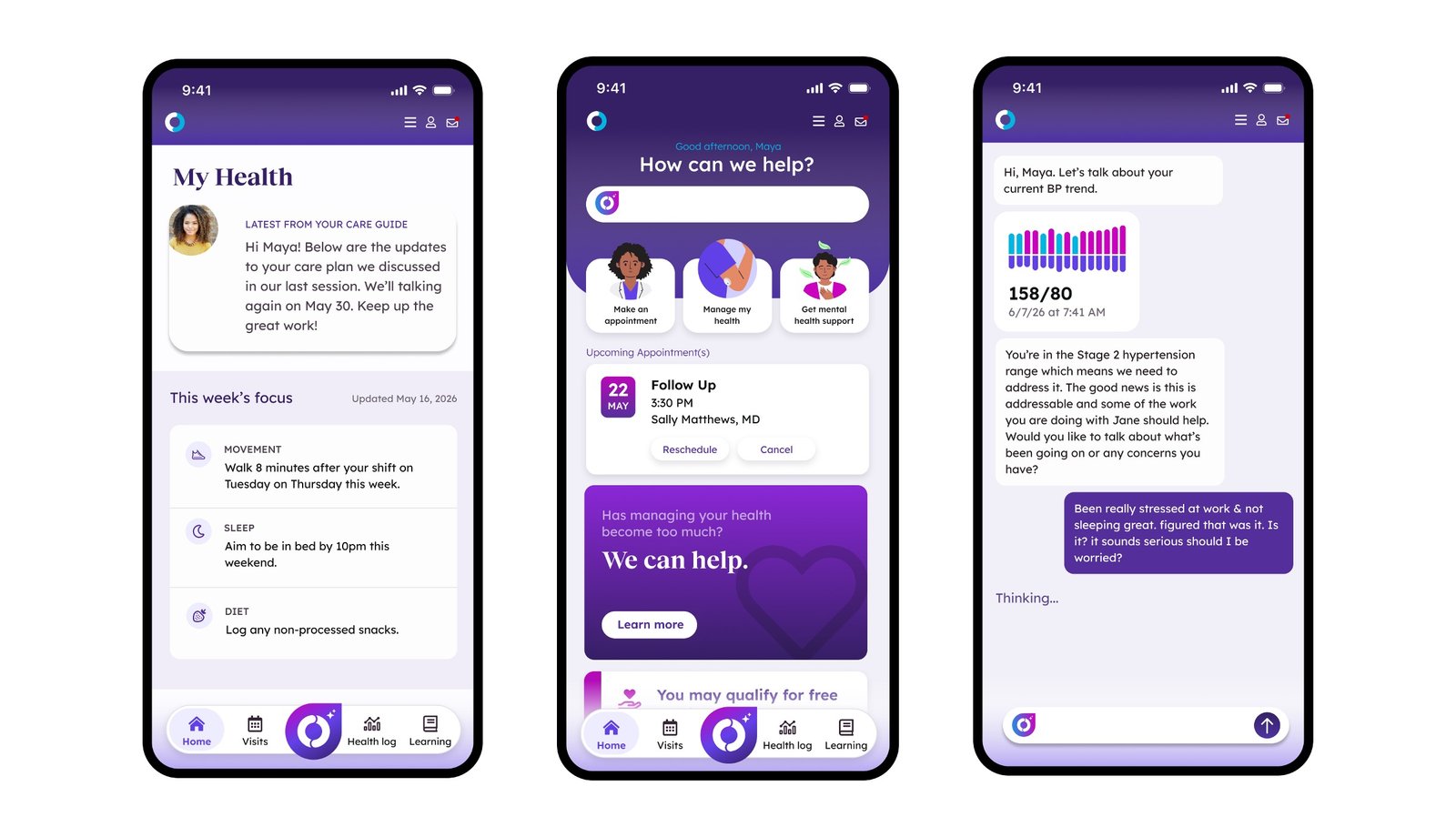
The virtual company is focused on moving health plan and employer clients away from fragmented point solutions to its broader Teladoc One model. Teladoc One, unveiled in July, is designed to offer a more coordinated, personalized approach for members, while tying payment to clinical and financial outcomes, executives said.
The company has moved forward with initial launch partners, and the platform will be more broadly available in 2027.
“We are encouraged by the level of client engagement and member feedback on Teladoc One at this point, reinforcing our view that clients are looking for solutions that can deliver a more connected experience, address more care needs, and demonstrate greater accountability for outcomes and impact,” Divita said.
Outside the U.S. market, Teladoc Health developed a “hybrid care” model that combines its technology with virtual clinical services delivered into physical healthcare settings. The company sees opportunities to build out that model with U.S. hospitals and health systems. To support that strategy, Teladoc Health acquired Teledigm Health, a company that provides virtual clinical services to U.S. hospitals and health systems. Teledigm partners with hospitals and clinics to deliver remote acute, outpatient and specialty care.
“We believe the market dynamics supporting the adoption of our hybrid care models in other countries are also increasingly prevalent with hospitals and health systems in the U.S., including healthcare workforce and capacity challenges, financial pressures and the need to improve access for underserved and rural communities. As a result, we see an opportunity to leverage our experience in hybrid care within the U.S. to support future growth,” Divita said during the call.
“This is a company that we’ve worked with for a long time that’s used our technology and really commercialized the services part of the equation using our technology. The tracks have been laid in terms of using our technology and support and use cases to those health systems. We think bringing that expertise we have in non-U.S. markets, which is considerable and has been a nice source of growth for us, bringing that expertise combined with our technology and telehealth services together, we can really go after that market opportunity in 2027,” he told investors and analysts during a Q&A on the earnings call.
Ryan Daniels, analyst with William Blair, wrote that Teladoc’s third-quarter results provided a positive update on the company’s ability to convert strong insurance demand into revenue.
“We continue to view BetterHelp’s transition toward greater in-network coverage as the key driver of business stabilization, particularly as insurance growth increasingly offsets cash-pay declines and added capacity of credentialed therapists enables the company to capture strong underlying demand,” Daniels wrote in an analyst note.
“We are also encouraged by the company’s continued 2026 product introductions and launches across virtual care, including implementing Teladoc One with early launch partners and expanding hybrid care and AI-enabled solutions set to support continued growth in the Integrated Care segment,” Daniels wrote.
However, ongoing weakness in BetterHelp’s cash-pay business “is likely to weigh on overall segment performance and temper the pace of the company’s broader turnaround,” Daniels noted.