
For decades, psychiatrists and other mental health professionals have used the “Diagnostic and Statistical Manual of Mental Disorders,” or DSM, to diagnose patients with conditions such as major depression, anorexia and post-traumatic stress disorder (PTSD). To reach diagnoses, mental health practitioners identify symptoms via interview, case history, questionnaire, or observation to paint a clinical picture.
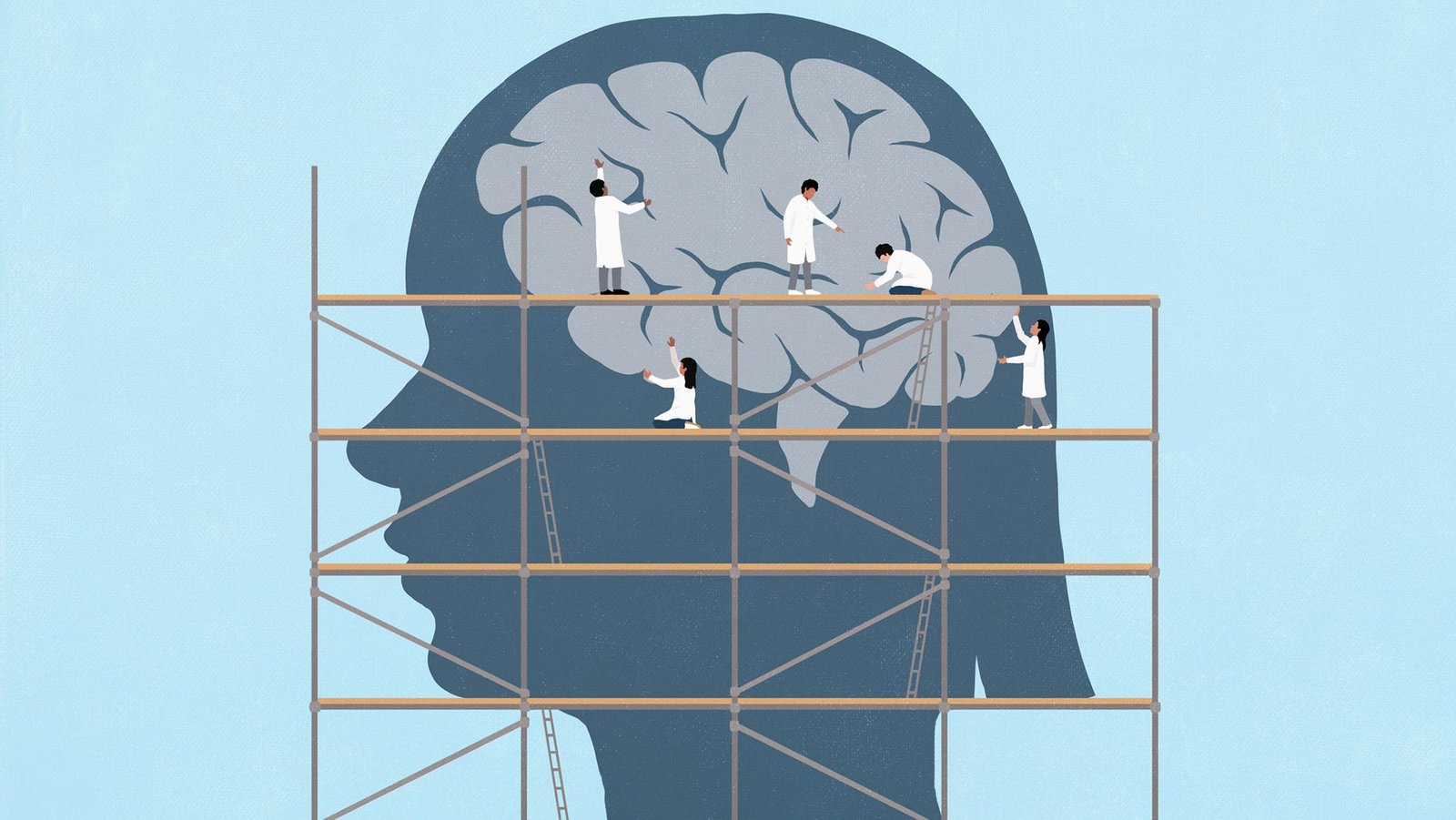
But for the next version of this “psychiatry bible”, the DSM-6, scientists are planning to add other factors into the diagnostic criteria.
Dr. Anand Kumar, a psychiatrist who served for two years on the DSM Strategy Committee, says one of the most important potential changes is the introduction of biological factors into the diagnostic framework. While Kumar, the head of the Department of Psychiatry at the University of Illinois Chicago, no longer serves on the committee, he was influential in discussions about how biology could be incorporated into the DSM-6. Some of these biological factors include data from genome-wide association studies of hundreds or thousands of genes that each increase the risk of a mental disorder by a tiny amount. Other biological factors include signs of inflammation or immune-system dysfunction that may show up in blood tests or brain scans.
Live Science spoke to Kumar about how this update to the DSM could change the way mental disorders are understood and potentially help improve treatment.
Anand Kumar
Dr. Kumar is the Lizzie Gilman Professor and Head of the Department of Psychiatry at the University of Illinois at Chicago. Dr. Kumar’s research focuses on late-life depression and mental disorders of the elderly, including Alzheimer’s disease. He has served as Treasurer, Program Committee Chair, and President of the American Association for Geriatric Psychiatry (2004-2005). Dr. Kumar is Associate Editor of the American Journal for Geriatric Psychiatry and has served as reviewer for numerous NIH review committees.
Kenna Hughes-Castleberry: How is the DSM-6 going to be different from the DSM-5?
Anand Kumar: Up to this point, the distinctions between the different major groups — who has clinical depression, or what we call major depression; who has an eating disorder; who has PTSD, etc. — have been based exclusively on clinical grounds: You meet certain criteria, and you fall into this category. If you meet some other criteria, you fall into another category.
An attempt that’s being made now, one of the major attempts for the next DSM, is to introduce biological factors into the manual.
The idea is not new. It’s been discussed in the past, but it was difficult to get a consensus on what goes in and what should not go in. That’s still going to be tricky, but at least there’s a broad acknowledgement that the time is ready to start introducing biology into the DSM.
It’s very likely that, at the end of it, there will be meaningful changes in a positive kind of way. It’s not going to make everyone happy. There are going to be gaps, but the idea is to incrementally improve this and make it more modern as we go along.
KHC: What sort of biological markers have you seen that we can actually correlate with these disorders?
AK: What the committee is doing is taking a more nuanced approach. Outside the realm of Alzheimer’s disease, which I’ll get into in a minute, there are no clear-cut diagnostic biomarkers — meaning no blood tests or brain scans that you can look at and say, “This person has a diagnosis of depression,” or “This person has PTSD,” or “This person has schizophrenia.”
The committee talked about how, in addition to biological biomarkers, there’s a concept of biological factors. What I mean by that is biological pathways and mechanisms that have a role in the development of a particular disorder, but the findings have not crystallized into a laboratory test.
For example, immunology — the study of the body’s response to a variety of stresses, including infections and others — has been shown to be impactful in about 30% of cases of major depression. Yet there is no single biological laboratory test that is currently available that can be used [to diagnose immune-mediated depression] in clinical practice. So these come under the category of what we call biological factors.
In the Alzheimer’s disease field there are clear-cut biomarkers. There are now blood tests for proteins called tau and amyloid that have been approved by the FDA [Food and Drug Administration] as biomarkers for Alzheimer’s disease. Meaning, if you have a clinical picture and a mental-status exam consistent with intellectual decline, you must have a positive biomarker test to be categorized as having definitive Alzheimer’s disease.
And that’s new. Ten or 15 years back, there were brain scans, and if you did a lumbar puncture, you could find these proteins in the spinal fluid. But those are invasive. Now you actually have a blood test.

A neuron, in blue, is surrounded by a plaque of amyloid-beta protein, in yellow, which causes the symptoms of Alzheimer’s disease. Tests can be used to detect biomarkers for Alzheimer’s disease.
(Image credit: JUAN GAERTNER/SCIENCE PHOTO LIBRARY via Getty Images)
But that degree of precision, for lack of a better term, is not available in the other branches of psychiatry. Nonetheless, there are clues that other pathways and mechanisms are involved.
I mentioned immunology as one. Another big elephant in the room is genetics.
Most people think of genetics as an abnormal gene or a mutation — meaning a gene switches or changes and confers increased risk — as one mutation causing one disease. That’s how most people in the general public think about mutations: They cause disease.
But when you get into complex diseases like heart disease and diabetes, there are multiple genes involved. And diseases may or may not be caused by a gene. Abnormal genes may or may not cause the disease, but they increase risk.
With mental disorders, the situation becomes immensely more complicated. It’s not just a few genes here and there. There are hundreds of genes, each increasing the risk for depression, schizophrenia and anxiety disorders by a small amount.
So while there is no single genetic test that can now be used, large numbers of genes have consistently been shown — and many of the recent studies are strong — to be associated with certain disorders. But because there’s no single gene or small group of genes, we cannot walk away from the science. Complexity doesn’t mean we throw our hands up and say, “Well, it’s all too much.”
It may seem overwhelming, but genetic profiles are better understood today than they were 20 years ago. So that’s something else this committee is thinking about and I think should take into account going forward: to somehow incorporate that into the diagnostic categories.
KHC: Do you think there’s any sort of risk with adding those biological factors into the DSM?
AK: I don’t think so, because if you think about genetics, it’s not going to be introduced as a biological test.
Most folks know that mental disorders, like other medical disorders, run in families. And genetics is the most plausible explanation for that. What this does, I hope, is introduce a degree of more comprehensive description of these disorders. So when a busy clinician looks at it, it confirms what they already suspected: There’s a family history here, and family history means genetics.
It’s complex, many genes are involved, and it produces a better characterization of this. The diagnosis is still going to remain clinical, but this provides a biological context, very much like, say, diabetes or heart disease.
Genes and environment cause a variety of medical disorders. With heart disease, there’s no one gene. When cardiologists develop a risk profile for heart disease, it includes genes, other physiological factors such as BMI, which is the weight-height ratio, diet and a variety of environmental factors.
That degree of classification is missing today in mental health and psychiatry. We hope this is a first step in correcting, if you will, those conceptions about what causes these disorders.
KHC: How would you end up using this in a psychiatrist’s office to guide treatment?
AK: I can give you one possible example. I’m reaching a bit.
There’s a term commonly used in clinical psychiatry and psychology called comorbidity. What it means is that people who are diagnosed with depression also have anxiety, or people who are diagnosed with an anxiety disorder also have substance abuse or alcoholism in general.
That is not coincidental. It’s not something that we just somehow find. A lot of these disorders share genes.
For example, about 45%, roughly, of patients diagnosed with a major mood disorder also have an anxiety disorder. And you flip that around: About 45%, roughly, of patients diagnosed with an anxiety disorder — it could be generalized anxiety disorder, what we call PTSD, or a phobia — also have a mood disorder.

Patients with anxiety may also be diagnosed with a mood disorder.
(Image credit: MementoJpeg via Getty Images)
I think when clinicians classify them together, not as the same disorder but as sharing a lot of psychological as well as genetic risk, clinicians should be on the lookout for both. A patient with a mood disorder, for example, could either now or at some later point develop an anxiety disorder. Or someone with an anxiety disorder is at risk for substance abuse.
So treatments need to be tailored a little more broadly. I’m hoping that’ll be something clinicians think about when they talk to patients and their families.
KHC: What do you think is the most unique aspect, from your perspective, of this upcoming DSM-6?
AK: My bias is the biology. I say this because a lot of the other things, the cultural factors, etc., are largely appreciated, and they’ll be better characterized. Some things like cognitive changes, such as working memory and attention [tests], are not unique to any given disorder.
Exclusive to Live Science Pro
Biology will be qualitatively new when introduced into the DSM, and I hope it’s done well. I hope that they do it appropriately, and I think they will [do it] correctly.
It’s not going to be perfect, but it’s going to be a first step. I think introducing the idea that genetics, immunology and other factors are very important in the causation of mental disorders, and explain some of the phenomena that we previously could not find an explanation for, is — I hate to use the word “leapfrog” — but that’s kind of what it is.
It moves the field conceptually forward, and not as a slow, steady, gradual increase. For the DSM, it would be an important step forward.
This interview has been condensed and edited lightly for clarity.
Help us improve Live Science Pro: We’re always trying to make our content better. Leave us feedback about Pro here.