
For people living with neurological conditions, access to specialized medical care can make a significant difference in their ability to maintain independence, manage symptoms and enjoy everyday life. As advances in research and technology create new possibilities for treating diseases that affect the brain, spine and nervous system, Ochsner Health is investing in state-of-the art centers, renowned expertise and multidisciplinary approaches to bring those innovations to patients across Louisiana.
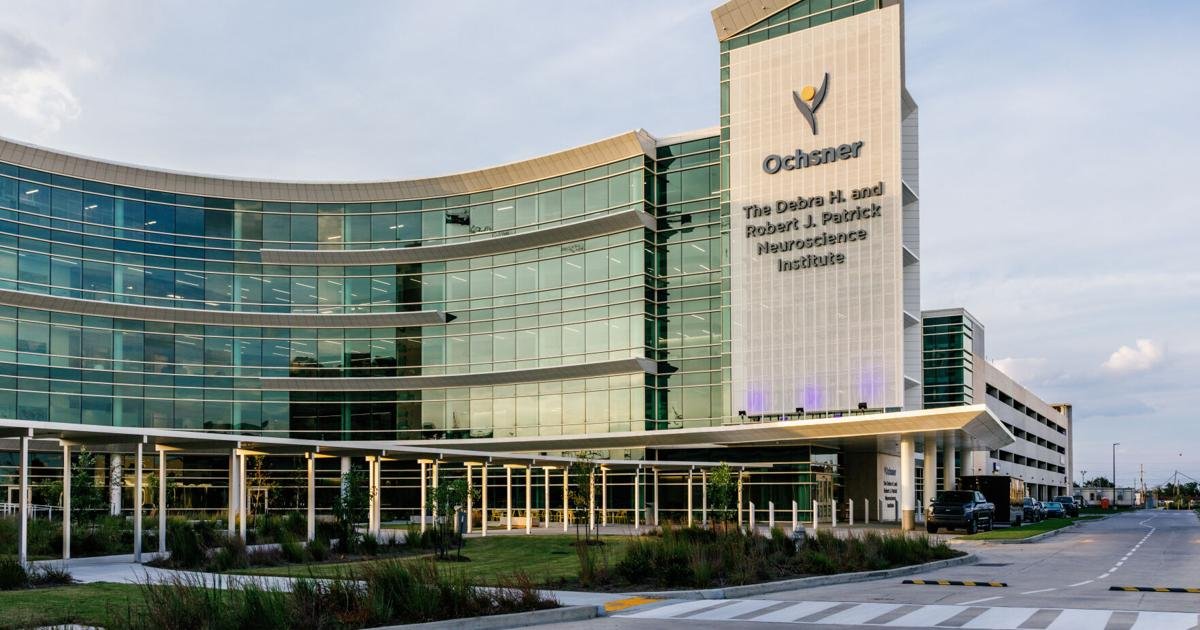
These investments include the newly opened Debra H. and Robert J. Patrick Neuroscience Institute in New Orleans, a new neuroscience center under construction in Lafayette and advanced spine care services in Baton Rouge.
“There is not a more exciting area of medicine today than neurology. We have greater certainty in our diagnoses thanks to biomarkers such as blood tests, skin biopsies and scans that tell us what specific parts of the nervous system are affected. The focus for us is on finding better treatments,” said David J. Houghton, MD, movement disorders neurologist at the Patrick Neuroscience Institute and chair of neurology, Ochsner Health.“ The goal for patients is to get back more than what they have lost. The time for that in neurology is now.”
A new era of neuroscience care in New Orleans
The Patrick Neuroscience Institute is the only facility of its kind between Houston and Atlanta, and represents a $120 million investment in neurological care. The five-story center brings neurology, neurosurgery, physical medicine and rehabilitation and behavioral health services under one roof.
Dr. Houghton said Ochsner has long excelled in treating complex conditions, including Parkinson’s disease, Alzheimer’s disease, amyotrophic lateral sclerosis, or ALS, multiple sclerosis, Huntington’s disease, brain cancer, advanced spinal disorders, strokes, epilepsy and more. However, bringing care for those conditions to one centralized location will expand opportunities for treatment, research and rehabilitation.
The Patrick Neuroscience Institute also houses comprehensive outpatient behavioral health services for patients of all ages, including psychiatric care, medication management, counseling, psychology and group therapy. By combining these services in one location, the institute expands access to a broad range of mental and emotional health resources for individuals and families throughout the region.
“I think the Patrick Neuroscience Institute will act as a magnet to help physician and team member recruitment, help us participate in more clinical trials and develop partnerships with more companies advancing neurological and behavioral health care. And it is in a place where patients are seamlessly able to navigate their journeys,” Dr. Houghton said. “Someone with multiple sclerosis might see their specialist, receive an infusion and go to aquatics or music therapy, all in the same building. It allows them to feel like they have found a home.”
David J. Houghton, MD, Movement Disorders Neurologist at the Patrick Neuroscience Institute and Chair of Neurology, Ochsner Health
The Patrick Neuroscience Institute features advanced rehabilitation technologies, including body-weight support systems, functional electrical stimulation, biodesign, 3D modeling and biofeedback tools to help patients improve mobility and regain function. The Team Gleason Assistive Technology Lab supports patients living with ALS and other conditions with access to advanced communication devices, mobility solutions and environmental control technologies that promote independence. There is also a strong emphasis on wellness with ample outdoor spaces, music therapy, art therapy, creative writing, yoga and more.
“Precision medicine – tailoring treatment to the specific characteristics of an individual patient – has been a focus of oncology over the past few years, and that’s in neurology now. Similar to cancer, the same neurological disease affects each person differently. This institute allows us to use the knowledge from our well-trained clinicians and incorporate therapies including weight-bearing training in the gait lab, aggressive speech and vocal therapy, walks in the healing garden with a physical therapist and art therapy,” Dr. Houghton said. “There is really no limit on what we can all do here together.”

Collaborating in Acadiana amid increased demand and growing patient needs
A significant expansion of services is under way in Acadiana with construction of the 35,000-square-foot Ochsner Lafayette General Neuroscience Center, expected to open in mid-2027. The center will bring together specialists from neurology, neuroendovascular care and neurosurgery.
Kevin R. Hargrave, MD, medical director of Ochsner Lafayette General Neuroscience Center, said the location will help physicians and advanced practice providers better coordinate inpatient and outpatient care for patients facing everything from migraines, sleep disorders and strokes to epilepsy, multiple sclerosis, spine disorders, dementia and more.
“Neurological conditions can be complex, and many patients benefit from the expertise of multiple specialists working together. Collaboration is especially important for patients with chronic or progressive neurological conditions who may require ongoing treatment, monitoring and support,” Dr. Hargrave said. “The new neuroscience center will strengthen that collaboration by creating a shared space where specialists can communicate and coordinate care more easily.”

Kevin R. Hargrave, MD, Medical Director, Neurology, Ochsner Lafayette General Neuroscience Center
Dr. Hargrave said improving access to care for patients in the Lafayette area is becoming even more crucial with an aging population. Conditions such as Parkinson’s and Alzheimer’s are more common now as people live longer, he said. At the same time, the therapies to treat some neurological disorders are improving rapidly with advances in new medications, brain stimulators and wearable pumps that deliver pharmaceuticals beneath the skin.
“Many of these chronic conditions can be managed to help patients maintain independence,” Dr. Hargrave said. “We will need to keep up with the demand and deliver care differently. It’s an added benefit when you can discuss patients with colleagues. Being in one place will help us facilitate those conversations more frequently. Ultimately, the goal is to make comprehensive neurological care more accessible and help patients receive the care they need without having to travel far from home.”

Team-based spine care in Baton Rouge focuses on relief and quality of life
In Baton Rouge, Ochsner physicians use a similar collaborative approach to help patients with spinal conditions like herniated discs, degenerative disc disease, spinal stenosis, scoliosis, nerve compression and more. Justin Haydel, MD, a neurosurgeon at Ochsner Health Center – O’Neal, said these issues can significantly hamper a person’s quality of life and overall well-being, no matter their age or other health conditions. Common symptoms include numbness, tingling, muscle weakness, pain in the arms or legs, and difficulty walking.
Most patients with these disorders can find relief with conservative treatments such as physical therapy, pain management, oral medications, injections or a combination. Dr. Haydel said only about one in every 10 to 15 patients in his clinic will ultimately need surgery.

Justin Haydel, MD, Neurosurgeon, Ochsner Health Center – O’Neal
“We’ve designed our clinics here in Baton Rouge so that all of the specialists who need to consult on a patient have easy access to the other physicians in order to provide the best care,” Dr. Haydel said. “If someone has a question, they can come to my office. There’s more face-to-face collaboration for a patient’s treatment.”
When patients do require surgery, advanced technology helps Dr. Haydel plan procedures with greater precision. Surgical options can include spinal decompression, microdiscectomy and spinal fusion, depending on the condition. Most of these operations are done using minimally invasive techniques with smaller incisions, meaning potentially less blood loss, reduced post-operative discomfort and shorter recovery times.
“I sit with patients using our software and 3D renderings that show them the before and after, and what kind of outcome to expect. It helps them understand our treatment goal, and it gives them and their family an idea of what to expect,” Dr. Haydel said. “The most important aspect of back and spine care is to have realistic expectations. I usually give them milestones for two weeks, six weeks and three months. I also make sure to involve the patient’s family and support system. It can be hard to recover from these conditions on your own, so it definitely helps the process when you have loved ones involved.”
From New Orleans to Lafayette and Baton Rouge, these investments reflect the growing importance of coordinated, specialized care for patients with neurological and spinal conditions. By bringing specialists together, incorporating advances in medical technology and expanding services across the region, Ochsner Health is creating more opportunities for patients to access comprehensive care close to home.
Ochsner Health is the leading nonprofit healthcare provider in Louisiana, Mississippi and across the Gulf South, delivering expert care at its 47 hospitals and more than 370 health and urgent care centers. To learn more about how Ochsner empowers people to get well and stay well, visit ochsner.org.