
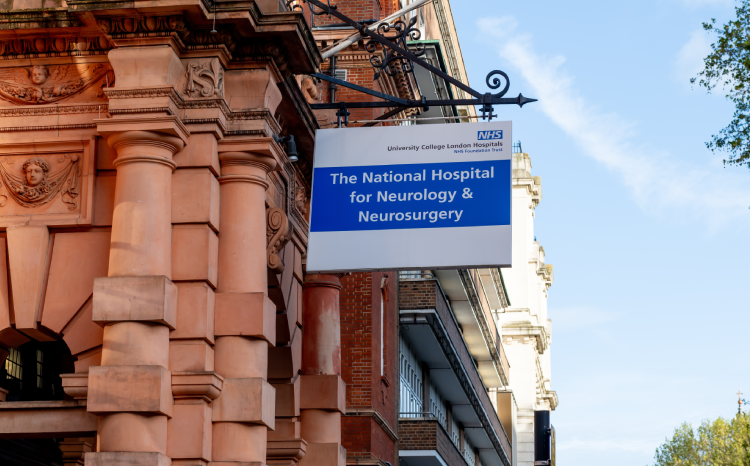
University College London Hospitals’ National Hospital for Neurology and Neurosurgery (Credit: Shutterstock.com)
The UK’s first national digital pathology platform has expanded with the addition of University College London Hospitals’ National Hospital for Neurology and Neurosurgery (NHNN).
The rollout brings the number of NHS sites connected to the national digital pathology network to 15, with Alder Hey Children’s Hospital and Royal Manchester Children’s Hospital expected to join later this year.
Based at Leeds Teaching Hospitals NHS Trust, the National Pathology Imaging Co-operative (NPIC) is developing a national digital pathology infrastructure designed to support faster diagnosis, improve collaboration between specialist pathologists, and support the future deployment of AI tools in routine clinical practice.
The latest rollout covers NHNN, the UK’s largest dedicated neurological and neurosurgical hospital, which provides specialist diagnosis, treatment and care for conditions affecting the brain, spinal cord and peripheral nervous system.
The platform enables pathologists to securely access and analyse high-resolution digital pathology slides remotely, reducing reliance on traditional glass slide workflows.
NPIC said the technology can help reduce diagnostic turnaround times, improve access to specialist second opinions and remove the need to transport physical slides between NHS organisations.
Dr Angela Richard, head biomedical scientist in the Neuropathology Department at the National Hospital for Neurology and Neurosurgery, said: “Working with Leeds Teaching Hospitals’ NPIC programme as part of a North Central London (NCL)-wide digital pathology solution, our Neuropathology department has successfully delivered a locally led implementation tailored to our service.
“Delivery has taken place through a phased programme, including scanner deployment, integration with Sectra, validation, and staff training, supported by close collaboration between clinical, IT, and NPIC teams.
“Following go-live, we are now at an exciting early stage of adoption, with digital pathology beginning to be embedded into routine practice and providing a strong foundation for future service development.”
NPIC said the platform is intended to support the development, testing and deployment of AI-powered diagnostic tools that could improve the speed and accuracy of pathology reporting, particularly for cancer and other complex diseases.
The network includes organisations such as Great Ormond Street Hospital and The Royal National Orthopaedic Hospital NHS Trust, alongside the newly connected NHNN.
Usman Arif, programme head at NPIC, said: “Our continued expansion evidences our commitment to building a national digital pathology ecosystem across the UK.
“Our partner NHS trusts not only benefit from a secure, scalable infrastructure that will enable AI integration into routine diagnostic workflows, but they also receive long-term, embedded support ensuring that digital transformation translates into sustainable clinical and operational impact for the benefit of the patients.”
The NPIC programme is delivered in partnership with Exponential-e, Sectra and Leica Biosystems.
Exponential-e provides the hosting platform for Sectra’s centralised picture archiving and communication system (PACS), enabling secure storage and sharing of digital pathology images for clinical care and research.
Leica Biosystems supplies digital pathology scanners, while Sectra provides the digital pathology software and vendor-neutral archive that supports image storage and sharing across organisations.
NPIC said its focus for the remainder of 2026 is to continue expanding the network while introducing AI-enabled diagnostic capabilities intended to support pathology reporting.