
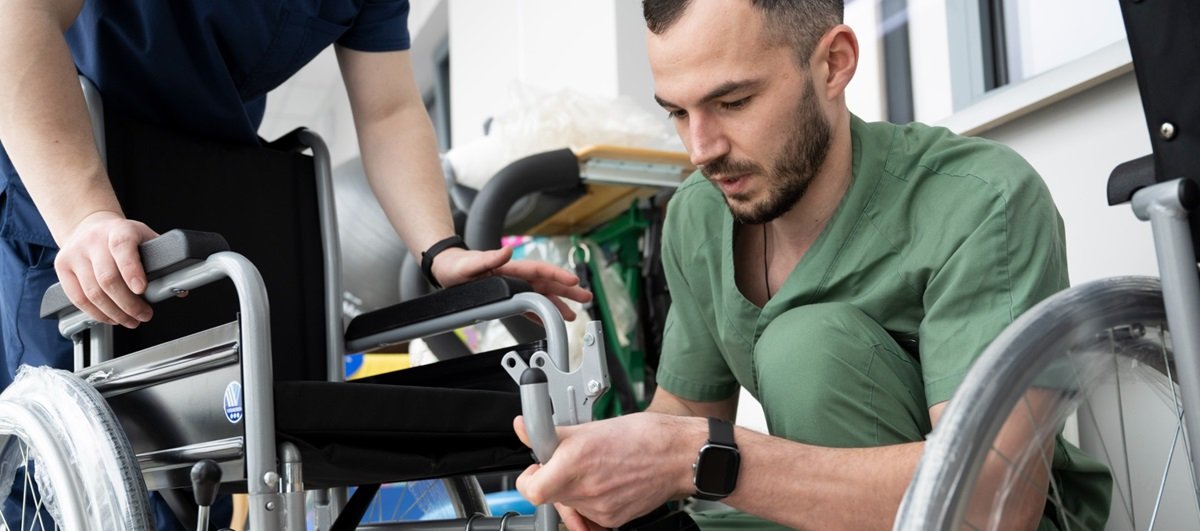
WHO/Europe has released a new guidance report outlining how countries can extend the life of assistive products, optimize resource use and reduce their environmental impact. “Repair, recycle and refurbishment of assistive products: for self-care and mobility products” is framed within the WHO-GATE 5P model and circular economy principles, featuring examples from Iceland, Norway and Romania. The WHO-GATE 5P is a WHO framework for making assistive technology easier to access.
The document, which is part of work funded by ATscale, the Global Partnership for Assistive Technology, focuses specifically on essential self-care and mobility products, including shower chairs, bath chairs, toilet chairs and commodes, walking aids and manual wheelchairs. These devices are essential for maintaining independence and promoting health and well-being, particularly among older people, people living with chronic conditions and persons with disabilities.
It aims to support Member States in the WHO European Region in:
- extending the life-cycle of quality assistive products through sustainable repair and refurbishment practices;
- reducing product-related waste and minimizing environmental impact;
- improving access to quality assistive products and supporting equitable provision;
- reducing overall procurement costs for national health systems;
- establishing safe and hygienic practices that protect user health and safety; and
- supporting the development of circular economy approaches in assistive technology.
Complementary approaches
Repair, refurbishment and recycling are distinct but complementary practices that form the foundation of a circular approach to assistive technology. Together, they extend product life, reduce waste, improve access and strengthen resource efficiency. Independently, these are their main objectives.
- Repair restores a faulty assistive product to its original function, so it can continue to be used by the same person, helping to maintain continuity of care and independence.
- Refurbishment restores used products to a safe and functional condition, so they can be reissued to new users, increasing available supply, improving access and reducing procurement costs and waste.
- Recycling involves recovering materials and components from end-of-life products for reuse or reprocessing, reducing landfill waste and supporting more sustainable resource use.
Member States are not expected to implement repair, refurbishment and recycling programmes simultaneously. Each of these 3 approaches can be implemented independently and will generate significant benefits for access, cost and sustainability.
By investing in repair, refurbishment and responsible recycling, countries can reduce costs, minimize environmental impact and expand access to assistive products for older people and persons with disabilities.