

How to clean lettuce amid cyclospora outbreak
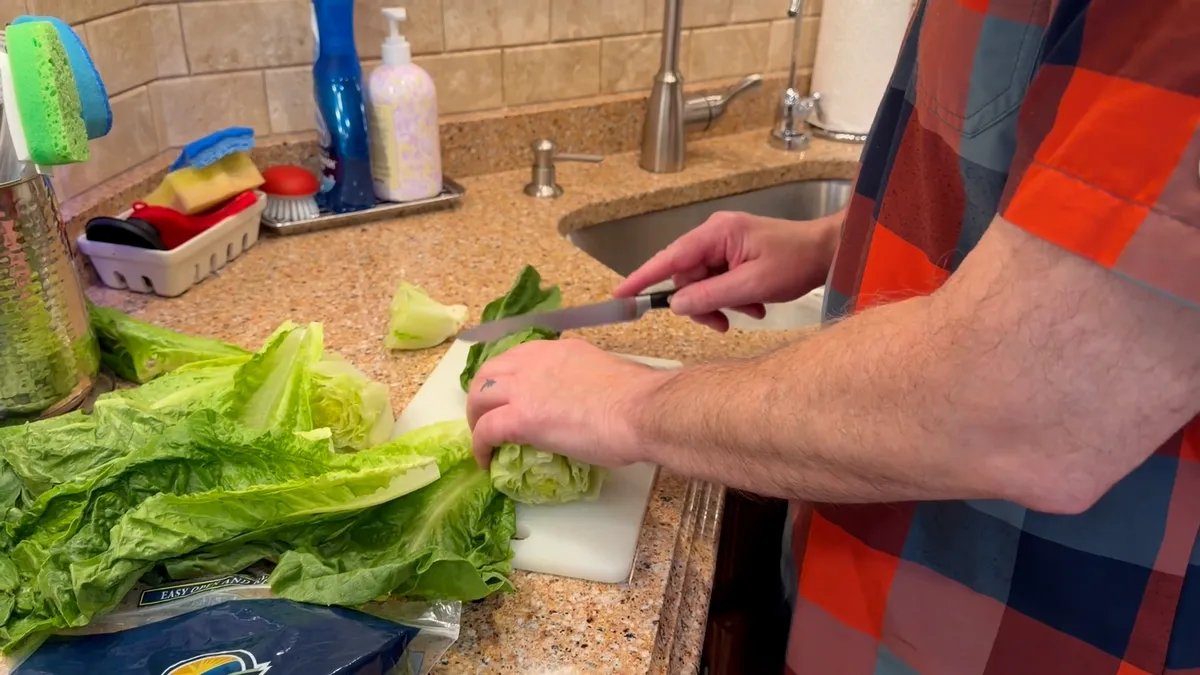
USA TODAY’s Mike Snider demonstrated how to properly clean and store your leafy greens.
Salad lovers stand by lettuce as a staple of a healthy diet. But what do you do when an outbreak of cyclosporiasis, which can cause painful diarrhea, makes munching leafy greens a food safety hazard?
Healthy diets include fruits and vegetables, but unfortunately, fresh produce can become contaminated by bacteria such as E. coli and the parasite cyclospora.
As crops grow, they may be contaminated by harmful substances in the water or soil, or by the feces of infected people. Even after produce is harvested, many people handle it, which increases the risk of contamination, notes the Food and Drug Administration.
The parasite – it’s proper name is Cyclospora cayetanensis – is an oocyst, an organism that lives on or inside another organism and comes out in feces (poop) and can contaminate water used for irrigation or washing, according to the Centers for Disease Control and Prevention. Subsequently, it can infect others down the food chain.
Washing lettuce lowers your risk, but cyclospora is not easy to remove from produce, said Dr. Tyler Evans, founder of Wellness Equity Alliance and former chief medical officer for New York City.
“Washing your produce reduces the load and it is worth doing,” Evans told USA TODAY. “But Cyclospora rides in a tough, sticky shell that clings to the crevices of leafy greens and the fine hairs of berries, and CDC is explicit that routine chemical disinfection and sanitizing will not kill it.”
Amid the current outbreak, shredded iceberg lettuce is the only produce currently identified as likely contaminated. You cannot eliminate all risks, but properly washing lettuce makes for a healthier salad – and should be a standard food safety practice.
“Good hand hygiene and safe food-preparation practices are always important,” said Dr. Syra Madad, an infectious disease epidemiologist at the Harvard Kennedy School’s Belfer Center for Science and International Affairs. “Otherwise, there is no reason to broadly avoid lettuce or other fresh vegetables.”
With many foods, cooking to at least 158 degrees kills the parasite, she said, “but for produce eaten raw, people should avoid products specifically identified by public health authorities during an outbreak rather than assume washing makes them safe.”
How to properly wash lettuce
You should always wash leafy greens and produce with running water before cutting, cooking and eating, said Kelsey Holloman, manager of the foodborne disease epidemiology program at the Virginia Department of Health. “I would advise people to remain vigilant.”Her tips on how to best wash lettuce:
- Wash your hands and any utensils and cutting boards. “Wash your hands thoroughly with soap and running water, especially before and after food preparation, and after using the bathroom or changing diapers,” Holloman said. Knives and cutting boards should be clean and sanitized.
- Discard outer lettuce leaves. With a head of iceberg lettuce or romaine hearts, discard the outer leaves and any torn or bruised leaves.
- Thoroughly rinse the lettuce leaves. Use your hands to gently rub the surface of each leaf to remove any grit or grime. With a head of iceberg lettuce – since it is more tightly packed than romaine or Boston lettuce, for instance – you could cut it in half and flood the center with running water for a few minutes, rather than wash individual leaves.
- Dry the lettuce. Even if you dry your lettuce using a salad spinner, you should subsequently dry it with a clean cloth or a paper towel.
Even if the lettuce you purchased says it was pre-washed, Holloman said, “you still want to rinse it with clean water when you get home.”
Should you eat lettuce?
Michigan is the state that has reported the highest number of cyclosporiasis cases. USA TODAY reached out to the Michigan Department of Health and Human Services, which says that residents should “purchase whole heads of lettuce, instead of pre-washed, bagged lettuce or pre-mixed salad kits.”
Produce from local farmers markets offers a lower risk of the current cyclospora contamination because those foods typically have not been shipped nationally, said Dr. Susan Cheng, the associate dean for public health practice at Tulane University’s Celia Scott Weatherhead School of Public Health and Tropical Medicine.
However, those who are pregnant may want to avoid fresh leafy greens and herbs and berries for awhile, Cheng said.
“In the meantime, make sure all produce is either cooked well or has a skin that can be peeled after washing well first (e.g. oranges, mangos, melons, bananas).”
Mike Snider is a national trending news reporter for USA TODAY. You can follow him on Threads, Bluesky, X and email him atmikegsnider & @mikegsnider.bsky.social & @mikesnider & msnider@usatoday.com.