
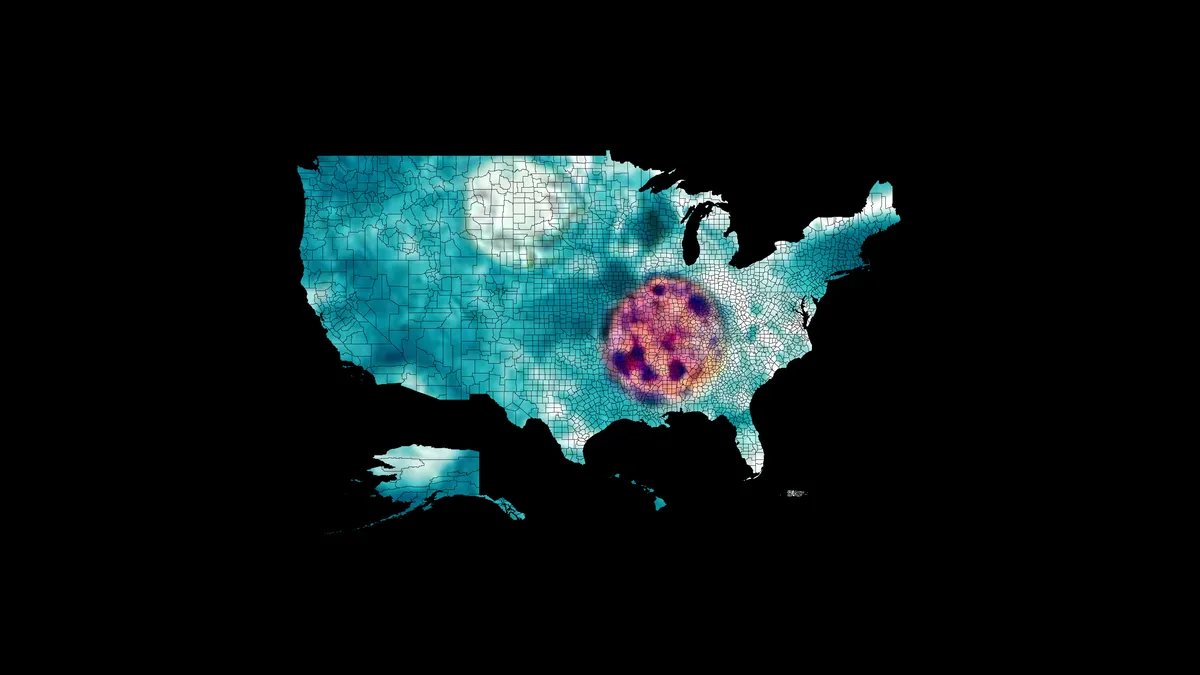
An intestinal illness, cyclosporiasis, that can cause weeks of severe and “explosive” diarrhea is spreading through the U.S. at a pace health officials call unusually high for this time of year. Thousands of cases have been reported nationwide so far, and the total is still climbing.
While most states have not released county-level data yet, USA TODAY collected figures directly from state health departments to show where reported cyclosporiasis cases are concentrated and which communities have been hardest hit.
Michigan
Michigan has reported more cyclosporiasis cases than any other state in the nation. As of July 16, the state had recorded more than 4,300 cases and over 100 hospitalizations, according to the Michigan Department of Health and Human Services.
Wayne County reported the most cases, with 582, followed by Washtenaw County and Oakland County, based on county-level data available through July 16.
When the population is taken into account, Shiawassee is the hardest-hit county with about 411 cases per 100,000 residents. That’s nearly double the rate reported in Lenawee, which had about 210 cases per 100,000 residents.
Ohio
Ohio is another state that reported a record number of cyclosporiasis cases, confirming over 1,200 cases as of the latest data available through July 16.
Lucas County reported the state’s highest number of cases with 272, followed by Wood County with 132 and Fulton County with 85. Fulton County had the state’s highest infection rate at about 203 cases per 100,000 residents, followed by Wyandot County and Henry County.
Lucas County reported the state’s highest number of cases with 86, followed by Wood County with 49 and Wyandot County with 23. Wyandot County had the state’s highest infection rate at about 107 cases per 100,000 residents, followed by Carroll County and Wood County.
Kentucky
Kentucky also had an unusual spike in cyclosporiasis cases. And it is one of four states, including Michigan, Ohio and West Virginia, where the CDC believes a cluster of cyclosporiasis cases is likely linked as it investigates a nationwide surge in infections.
“While cases of cyclosporiasis normally rise in the spring and summer months, Kentucky is one of many states experiencing a larger-than-typical increase,” said Beth Fisher, spokesperson at Kentucky Cabinet for Health and Family Services.
“In 2026, the Kentucky Department for Public Health has received 100 reports of cases of cyclosporiasis, and 55 cases have been confirmed, whereas Kentucky typically only has about 35 cases of cyclosporiasis each year.”
West Virginia
In West Virginia, cases are concentrated in the state’s northern panhandle. The state reported 69 cases as of July 16, with Hancock County leading at 40 cases per 100,000 residents.
Connecticut
As of July 13, Connecticut confirms 35 cyclosporiasis cases in 2026, nearly double the count from this time last year.
Florida
Florida reported over 100 cases in 2026, including 69 cases since May, based on the state’s Department of Health’s latest report as of July 11. Miami-Dade County had the most cases, with 17, followed by Lee County and Broward County.
Arizona
Arizona has reported 19 cases this year. According to Magda Rodríguez, spokesperson with the Arizona Department of Health Services, none of those cases are associated with localized clusters or active outbreaks in Arizona.
Nevada
Nevada reported two cases of cyclosporiasis since May 1, both in Clark County. Daniel Vezmar, a spokesperson for the Nevada Department of Health and Human Services, said the state has no evidence that the cases are linked to the nationwide outbreak.
Health officials are investigating outbreaks in several states and have not yet confirmed a source for the illnesses.
USA TODAY will continue to update its county-level maps and analysis as states release new data.
This story was updated to reflect data as of July 16, 2026 for Michigan and Ohio. A map and text for West Virginia were added, as well as text for Florida, Arizona and Nevada.