
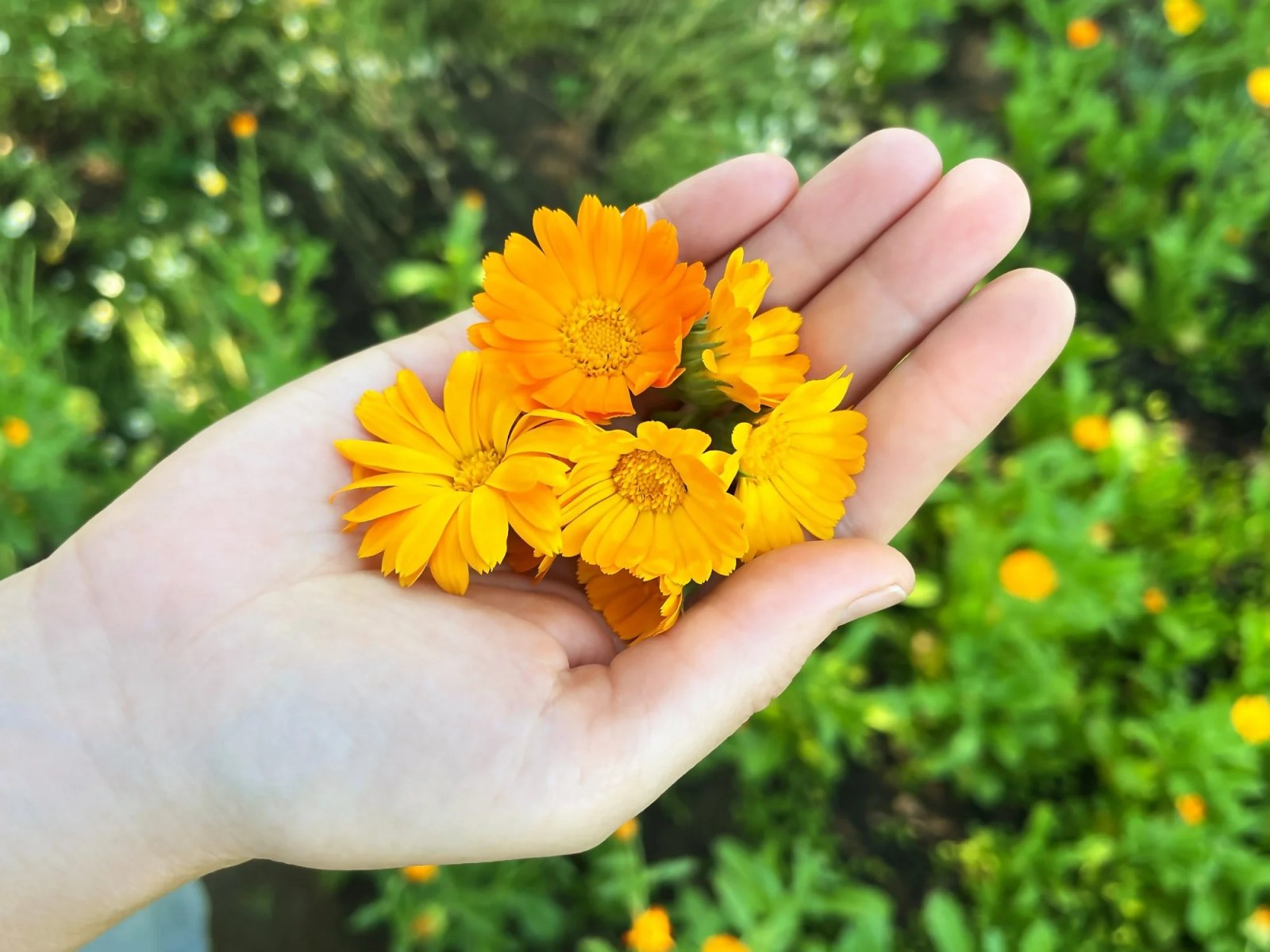
Once known as “poor man’s saffron,” pot marigold is drawing fresh attention for pigments, fiber, and bioactive compounds that could expand its role in food.
Calendula officinalis L. as a Source of Bioactive Compounds for Functional Foods: A Review. Image Credit: 1777177 / Shutterstock
In a recent review published in the journal Applied Sciences, authors summarized current evidence on the phytochemical composition, biological activities, agronomic factors, nutritional value, and functional food applications of Calendula officinalis L. (pot marigold), while highlighting its potential as a functional food ingredient.
Background
Many edible flowers contain hundreds of naturally occurring compounds that may support both nutrition and food quality. Calendula officinalis L. has been used in traditional medicine for centuries and as a natural food colorant, earning it the name “poor man’s saffron.” The flowers contain numerous bioactive compounds that have attracted interest due to their antioxidant, anti-inflammatory, antimicrobial, and nutritional properties. As people become increasingly interested in natural rather than synthetic ingredients, some edible flowers, like pot marigold, are becoming relevant to functional food producers. Further research is needed to understand their practical applications.
Literature search
The authors conducted a structured literature review using the Scopus and Web of Science databases, focusing on articles published from 2003 to 2026, although the paper also cites older foundational studies. The search terms comprised Calendula officinalis L. along with terms for bioactive compounds, antioxidant activity, antimicrobial activity, functional foods, growing, and pharmaceutical and food applications. The review followed the Preferred Reporting Items for Systematic Reviews and Meta-Analyses (PRISMA) guidelines for literature retrieval. Of 86 records screened against inclusion and exclusion criteria, 76 publications were included in the evidence synthesis.
Bioactive compounds
More than 500 secondary metabolites have been reported in Calendula officinalis L., primarily through studies of its flowers. Their composition varies with cultivar, growing conditions, flower maturity, processing, and analytical methods.
Flavonoids, such as quercetin, kaempferol, isorhamnetin, rutin, and isoquercitrin, are major contributors to its antioxidant properties, and their concentrations vary depending on the extraction method. Moreover, the flowers contain approximately 100 carotenoids, including beta-carotene and lutein, which contribute to their antioxidant properties and yellow-orange color. Furthermore, essential oils, triterpenoids, carbohydrates, amino acids, and fatty acids are some of the constituents that contribute to the plant’s chemical and nutritional profile.
Total flavonoid content of dried Calendula officinalis flowers reported in selected recent studies
| Flavonoid Content | Solvent | Raw Material | Unit |
|---|---|---|---|
| 0.21–0.68% DM | Methanol (spectro., 370 nm) |
Dried flowers, 20 cultivars |
% per dry raw material |
| up to 1.7% DM | Methanol (spectro.) | Dried flowers, ‘Radio’ | % per dry raw material |
| 12.12 ± 0.02 mg QE/g | Ethanol 80% | Dried flowers | mg QE per g of dry extract |
| 13.61 ± 0.54 mg QE/g | Ethanol 80% | Dried flowers | mg QE per g of dry extract |
| 15.2 ± 0.3 mg/g (flowers); 12 ± 0.02 mg/g (leaves) | Methanol | Dried flowers and leaves | mg per g of dry plant material |
| 147.82 mg QE/100 g (≈1.48 mg QE/g) | Ethanol 50% | Dried flowers | mg QE per 100 g of dry extract |
QE – quercetin equivalents (total flavonoid content performed by comparing the sample’s assay response with a calibration curve prepared using quercetin as the reference standard); DM – dry matter, the material remaining after its water content has been removed. This allows measurements to be compared without differences in sample moisture affecting the results. Values are not directly comparable because of differences in solvent, plant part, and expression basis.
Experimental studies indicate diverse biological activities
The diverse phytochemical composition of Calendula officinalis L. contributes to a wide range of biological activities reported in laboratory and animal studies. Various flavonoids, phenolic acids, carotenoids, and saponins contribute to antioxidant activity. The flower extracts were used to enhance the antioxidant activity of foods such as bread and yogurt by increasing their phenolic content. Calendula extracts also showed anti-inflammatory effects in experimental models, with triterpenoids, flavonoids, carotenoids, polysaccharides, and sterols reducing inflammatory responses and inhibiting inflammatory mediators.
In addition, cell and rodent studies found that Calendula extracts promoted wound healing, fibroblast proliferation, connective tissue repair, and recovery from burns and tendon injuries. In vitro research has also shown that the extracts exhibit activity against Gram-positive and Gram-negative bacteria and fungi, supporting further investigation of their potential as natural preservatives. Although experimental studies also reported cytotoxic, antiproliferative, antidepressant, digestive-system protective, and neuroprotective effects, including findings in models relevant to Parkinson’s disease, the review emphasizes that these findings are primarily based on laboratory and animal research and require further investigation before their clinical relevance can be confirmed.
Functional food applications
The reviewed evidence identifies Calendula officinalis as a promising candidate for use as a functional food ingredient because of its natural pigments, antioxidant compounds, dietary fiber, and pleasant floral aroma. These characteristics may improve the nutritional composition, oxidative or microbial stability, and sensory characteristics of selected foods, supporting their potential as alternatives to selected synthetic colors, antioxidants, or preservatives in suitable products.
Yogurt has been one of the most widely studied areas of application. Supplementation with a lyophilized hydroethanolic flower extract increased total phenolic content, flavonoid levels, and antioxidant capacity in standard laboratory assays. The extract also preserved the viability of beneficial lactic acid bacteria and produced a yellow-orange color and favorable sensory properties at 0.25 g per 100 g of yogurt, although excessive amounts increased astringency.
Bakery products also showed promising outcomes. Replacing 10-15% of the water in wheat bread with an aqueous flower extract increased phenolic content, enhanced antioxidant activity in standard laboratory assays, and reduced the growth of Aspergillus niger, although it did not inhibit Penicillium species. The addition did not negatively affect loaf volume or baking loss, and sensory properties remained acceptable. Fresh pasta made by replacing 5% of the wheat flour with flower powder had higher levels of fiber, protein, carotenoids, and phenolic compounds, and retained antioxidant properties after cooking.
Additional applications in biscuits, grape juice, mustard oil, cold-pressed oils, and encapsulated extracts produced application-specific improvements in nutritional composition, antioxidant stability, or resistance to lipid oxidation. Furthermore, the plant’s antimicrobial and antifungal properties support its potential use as a natural food preservative, though its effectiveness varies across food systems, extraction methods, and microorganisms.
Agronomic factors, safety, and research gaps
The phytochemical composition and quality of Calendula officinalis L. depend strongly on cultivar, flower morphology, environmental conditions, harvest timing, nutrient availability, and light exposure. Orange-flowered cultivars generally contain more carotenoids than yellow cultivars, while ligulate petals tend to contain more flavonoids and carotenoids than tubular petals. However, tubular petals may contain higher levels of caffeoylquinic acids, coumarins, and anthocyanins.
Use of new smart cultivation techniques such as Plant Factories with Artificial Lighting (PFALs) may support controlled, year-round production and targeted management of phytochemical content, although trade-offs between crop yield and bioactive-compound levels require further study.
The review also reports that Calendula officinalis flowers are considered a traditional food ingredient in the European Union, while marigold is listed in the United States as a Generally Recognized as Safe (GRAS) flavoring substance. However, some people may experience allergic reactions, particularly those sensitive to other plants in the Asteraceae family.
Animal studies generally support safety at food-relevant exposures, although prolonged high-dose administration produced mild biochemical or tissue changes related to the liver and kidneys in some experiments.
Additional challenges include the effects of high insoluble fiber content on dough quality, increased astringency with excessive extract concentrations, and limited food-product trials. Further research is needed to optimize processing methods and establish standardized applications in functional foods.
Conclusion
The review shows that Calendula officinalis is a rich source of bioactive compounds with considerable potential for the development of functional foods. Flavonoids, carotenoids, terpenoids, dietary fiber, and other phytochemicals found in Calendula officinalis have demonstrated antioxidant, anti-inflammatory, antimicrobial, and regenerative activities in laboratory and animal studies.
The review identified promising applications of Calendula officinalis in yogurt, bread, pasta, beverages, edible oils, and natural food preservation. However, food-product research remains limited, most applications rely on single studies, and no clinical study has assessed Calendula-containing foods at realistic intake levels. The content of bioactive compounds also varies with cultivation and processing methods. The bioavailability of these compounds from food matrices remains unknown, meaning that the reported biological activities cannot currently support human health claims.
The review concludes that further well-designed food application studies are needed to establish standardized processing strategies and maximize the plant’s practical value as a functional food ingredient.
Journal reference:
- Owczarek, A., & Harasym, J. (2026). Calendula officinalis L. as a Source of Bioactive Compounds for Functional Foods: A Review. Applied Sciences, 16(15), 7466. DOI: 10.3390/app16157466. https://www.mdpi.com/2076-3417/16/15/7466