A new platform aims to teach consumers about hormone-related conditions like menopause.
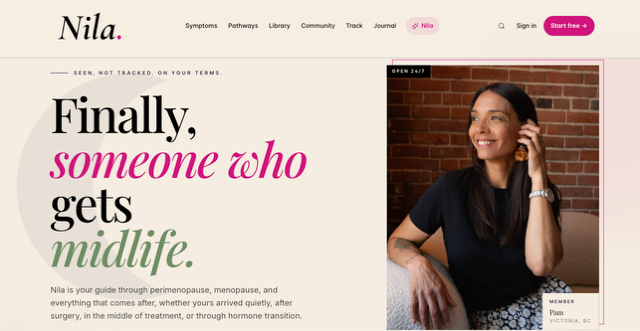
Nila, available for free on desktop, iOS and soon Android, is a collection of hundreds of evidence-based pieces of research on hormone-related conditions. These extend beyond perimenopause and menopause, including endometriosis, autoimmune disease and cancer. It also features a chatbot that helps users curate research relevant to their unique needs.
Nila’s goal is to offer inclusive information to underrepresented communities like neurodivergent or transgender people.
The platform was built and bootstrapped by Erin Beattie, a communications professional based in Canada. Beattie inadvertently built the platform when going through her own endometriosis and breast cancer journey. Her treatments plunged her into chemical and surgical menopause. To understand her body and treatments, Beattie pulled and indexed existing research.
Along the way, she noticed glaring research gaps, such as treatment options for those with hormone-positive cancer and menopause, the symptoms of which are often treated with hormone replacement therapy (HRT) but should not be combined with hormone cancer therapies.
Nila includes peer-reviewed studies, clinical guidelines, government and institutional reports, white papers and lived experience research. The chatbot only pulls from this dataset. Additionally, menopause-trained providers who are seeing new patients can submit to Nila to be on its new practitioner directory.
“I really want this to be a support tool to help bridge the gap,” Beattie told Fierce Healthcare. “My goal is to have this in everybody’s back pocket.”
(Erin Beattie)
There are free and premium versions of the platform. All users can access the full research library and 80 symptom guides—written by Beattie based on clinical guidelines—plus the chatbot, with a daily message limit. They can also view the practitioner directory, which today features a dozen health professionals across modalities. The premium version comes with more features. Nila also has an enterprise offering for payers and employers.
Nila is undergoing a review process with the Society of Obstetricians and Gynecologists of Canada to get the organization’s stamp of recognition on the site. A U.S.-based OB hospitalist, Jill Palko, M.D., is Nila’s medical reviewer and advisor.
The site was designed for accessibility, per Beattie, incorporating visuals, podcasts, recipes and other multimedia to support neurodivergent users who may be overwhelmed with text-heavy pages. Privacy is also a priority. Users do not need to reveal any personal information to use the platform, but may optionally list their sex assigned at birth, gender identity and pronouns, as well as gender-affirming treatment information. Beattie says this information will help her understand who is using the site and how.
Nila also allows users to track their symptoms and mood, journal, generate letters for their doctor and tap into a member community. “It kind of gives you a more empowered approach to your own advocacy,” Beattie said.
Attention to menopause is growing in healthcare, with more employers offering menopause benefits and more providers addressing the condition specifically. While virtual providers like Midi Health and Elektra Health fill an important market gap, Beattie said, she believes they generally cater to white cisgender patients. Nila aims to be an accessible, diversified resource hub available to patients with less common journeys.
“That’s amazing, that’s great,” she said of existing offerings, “but that’s not everybody’s pathway.”