
One click. One shot. Medications helping millions of Americans lose weight.
But one wrong dose can make you dangerously sick.
As drugs like Ozempic, Wegovy, Mounjaro and Zepbound become more popular, the Indiana Poison Center is seeing a growing number of calls involving people taking these medications incorrectly.
And doctors warn that once someone takes too much, there is no quick fix.
“Once you’ve taken too much of it, there’s, you know, no antidote, no way to get it out of your system,” said Dr. Mary Wermuth, an IU Health medical toxicologist and assistant medical director of the Indiana Poison Center.
The numbers show a troubling trend.
In 2024, the Indiana Poison Center received 161 calls involving GLP-1 medications. That number nearly doubled to 320 in 2025.
During just the first six months of 2026, the center had already received 175 calls.
And 85% of those cases involved therapeutic errors — mistakes people made while using their medications.
Those errors include taking too much medication, accidentally giving themselves an extra dose or taking a drug daily when it is supposed to be taken weekly.
Wermuth says taking more than prescribed increases the risk of serious side effects.
“if you’re taking too much of it, then you have an increased chance of having some of these side effects.”
The medications are generally taken through injections. In fact, 72% of the cases reported to the Indiana Poison Center involved injections.
But how those injections are prepared can make a difference.
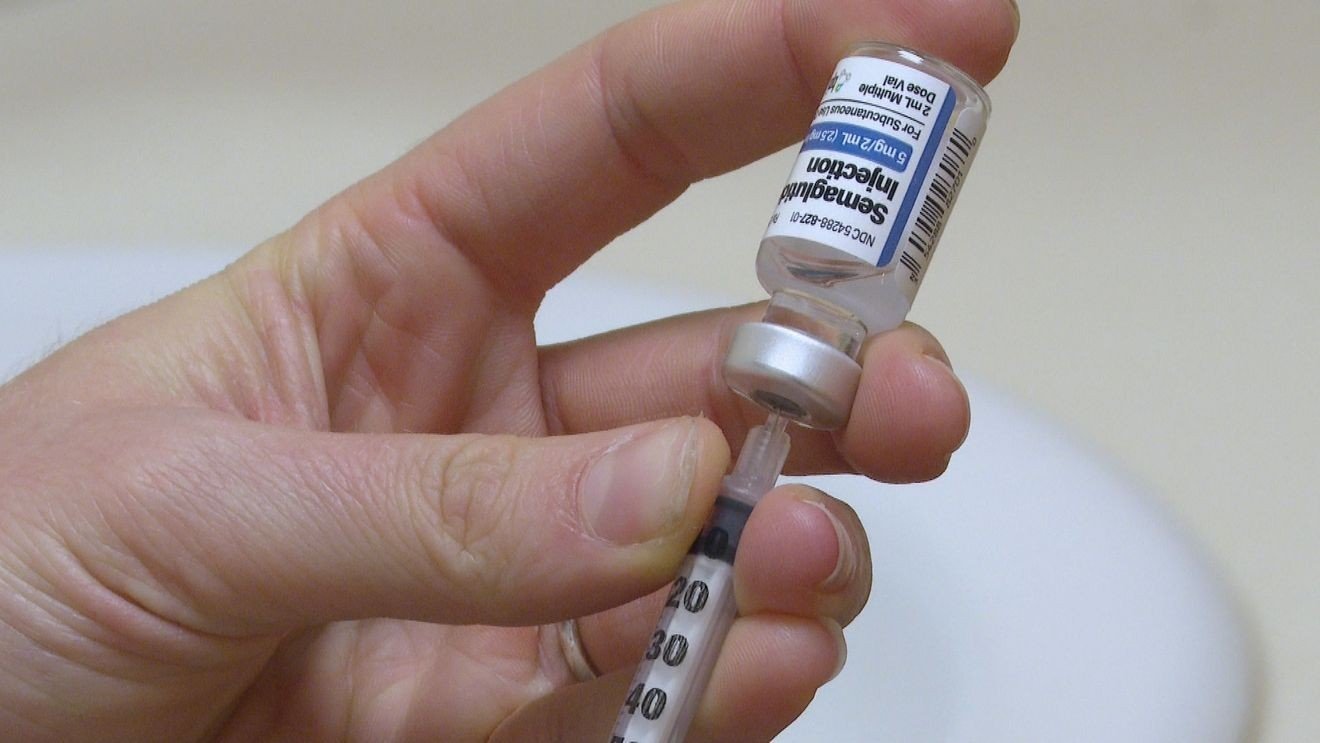
Clinical pharmacist Kelly Peddy demonstrated how the medications are administered and where patients can run into trouble.
Some FDA-approved GLP-1 medications come in prefilled injection pens, which simplify measuring the medication. Depending on the product, patients may need to select their dose or use a pen containing a preset amount.
Compounded versions, however, are often supplied in vials. Patients must draw the medication into a syringe and measure the correct amount themselves.
That’s where confusion can turn dangerous.
“There’s a lot more room for dosing error with the compounded medications,” Peddy said.
A prescription may list a dose in milligrams, while the syringe measures milliliters or units. Confusing those measurements can lead someone to inject far more medication than prescribed.
The concentration of compounded medications can also vary, making it especially important for patients to understand exactly how much to draw into the syringe.
And the mistakes aren’t limited to measuring medication. Patients can also run into problems when increasing their dose too quickly or misunderstanding when to take their next injection.
The consequences can be painful.
Too much of these medications can trigger severe nausea, vomiting, diarrhea and abdominal pain.
Those symptoms can lead to dehydration, especially when someone cannot keep enough fluids down.
“They feel dizzy, they feel lightheaded, they’re not able to take in adequate oral fluids or eat food, then that is somebody that we would be worried about,” Wermuth said.
For some patients, the consequences can be even more serious.
“Sometimes these cases can be so severe that patients end up in the emergency room or in the hospital,” Peddy said.
Doctors are particularly concerned about older adults and people with underlying health conditions, including kidney disease. Severe dehydration can create additional complications for those patients.
People with diabetes who take insulin or certain other blood-sugar-lowering medications can also face a greater risk of dangerously low blood sugar.
Other serious complications associated with GLP-1 medications include pancreatitis and gallbladder problems.
Still, not every dosing mistake results in a hospital visit.
According to the Indiana Poison Center, approximately 68% of reported cases were managed without a referral to a health care facility. Others required additional medical evaluation or were already receiving care.
The data also show that 77% of reported cases involved women, with adults ages 30 to 69 accounting for much of the call volume.
Experts say preventing these mistakes starts with understanding the medication before taking the first dose.
Patients should have a doctor or pharmacist explain the correct amount, demonstrate how to use the pen or syringe and confirm how frequently the medication should be taken.
They also recommend keeping track of injection days, checking the prescribed dose before every injection and never sharing prescription medications.
Anyone who accidentally takes too much should contact their healthcare provider or Poison Control at 1-800-222-1222 for guidance rather than waiting for symptoms to develop.
Despite the increase in dosing mistakes, Wermuth stresses that the medications themselves can be beneficial when used correctly.
“I don’t think these medications are inherently dangerous or bad, and I think they probably, you know, have some benefit and merit. I just think they’re difficult to take, and can be confusing.”
Her message isn’t to discourage patients from taking medications that can help them. It’s to make sure they understand what they’re taking and how to use it safely.
“These medications aren’t inherently unsafe. It’s just if they’re used incorrectly, then you can develop the side effects,” said Wermuth.