
The discovery of a 2,900-year-old mountaintop sanctuary on a Mediterranean island shows the ancient Greek veneration for high mountains and their link to the Greek gods, archaeologists say.
The sanctuary was found during new excavations on Euboea, a very large island only about 30 miles (50 kilometers) northeast of Athens. The sanctuary did not include any buildings, such as a temple. Archaeologists think it was used for offerings and feasting by worshippers for hundreds of years, from about the ninth century B.C. until the first or second century A.D., during Imperial Roman times.
“We know that in the ancient Greek world, religious life was not limited to large temples and urban sanctuaries,” excavation leader Chloé Chezeaux, an archaeologist at the Swiss School of Archeology in Greece, told Live Science in an email. “There were also many places of worship in the countryside and in the mountains.”
Latest Videos FromLive Science
“An exceptional concentration of pottery”
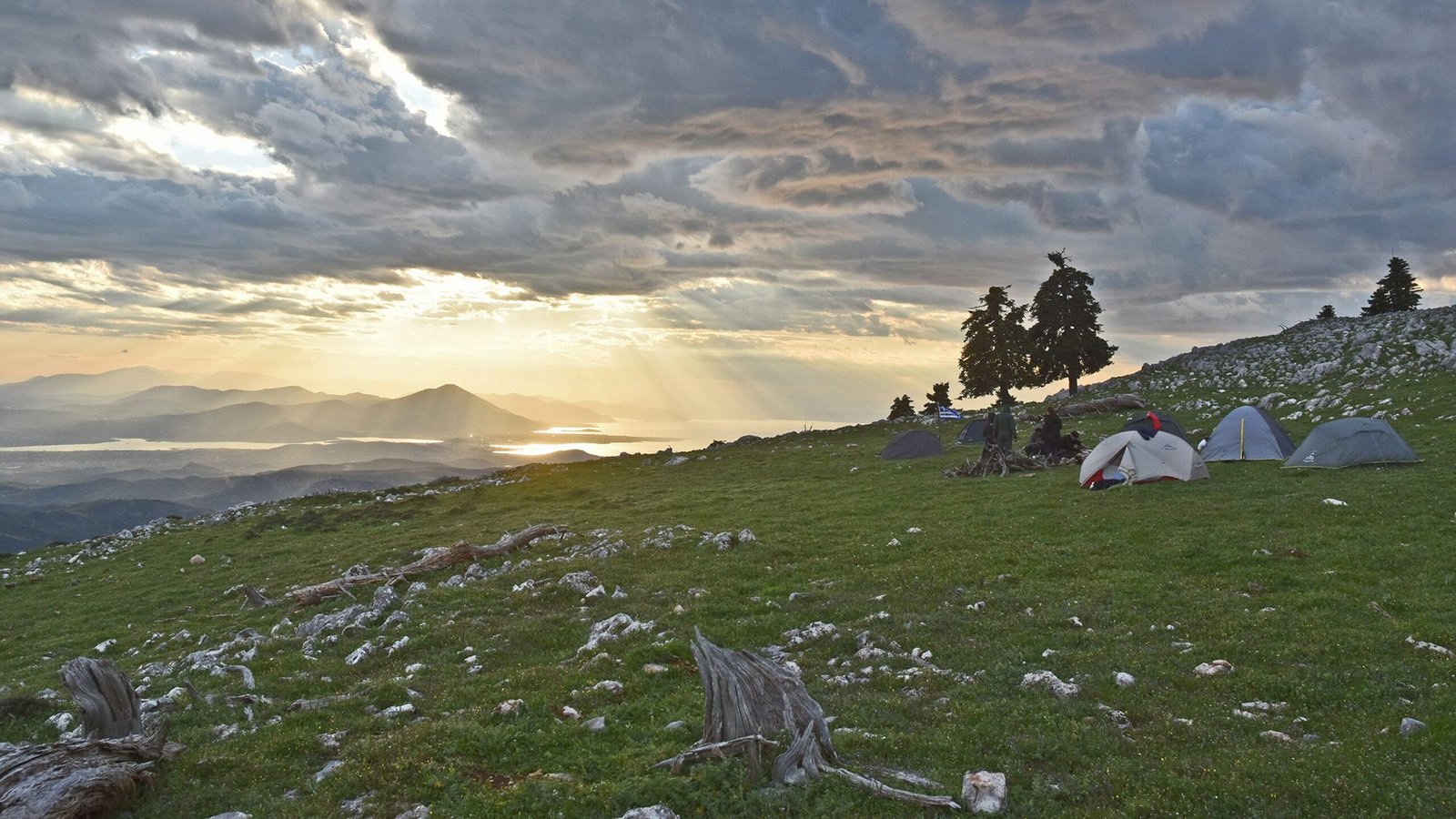
Chezeaux led the excavations this year near the summit of Elatias, one of the highest peaks of Mount Olympus on Euboea. It is not, however, the mainland Mount Olympus traditionally regarded as the abode of the Greek gods.
Chezeaux said that her team first spotted signs of the sanctuary during an archaeological survey in 2025. In excavations throughout Greece, “mountaintop sanctuaries are not uncommon,” she said. “The problem is that these sanctuaries often left very little archaeological evidence, sometimes with no visible structures at all, which makes them particularly difficult to identify.”
Archaeologists found the sanctuary during a survey in 2025 and first excavated it in 2026.
(Image credit: Swiss School of Archaeology in Greece)
The sanctuary on the Euboean Olympus, however, has yielded “an exceptional concentration of pottery,” she said. The earliest is from at least the ninth century B.C., during the early Greek Geometric period — named after the distinctive patterns on ceramics of the time.
“This means that people were coming to this summit over several centuries, perhaps even for more than a thousand years,” Chezeaux said.
The sanctuary was used in ancient times mainly by people from the nearby city of Eretria, where the Swiss School of Archaeology is now based.
“Reaching the summit is quite a physical challenge even today,” Chezeaux said. “The final part of our ascent involves walking about 3 kilometres [1.8 miles], with an elevation gain of 650 metres [2,130 feet]”
Researchers now reach the summit from the nearest mountain pass in about an hour, but “it’s difficult to estimate how long the journey would have taken in antiquity,” she said. “Travel conditions were different, we don’t know which routes people followed, and … not everyone visiting the sanctuary necessarily came from the city of Eretria.”
The effort required to get to the mountaintop is part of the mystery.
“People were willing to devote considerable time and energy to reaching these places, and in our case they seem to have done so over many generations,” Chezeaux said. This raised questions of what the mountain meant to worshippers, and why this particular summit remained important for so long, she said.
Gods and mountains
The immortal Greek gods of ancient myths were said to watch the affairs of mortal humans from their home on the summit of a different Mount Olympus, in a mountain range between the northern Greek regions of Thessaly and Macedonia. The highest mountain in Greece, it stands at over 9,500 feet (2,900 m) high, while the Euboean Olympus is almost 3,800 feet (1,100 m) high, and the Elatias peak on it is about 100 feet (30 m) lower than its highest peak.

The Mount Olympus in northern Greece is the highest of several mountains with that name.
(Image credit: Getty Images/Angelos Tzortzinis)
The tradition of the northern Olympus on mainland Greece dates from the poems of Homer and Hesiod, which were written in about the eighth century B.C. But the name Olympus was already widespread for high mountains, and modern Greece has several mountains bearing this name.
Chezeaux said religious ceremonies were often held at the sanctuary high on the Euboean Olympus, as well as at other sites on the island.
“In antiquity, Eretria had a very rich religious life, with sanctuaries both within the city and throughout its territory,” Chezeaux said. “Mount Olympus dominates much of the surrounding region, and its prominent position probably played a role in the choice of this location.”
High mountains held particular significance for the ancient Greeks, and the journey to reach the sanctuary may have been part of the religious experience, she noted.
The excavation team has yet to find an altar at the sanctuary. While the chief Greek god Zeus is traditionally associated with mountaintops, an inscription at an ancient site in Eretria mentions “Artemis Olympia” — an epithet that suggests the wild nature goddess Artemis was worshipped at the mountaintop sanctuary.
The remains of offerings found in crevices at the site include bones from sheep and goats.
“Several of them show signs of burning, sometimes at very high temperatures,” Chezeaux said. “These finds naturally suggest practices involving animal sacrifice and ritual meals, which played an important role in ancient Greek religion.”