
Mills KL, Goddings AL, Clasen LS, Giedd JN, Blakemore SJ. The developmental mismatch in structural brain maturation during adolescence. Dev Neurosci. 2014;36:147–60.
Marin O. Developmental timing and critical windows for the treatment of psychiatric disorders. Nat Med. 2016;22:1229–38.
Solmi M, Radua J, Olivola M, Croce E, Soardo L, Salazar de Pablo G, et al. Age at onset of mental disorders worldwide: large-scale meta-analysis of 192 epidemiological studies. Mol Psychiatry. 2022;27:281–95.
McGrath JJ, Al-Hamzawi A, Alonso J, Altwaijri Y, Andrade LH, Bromet EJ, et al. Age of onset and cumulative risk of mental disorders: a cross-national analysis of population surveys from 29 countries. Lancet Psychiatry. 2023;10:668–81.
Daly M. Prevalence of depression among adolescents in the U.S. From 2009 to 2019: Analysis of trends by sex, race/ethnicity, and income. J Adolesc Health. 2022;70:496–9.
Australian Bureau of Statistics. National study of mental health and wellbeing. https://www.abs.gov.au/statistics/health/mental-health/national-study-mental-health-and-wellbeing/latest-release (accessed Nov 8, 2024). 2023.
Potter AS, Owens MM, Albaugh M, Garavan H, Sher KJ, Kaufman J, et al. Obsessive-compulsive disorder in the adolescent brain cognitive development study: Impact of changes from DSM-IV to DSM-5. J Am Acad Child Adolesc Psychiatry. 2021;60:421–4.
Abdelnour E, Jansen MO, Gold JA. ADHD diagnostic trends: Increased recognition or overdiagnosis? Mo Med. 2022;119:467–73.
Yap MB, Reavley N, Mackinnon AJ, Jorm AF. Psychiatric labels and other influences on young people’s stigmatizing attitudes: Findings from an Australian national survey. J Affect Disord. 2013;148:299–309.
Australian Bureau of Statistics. National survey of mental health and wellbeing: summary of results. https://www.abs.gov.au/statistics/health/mental-health/national-study-mental-health-and-wellbeing/2007 (accessed Nov 8, 2024). 2008.
Yang CH, Lv JJ, Kong XM, Chu F, Li ZB, Lu W, et al. Global, regional and national burdens of depression in adolescents and young adults aged 10-24 years, from 1990 to 2019: Findings from the 2019 global burden of disease study. Br J Psychiatry. 2024;225:311–20.
Goodwin R, Weinberger A, Kim J, Wu M, Galea S. Trends in anxiety among adults in the United States, 2008-2018: Rapid increases among young adults. J Psychiatr Res. 2020;130:441–6.
Momen NC, Beck C, Lousdal ML, Agerbo E, McGrath JJ, Pedersen CB, et al. Mental health disorder trends in Denmark according to age, calendar period, and birth cohort. JAMA Psychiatry. 2025;82:161–70.
Armitage JM, Kwong ASF, Tseliou F, Sellers R, Blakey R, Anthony R, et al. Cross-cohort change in parent-reported emotional problem trajectories across childhood and adolescence in the UK. Lancet Psychiatry. 2023;10:509–17.
Wiens K, Bhattarai A, Pedram P, Dores A, Williams J, Bulloch A, et al. A growing need for youth mental health services in Canada: examining trends in youth mental health from 2011 to 2018. Epidemiol Psychiatr Sci. 2020;29:e115.
Avenevoli S, Swendsen J, He JP, Burstein M, Merikangas KR. Major depression in the national comorbidity survey-adolescent supplement: prevalence, correlates, and treatment. J Am Acad Child Adolesc Psychiatry. 2015;54:37–44 e2.
Yu B, Chen X. Age and birth cohort-adjusted rates of suicide mortality among US male and female youths aged 10 to 19 years from 1999 to 2017. JAMA Netw Open. 2019;2:e1911383.
Curtin S, Garnett M Suicide and homicide death rates among youth and young adults aged 10-24: United States, 2001-2021. NCHS Data Brief. 2023:1-8.
Chang Y, Lin C, Liao S, Chen Y, Shaw F, Hsu C, et al. Societal factors and psychological distress indicators associated with the recent rise in youth suicide in Taiwan: A time trend analysis. Aust N Z J Psychiatry. 2023;57:537–49.
Cybulski L, Ashcroft DM, Carr MJ, Garg S, Chew-Graham CA, Kapur N, et al. Temporal trends in annual incidence rates for psychiatric disorders and self-harm among children and adolescents in the UK, 2003-2018. BMC Psychiatry. 2021;21:229.
Cortese S, Song M, Farhat LC, Yon DK, Lee SW, Kim MS, et al. Incidence, prevalence, and global burden of ADHD from 1990 to 2019 across 204 countries: data, with critical re-analysis, from the global burden of disease study. Mol Psychiatry. 2023;28:4823–30.
Foulkes L, Andrews JL. Are mental health awareness efforts contributing to the rise in reported mental health problems? A call to test the prevalence inflation hypothesis. New Ideas Psychol. 2023;69:101010.
Haslam N. Concept creep: Psychology’s expanding concepts of harm and pathology. Psychol Inq. 2016;27:1–17.
Hacking I. The looping effects of human kinds. Causal cognition: A multidisciplinary debate. New York, NY, US: Clarendon Press/Oxford University Press; 1995. p. 351–94.
Reavley N, Jorm A, Carbone S, Tsiamis E, Morgan AJ. Testing the diagnostic expansion hypothesis with a population-based survey of attitudes to depression in Australia. BMJ Public Health. 2025;3:e003040.
Anderson KN, Johns D, Holland KM, Chen Y, Vivolo-Kantor AM, Trinh E, et al. Emergency department visits involving mental health conditions, suicide-related behaviors, and drug overdoses among adolescents – United States, January 2019-February 2023. MMWR Morb Mortal Wkly Rep. 2023;72:502–12.
McManus S, Gunnell D, Cooper C, Bebbington PE, Howard LM, Brugha T, et al. Prevalence of non-suicidal self-harm and service contact in England, 2000-14: repeated cross-sectional surveys of the general population. Lancet Psychiatry. 2019;6:573–81.
Paulich KN, Ross JM, Lessem JM, Hewitt JK. Screen time and early adolescent mental health, academic, and social outcomes in 9- and 10- year old children: Utilizing the adolescent brain cognitive development ℠ (ABCD) study. PLoS ONE. 2021;16:e0256591.
Moroney E, Lee SS, Ebbert AM, Luthar SS. Digital media use frequency, online behaviors, and risk for negative mental health in adolescents in high-achieving schools. Clin Child Psychol Psychiatry. 2023;28:237–54.
Hasan M, Fatima Y, Cleary A, McDaid L, Munir K, Smith S, et al. Geographical variations in the prevalence of traditional and cyberbullying and its additive role in psychological and somatic health complaints among adolescents in 38 European countries. J Psychosom Res. 2023;164:111103.
De Looze ME, Cosma AP, Vollebergh WAM, Duinhof EL, de Roos SA, van Dorsselaer S, et al. Trends over time in adolescent emotional wellbeing in the Netherlands, 2005-2017: Links with perceived schoolwork pressure, parent-adolescent communication and bullying victimization. J Youth Adolesc. 2020;49:2124–35.
Jost GM, Hang S, Shaikh U, Hostinar CE. Understanding adolescent stress during the COVID-19 pandemic. Curr Opin Psychol. 2023;52:101646.
Delobel-Ayoub M, Ehlinger V, Klapouszczak D, Maffre T, Raynaud JP, Delpierre C, et al. Socioeconomic disparities and prevalence of autism spectrum disorders and intellectual disability. PLoS ONE. 2015;10:e0141964.
Sagar R, Dandona R, Gururaj G, Dhaliwal R, Singh A, Ferrari A, et al. The burden of mental disorders across the states of India: The global burden of disease study 1990–2017. Lancet Psychiatry. 2020;7:148–61.
Mohammadi MR, Ahmadi N, Khaleghi A, Zarafshan H, Mostafavi S-A, Kamali K, et al. Prevalence of autism and its comorbidities and the relationship with maternal psychopathology: a national population-based study. Arch Iran Med. 2019;22:546–53.
Qiu S, Lu Y, Li Y, Shi J, Cui H, Gu Y, et al. Prevalence of autism spectrum disorder in Asia: A systematic review and meta-analysis. Psychiatry Res. 2020;284:112679.
Global Burden of Disease Study 2021 Autism Spectrum Collaborators. The global epidemiology and health burden of the autism spectrum: findings from the global burden of disease study 2021. Lancet Psychiatry. 2025;12:111–21.
Lundström S, Reichenberg A, Anckarsäter H, Lichtenstein P, Gillberg C. Autism phenotype versus registered diagnosis in Swedish children: prevalence trends over 10 years in general population samples. BMJ. 2015;350:h1961.
Salari N, Ghasemi H, Abdoli N, Rahmani A, Shiri MH, Hashemian AH, et al. The global prevalence of ADHD in children and adolescents: a systematic review and meta-analysis. Ital J Pediatr. 2023;49:48.
Danielson ML, Claussen AH, Bitsko RH, Katz SM, Newsome K, Blumberg SJ, et al. ADHD prevalence among U.S. children and adolescents in 2022: Diagnosis, severity, co-occurring disorders, and treatment. J Clin Child Adolesc Psychol. 2024;53:343–60.
Nair R, Chen M, Dutt AS, Hagopian L, Singh A, Du M. Significant regional inequalities in the prevalence of intellectual disability and trends from 1990 to 2019: a systematic analysis of GBD 2019. Epidemiol Psychiatr Sci. 2022;31:e91.
Morinaga M, Ahlqvist VH, Lundberg M, Hollander AC, Rai D, Magnusson C. Changes in the prevalence of intellectual disability among 10-year-old children in Sweden during 2011 through 2021: a total population study. J Neurodev Disord. 2024;16:58.
Bourke J, de Klerk N, Smith T, Leonard H. Population-based prevalence of intellectual disability and autism spectrum disorders in Western Australia: A comparison with previous estimates. Medicine. 2016;95:e3737.
Lin I, Tseng Y, Lai D. Trends in the prevalence of intellectual disability among children in Taiwan. J Intellect Disabil Res. 2023;67:1227–36.
McDonnell CG, Boan AD, Bradley CC, Seay KD, Charles JM, Carpenter LA. Child maltreatment in autism spectrum disorder and intellectual disability: results from a population-based sample. J Child Psychol Psychiatry. 2019;60:576–84.
Brendli KR, Broda MD, Brown R. Children with intellectual disability and victimization: A logistic regression analysis. Child Maltreat. 2022;27:320–4.
Einfeld SL, Ellis LA, Emerson E. Comorbidity of intellectual disability and mental disorder in children and adolescents: a systematic review. J Intellect Dev Disabil. 2011;36:137–43.
Buckley N, Glasson EJ, Chen W, Epstein A, Leonard H, Skoss R, et al. Prevalence estimates of mental health problems in children and adolescents with intellectual disability: A systematic review and meta-analysis. Aust N Z J Psychiatry. 2020;54:970–84.
Pinals DA, Hovermale L, Mauch D, Anacker L. Persons with intellectual and developmental disabilities in the mental health system: Part 1. Clinical considerations. Psychiatr Serv. 2022;73:313–20.
Jafari F, Abbasi P, Rahmati M, Hodhodi T, Kazeminia M. Systematic review and meta-analysis of Tourette syndrome prevalence; 1986 to 2022. Pediatr Neurol. 2022;137:6–16.
Chou IJ, Hung PC, Lin JJ, Hsieh MY, Wang YS, Kuo CY, et al. Incidence and prevalence of Tourette syndrome and chronic tic disorders in Taiwan: A nationwide population-based study. Soc Psychiatry Psychiatr Epidemiol. 2022;57:1711–21.
Kim S, Kim MS, Kim J, Hong SB. Incidence trend and epidemiology of tic disorders among youths and adults in Korea from 2003 to 2020: A national population-based study. Psychiatry Res. 2024;331:115634.
Bölte S, Neufeld J, Marschik PB, Williams ZJ, Gallagher L, Lai MC. Sex and gender in neurodevelopmental conditions. Nat Rev Neurol. 2023;19:136–59.
Ruhrman D, Mikulincer M, Apter A, Benaroya-Milshtein N, Steinberg T. Emotion regulation and tic disorders in children. Eur Child Adolesc Psychiatry. 2023;32:893–902.
Lu B, Lin L, Su X. Global burden of depression or depressive symptoms in children and adolescents: A systematic review and meta-analysis. J Affect Disord. 2024;354:553–62.
Kwok NT, So SH, Chan SSM, Tsoi KKF, Ma SL, Wong OWH, et al. Clinical and subthreshold depression in an epidemiologic sample of adolescents. J Affect Disord. 2026;392:120143.
Lai J, Li S, Wei C, Chen J, Fang Y, Song P, et al. Mapping the global, regional and national burden of bipolar disorder from 1990 to 2019: trend analysis on the global burden of disease study 2019. Br J Psychiatry. 2024;224:36–46.
Vieta E, Salagre E, Grande I, Carvalho AF, Fernandes BS, Berk M, et al. Early intervention in bipolar disorder. Am J Psychiatry. 2018;175:411–26.
Lebrun-Harris LA, Ghandour RM, Kogan MD, Warren MD. Five-year trends in US children’s health and well-being, 2016-2020. JAMA Pediatr. 2022;176:e220056.
Kiviruusu O, Haravuori H, Lindgren M, Therman S, Marttunen M, Suvisaari J, et al. Generalized anxiety among Finnish youth from 2013 to 2021-trend and the impact of COVID-19. J Affect Disord. 2023;330:267–74.
Ranta K, Aalto-Setälä T, Heikkinen T, Kiviruusu O. Social anxiety in Finnish adolescents from 2013 to 2021: Change from pre-COVID-19 to COVID-19 era, and mid-pandemic correlates. Soc Psychiatry Psychiatr Epidemiol. 2024;59:121–36.
Parodi KB, Holt MK, Green JG, Porche MV, Koenig B, Xuan Z. Time trends and disparities in anxiety among adolescents, 2012-2018. Soc Psychiatry Psychiatr Epidemiol. 2022;57:127–37.
Heyman I, Fombonne E, Simmons H, Ford T, Meltzer H, Goodman R. Prevalence of obsessive-compulsive disorder in the British nationwide survey of child mental health. Br J Psychiatry. 2001;179:324–9.
Rapoport JL, Inoff-Germain G, Weissman MM, Greenwald S, Narrow WE, Jensen PS, et al. Childhood obsessive-compulsive disorder in the NIMH MECA study: Parent versus child identification of cases. Methods for the epidemiology of child and adolescent mental disorders. J Anxiety Disord. 2000;14:535–48.
Cervin M. Obsessive-compulsive disorder: Diagnosis, clinical features, nosology, and epidemiology. Psychiatr Clin North Am. 2023;46:1–16.
Selles RR, Storch EA, Lewin AB. Variations in symptom prevalence and clinical correlates in younger versus older youth with obsessive-compulsive disorder. Child Psychiatry Hum Dev. 2014;45:666–74.
Kessler RC, Aguilar-Gaxiola S, Alonso J, Benjet C, Bromet EJ, Cardoso G, et al. Trauma and PTSD in the WHO world mental health surveys. Eur J Psychotraumatol. 2017;8:1353383.
Alisic E, Zalta AK, van Wesel F, Larsen SE, Hafstad GS, Hassanpour K, et al. Rates of post-traumatic stress disorder in trauma-exposed children and adolescents: meta-analysis. Br J Psychiatry. 2014;204:335–40.
Trickey D, Siddaway AP, Meiser-Stedman R, Serpell L, Field AP. A meta-analysis of risk factors for post-traumatic stress disorder in children and adolescents. Clin Psychol Rev. 2012;32:122–38.
Wilcox HC, Storr CL, Breslau N. Posttraumatic stress disorder and suicide attempts in a community sample of urban american young adults. Arch Gen Psychiatry. 2009;66:305–11.
The Lancet Diabetes & Endocrinology. Eating disorders: care not keeping up with demand. Lancet Diabetes Endocrinol. 2023;11:625.
Taquet M, Geddes JR, Luciano S, Harrison PJ. Incidence and outcomes of eating disorders during the COVID-19 pandemic. Br J Psychiatry. 2022;220:262–4.
Silén Y, Keski-Rahkonen A. Worldwide prevalence of DSM-5 eating disorders among young people. Curr Opin Psychiatry. 2022;35:362–71.
Arcelus J, Mitchell AJ, Wales J, Nielsen S. Mortality rates in patients with anorexia nervosa and other eating disorders. A meta-analysis of 36 studies. Arch Gen Psychiatry. 2011;68:724–31.
Auger N, Potter BJ, Ukah UV, Low N, Israël M, Steiger H, et al. Anorexia nervosa and the long-term risk of mortality in women. World Psychiatry. 2021;20:448–9.
Chen H, Liu S, Wang W, Shi H, Gao S, Yan Y, et al. Global burden of substance use disorders in adolescents and young adults aged 10–24 years from 1990 to 2021. Sci Rep. 2025;15:25971.
Dongying C, Yanyan S, Xiaowu L, Zongyi Y. Global burden on drug use disorders from 1990 to 2021 and projections to 2046. Front Public Health. 2025;13:1550518.
Lin C-C, Weng T-I, Ng C-J, Shih C-P, Hsu J, Liao Y-C, et al. Emergency department visits due to new psychoactive substances and other illicit drugs in Taiwan: Preliminary results of the Taiwan Emergency Department Drug Abuse Surveillance (TEDAS) project. Clin Toxicol (Phila). 2022;60:708–15.
Hammond CJ, Hyer JM, Boustead AE, Fristad MA, Steelesmith DL, Brock GN, et al. Association between Marijuana laws and suicide among 12- to 25-year-olds in the United States from 2000 to 2019. J Am Acad Child Adolesc Psychiatry. 2024;63:345–54.
Volkow ND, Han B, Einstein EB, Compton WM. Prevalence of substance use disorders by time since first substance use among young people in the US. JAMA Pediatr. 2021;175:640–3.
Steinfeld MR, Torregrossa MM. Consequences of adolescent drug use. Transl Psychiatry. 2023;13:313.
Lees B, Mewton L, Stapinski LA, Squeglia LM, Rae CD, Teesson M. Neurobiological and cognitive profile of young binge drinkers: a systematic review and meta-analysis. Neuropsychol Rev. 2019;29:357–85.
Edwards AC, Heron J, Dick DM, Hickman M, Lewis G, Macleod J, et al. Adolescent alcohol use is positively associated with later depression in a population-based U.K. cohort. J Stud Alcohol Drugs. 2014;75:758–65.
Awad AA, Itumalla R, Gaidhane AM, Khatib MN, Ballal S, Bansal P, et al. Association of electronic cigarette use and suicidal behaviors: a systematic review and meta-analysis. BMC Psychiatry. 2024;24:608.
Ilomäki E, Räsänen P, Viilo K, Hakko H. Suicidal behavior among adolescents with conduct disorder–the role of alcohol dependence. Psychiatry Res. 2007;150:305–11.
Yang Y. Suicidal thoughts and behaviors among US adolescents: The cumulative effects of polysubstance use behaviors. Subst Use Misuse. 2024;59:1930–7.
Young-Wolff KC, Cortez CA, Alexeeff SE, Silver LD, Pacula RL, Slama NE, et al. Adolescent cannabis use and risk of psychotic, bipolar, depressive, and anxiety disorders. JAMA Health Forum. 2026;7:e256839.
Solmi M, Seitidis G, Mavridis D, Correll CU, Dragioti E, Guimond S, et al. Incidence, prevalence, and global burden of schizophrenia – data, with critical appraisal, from the global burden of disease (GBD) 2019. Mol Psychiatry. 2023;28:5319–27.
Correll CU, Arango C, Fagerlund B, Galderisi S, Kas MJ, Leucht S. Identification and treatment of individuals with childhood-onset and early-onset schizophrenia. Eur Neuropsychopharmacol. 2024;82:57–71.
Myran DT, Pugliese M, Harrison LD, Solmi M, Anderson KK, Fiedorowicz JG, et al. Changes in incident schizophrenia diagnoses associated with cannabis use disorder after cannabis legalization. JAMA Netw Open. 2025;8:e2457868.
Hawes D, Gardner F, Dadds M, Frick P, Kimonis E, Burke J, et al. Oppositional defiant disorder. Nat Rev Dis Primers. 2023;9:31.
Sacco R, Camilleri N, Umla-Runge K. The prevalence of oppositional defiant disorders among young people in europe: A systematic review and meta-analysis. Eur Psychiatry. 2021;64:S639–40.
Mojtabai R, Olfson M. Trends in mental disorders in children and adolescents receiving treatment in the state mental health system. J Am Acad Child Adolesc Psychiatry. 2024;64:906–20.
GBD 2019 Mental Disorders Collaborators. Global, regional, and national burden of 12 mental disorders in 204 countries and territories, 1990-2019: a systematic analysis for the global burden of disease study 2019. Lancet Psychiatry. 2022;9:137–50.
Fairchild G, Hawes DJ, Frick PJ, Copeland WE, Odgers CL, Franke B, et al. Conduct disorder. Nat Rev Dis Primers. 2019;5:43.
Wu J, Chen L, Li X, Yue S, Huang X, Liu J, et al. Trends in the prevalence of conduct disorder from 1990 to 2019: Findings from the global burden of disease study 2019. Psychiatry Res. 2022;317:114907.
Loy JH, Merry SN, Hetrick SE, Stasiak K. Atypical antipsychotics for disruptive behaviour disorders in children and youths. Cochrane Database Syst Rev. 2017;8:Cd008559.
Feng W, Ramo DE, Chan SR, Bourgeois JA. Internet gaming disorder: Trends in prevalence 1998-2016. Addict Behav. 2017;75:17–24.
Stevens MW, Dorstyn D, Delfabbro PH, King DL. Global prevalence of gaming disorder: A systematic review and meta-analysis. Aust N Z J Psychiatry. 2021;55:553–68.
GBD 2019 Diseases and Injuries Collaborators. Global burden of 369 diseases and injuries in 204 countries and territories, 1990-2019: a systematic analysis for the global burden of disease study 2019. Lancet. 2020;396:1204–22.
Yan N, Luo Y, Mackay LE, Wang Y, Wang Y, Wang Y, et al. Global patterns and trends of suicide mortality and years of life lost among adolescents and young adults from 1990 to 2021: A systematic analysis for the global burden of disease study 2021. Epidemiol Psychiatr Sci. 2024;33:e52.
Australian Institute of Health and Welfare. Deaths by suicide among young people. https://www.aihw.gov.au/suicide-self-harm-monitoring/data/populations-age-groups/suicide-among-young-people (accessed Dec 14, 2024). 2024.
Tian Y, Luan M, Chen H, Zhang J. Temporal trend in suicide mortality for Chinese adolescents, 2008 to 2021. JAMA Pediatr. 2023;177:1224–6.
Hung YA, Liao SC, Chang CM, Chang SS, Yang AC, Chien YL, et al. Population-attributable risk of psychiatric disorders for suicide among adolescents and young adults in Taiwan. Psychol Med. 2023;53:6161–70.
Castellví P, Lucas-Romero E, Miranda-Mendizábal A, Parés-Badell O, Almenara J, Alonso I, et al. Longitudinal association between self-injurious thoughts and behaviors and suicidal behavior in adolescents and young adults: A systematic review with meta-analysis. J Affect Disord. 2017;215:37–48.
Rodway C, Tham S-G, Turnbull P, Kapur N, Appleby L. Suicide in children and young people: Can it happen without warning? J Affect Disord. 2020;275:307–10.
Bridge J, Birmaher B, Brent D. The case for universal screening for suicidal risk in adolescents. Pediatrics. 2023;151:e2022061093.
Armitage JM, Collishaw S, Sellers R. Explaining long-term trends in adolescent emotional problems: what we know from population-based studies. Discov Soc Sci Health. 2024;4:14.
Sanders T, Noetel M, Parker P, Del Pozo Cruz B, Biddle S, Ronto R, et al. An umbrella review of the benefits and risks associated with youths’ interactions with electronic screens. Nat Hum Behav. 2024;8:82–99.
Nagata JM, Al-Shoaibi AAA, Leong AW, Zamora G, Testa A, Ganson KT, et al. Screen time and mental health: a prospective analysis of the adolescent brain cognitive development (ABCD) study. BMC Public Health. 2024;24:2686.
Dibben GO, Martin A, Shore CB, Johnstone A, McMellon C, Palmer V, et al. Adolescents’ interactive electronic device use, sleep and mental health: a systematic review of prospective studies. J Sleep Res. 2023;32:e13899.
Haug E. Adolescents’ screen-based media use and the relationship with moderate-to-vigorous physical activity, sports club participation and active commuting. Scand J Public Health. 2025;53:42–51.
Schmidt-Persson J, Rasmussen MGB, Sorensen SO, Mortensen SR, Olesen LG, Brage S, et al. Screen media use and mental health of children and adolescents: A secondary analysis of a randomized clinical trial. JAMA Netw Open. 2024;7:e2419881.
Ivie E, Pettitt A, Moses L, Allen N. A meta-analysis of the association between adolescent social media use and depressive symptoms. J Affect Disord. 2020;275:165–74.
Wu W, Huang L, Yang F. Social anxiety and problematic social media use: A systematic review and meta-analysis. Addict Behav. 2024;153:107995.
Huang C. A meta-analysis of the problematic social media use and mental health. Int J Soc Psychiatry. 2022;68:12–33.
Boers E, Afzali MH, Newton N, Conrod P. Association of screen time and depression in adolescence. JAMA Pediatr. 2019;173:853–9.
Shoshani A, Kor A, Bar S. The impact of social media use on psychiatric symptoms and well-being of children and adolescents in the Post-COVID-19 era: a four-year longitudinal study. Eur Child Adolesc Psychiatry. 2024;33:4013–27.
Plackett R, Sheringham J, Dykxhoorn J. The longitudinal impact of social media use on adolescent mental health in the UK. Eur J Public Health. 2022;32:ckac129.054.
Li SH, Batterham PJ, Whitton AE, Maston K, Khan A, Christensen H, et al. Cross-sectional and longitudinal associations of screen time with adolescent depression and anxiety. Br J Clin Psychol. 2025;64:873–87.
Tsomokos DI. Adolescent social media use and psychiatric outcomes: a longitudinal mediation analysis via interpersonal distrust, sleep, and self-image. Soc Psychiatry Psychiatr Epidemiol. 2025;61:1387–99.
Shannon H, Bush K, Villeneuve PJ, Hellemans KG, Guimond S. Problematic social media use in adolescents and young adults: Systematic review and meta-analysis. JMIR Ment Health. 2022;9:e33450.
Kelly Y, Zilanawala A, Booker C, Sacker A. Social media use and adolescent mental health: Findings from the UK millennium cohort study. EClinicalMedicine. 2018;6:59–68.
Blake JA, Sourander A, Kato A, Scott JG. Will restricting the age of access to social media reduce mental illness in Australian youth? Aust N Z J Psychiatry. 2025;59:202–8.
Champion KE, Birrell L, Smout S, Teesson M, Slade T. Debate: Social media in children and young people – time for a ban? Beyond the ban – empowering parents and schools to keep adolescents safe on social media. Child Adolesc Ment Health. 2025;30:411–3.
Irwin V, Wang K, Cui J, Thompson A. Report on indicators of school crime and safety: 2023 (NCES 2024–145/NCJ 309126). National Center for Education Statistics, U.S. Department of Education, and Bureau of Justice Statistics, Office of Justice Programs, U.S. Department of Justice. Washington, DC. Accessed Jan 14, 2025) from https://nces.ed.gov/pubsearch/pubsinfo.asp?pubid=2024145.
Kaiser S, Kyrrestad H, Fossum S. Cyberbullying status and mental health in Norwegian adolescents. Scand J Psychol. 2020;61:707–13.
Takizawa R, Maughan B, Arseneault L. Adult health outcomes of childhood bullying victimization: evidence from a five-decade longitudinal British birth cohort. Am J Psychiatry. 2014;171:777–84.
Ye Z, Wu D, He X, Ma Q, Peng J, Mao G, et al. Meta-analysis of the relationship between bullying and depressive symptoms in children and adolescents. BMC Psychiatry. 2023;23:215.
Huang H, Ding Y, Wan X, Liang Y, Zhang Y, Lu G, et al. A meta-analysis of the relationship between bullying and non-suicidal self-injury among children and adolescents. Sci Rep. 2022;12:17285.
Strohacker E, Wright LE, Watts SJ. Gender, bullying victimization, depressive symptoms, and suicidality. Int J Offender Ther Comp Criminol. 2021;65:1123–42.
Hysing M, Askeland KG, La Greca AM, Solberg ME, Breivik K, Sivertsen B. Bullying involvement in adolescence: Implications for sleep, mental health, and academic outcomes. J Interpers Violence. 2021;36:NP8992–9014.
Khadka S, Limbu A, Chalise A, Pandey S, Paudel S. Cyberbullying victimisation and its association with depression, anxiety and stress among female adolescents in Deumai Municipality, Nepal: a cross-sectional survey. BMJ Open. 2024;14:e081797.
Chu XW, Fan CY, Lian SL, Zhou ZK. Does bullying victimization really influence adolescents’ psychosocial problems? A three-wave longitudinal study in China. J Affect Disord. 2019;246:603–10.
Liu X, Yang Z, Yang M, Ighaede-Edwards IG, Wu F, Liu Q, et al. The relationship between school bullying victimization and mental health among high school sexual minority students in China: A cross-sectional study. J Affect Disord. 2023;334:69–76.
Abregú-Crespo R, Garriz-Luis A, Ayora M, Martín-Martínez N, Cavone V, Carrasco M, et al. School bullying in children and adolescents with neurodevelopmental and psychiatric conditions: a systematic review and meta-analysis. Lancet Child Adolesc Health. 2024;8:122–34.
Forbes MK, Fitzpatrick S, Magson NR, Rapee RM. Depression, anxiety, and peer victimization: Bidirectional relationships and associated outcomes transitioning from childhood to adolescence. J Youth Adolesc. 2019;48:692–702.
Sampasa-Kanyinga H, Bakwa-Kanyinga F, Hamilton HA, Chaput JP. Cyberbullying involvement, parental support, and cannabis use among adolescents. Child Abuse Negl. 2022;133:105830.
Hellfeldt K, López-Romero L, Andershed H. Cyberbullying and psychological well-being in young adolescence: The potential protective mediation effects of social support from family, friends, and teachers. Int J Environ Res Public Health. 2019;17:1–16.
González Moreno A. Molero Jurado MdM. Intervention programs for the prevention of bullying and the promotion of prosocial behaviors in adolescence: A systematic review. Sci Humanit Open. 2024;10:100954.
Meyer N, Lok R, Schmidt C, Kyle SD, McClung CA, Cajochen C, et al. The sleep–circadian interface: A window into mental disorders. Proc Natl Acad Sci USA. 2024;121:e2214756121.
Chen SJ, Zhang JH, Li SX, Tsang CC, Chan KCC, Au CT, et al. The trajectories and associations of eveningness and insomnia with daytime sleepiness, depression and suicidal ideation in adolescents: A 3-year longitudinal study. J Affect Disord. 2021;294:533–42.
Reichenberger DA, Master L, Mathew GM, Snyder CK, Buxton OM, Hale L, et al. Interactive screen-based activities predict worse actigraphic sleep health that night among adolescents. J Adolesc Health. 2024;74:774–81.
Woodfield M, Butler NG, Tsappis M. Impact of sleep and mental health in adolescence: an overview. Curr Opin Pediatr. 2024;36:375–81.
Hill ED, Kashyap P, Raffanello E, Wang Y, Moffitt TE, Caspi A, et al. Prediction of mental health risk in adolescents. Nat Med. 2025;31:1840–6.
Scott AJ, Webb TL, Martyn-St James M, Rowse G, Weich S. Improving sleep quality leads to better mental health: A meta-analysis of randomised controlled trials. Sleep Med Rev. 2021;60:101556.
Guthold R, Stevens GA, Riley LM, Bull FC. Global trends in insufficient physical activity among adolescents: a pooled analysis of 298 population-based surveys with 1·6 million participants. Lancet Child Adolesc Health. 2020;4:23–35.
Valkenborghs SR, Noetel M, Hillman CH, Nilsson M, Smith JJ, Ortega FB, et al. The impact of physical activity on brain structure and function in youth: A systematic review. Pediatrics. 2019;144:e20184032.
Esteban-Cornejo I, Cadenas-Sanchez C, Contreras-Rodriguez O, Verdejo-Roman J, Mora-Gonzalez J, Migueles JH, et al. A whole brain volumetric approach in overweight/obese children: Examining the association with different physical fitness components and academic performance. The ActiveBrains project. Neuroimage. 2017;159:346–54.
Ortega FB, Campos D, Cadenas-Sanchez C, Altmäe S, Martínez-Zaldívar C, Martín-Matillas M, et al. Physical fitness and shapes of subcortical brain structures in children. Br J Nutr. 2019;122:S49–S58.
Rodriguez-Ayllon M, Cadenas-Sanchez C, Estevez-Lopez F, Munoz NE, Mora-Gonzalez J, Migueles JH, et al. Role of physical activity and sedentary behavior in the mental health of preschoolers, children and adolescents: A systematic review and meta-analysis. Sports Med. 2019;49:1383–410.
Alves Donato AN, Waclawovsky AJ, Tonello L, Firth J, Smith L, Stubbs B, et al. Association between cardiorespiratory fitness and depressive symptoms in children and adolescents: A systematic review and meta-analysis. J Affect Disord. 2021;282:1234–40.
Smith JJ, Eather N, Morgan PJ, Plotnikoff RC, Faigenbaum AD, Lubans DR. The health benefits of muscular fitness for children and adolescents: a systematic review and meta-analysis. Sports Med. 2014;44:1209–23.
Pascoe M, Bailey AP, Craike M, Carter T, Patten R, Stepto N, et al. Physical activity and exercise in youth mental health promotion: a scoping review. BMJ Open Sport Exerc Med. 2020;6:e000677.
Liu C, Liang X, Sit CHP. Physical activity and mental health in children and adolescents with neurodevelopmental disorders: A systematic review and meta-analysis. JAMA Pediatr. 2024;178:247–57.
Muntaner-Mas A, Ortega FB, Femia P, Kiive E, Eensoo D, Maestu J, et al. Low cardiorespiratory fitness and obesity for ADHD in childhood and adolescence: A 6-year cohort study. Scand J Med Sci Sports. 2021;31:903–13.
Chiang HL, Chuang YF, Chen YA, Hsu CT, Ho CC, Hsu HT, et al. Physical fitness and risk of mental disorders in children and adolescents. JAMA Pediatr. 2024;178:595–607.
Tomkinson GR, Lang JJ, Tremblay MS. Temporal trends in the cardiorespiratory fitness of children and adolescents representing 19 high-income and upper middle-income countries between 1981 and 2014. Br J Sports Med. 2019;53:478–86.
Belcher BR, Zink J, Azad A, Campbell CE, Chakravartti SP, Herting MM. The roles of physical activity, exercise, and fitness in promoting resilience during adolescence: Effects on mental well-being and brain development. Biol Psychiatry Cogn Neurosci Neuroimaging. 2021;6:225–37.
Chaput JP, Willumsen J, Bull F, Chou R, Ekelund U, Firth J, et al. 2020 WHO guidelines on physical activity and sedentary behaviour for children and adolescents aged 5-17 years: summary of the evidence. Int J Behav Nutr Phys Act. 2020;17:141.
Steare T, Gutiérrez Muñoz C, Sullivan A, Lewis G. The association between academic pressure and adolescent mental health problems: A systematic review. J Affect Disord. 2023;339:302–17.
Kristensen SM, Larsen TMB, Urke HB, Danielsen AG. Academic stress, academic self-efficacy, and psychological distress: A moderated mediation of within-person effects. J Youth Adolesc. 2023;52:1512–29.
Kaman A, Otto C, Klasen F, Westenhofer J, Reiss F, Holling H, et al. Risk and resource factors for depressive symptoms during adolescence and emerging adulthood – A 5-year follow-up using population-based data of the BELLA study. J Affect Disord. 2021;280:258–66.
Vogelaar S, Miers AC, Saab N, van Loon AWG, Creemers HE, Asscher JJ, et al. Self-reported stressors in early adolescence: The role of educational track and ethnic background. J Early Adolesc. 2024;44:405–28.
Eriksen IM. Class, parenting and academic stress in Norway: middle-class youth on parental pressure and mental health. Discourse: Stud Cult Polit Educ. 2021;42:602–14.
Carbone JT, Holzer KJ, Vaughn MG. Child and adolescent suicidal ideation and suicide attempts: Evidence from the healthcare cost and utilization project. J Pediatr. 2019;206:225–31.
Matsubayashi T, Ueda M, Yoshikawa K. School and seasonality in youth suicide: evidence from Japan. J Epidemiol Community Health. 2016;70:1122–7.
Bosmans MWG, de Vetten-Mc Mahon M, Penders JAC, Rahmon IJ, Marra E, Inja B, et al. Impact of the COVID-19 pandemic on long-term trends in youth depression and anxiety. Discov Ment Health. 2025;5:210.
Meade J. Mental health effects of the COVID-19 pandemic on children and adolescents: A review of the current research. Pediatr Clin North Am. 2021;68:945–59.
Rosen ML, Rodman AM, Kasparek SW, Mayes M, Freeman MM, Lengua LJ, et al. Promoting youth mental health during the COVID-19 pandemic: A longitudinal study. PLoS ONE. 2021;16:e0255294.
Orben A, Tomova L, Blakemore SJ. The effects of social deprivation on adolescent development and mental health. Lancet Child Adolesc Health. 2020;4:634–40.
von Suchodoletz A, Belanger J, Bryan C, Ali R, Al Nuaimi SR. COVID-19’s shadow on families: A structural equation model of parental stress, family relationships, and child wellbeing. PLoS ONE. 2023;18:e0292292.
Christie H, Hiscox LV, Halligan SL, Creswell C. Examining harmful impacts of the COVID-19 pandemic and school closures on parents and carers in the United Kingdom: A rapid review. JCPP Adv. 2022;2:e12095.
Kim HJ, Wilson C, Van Deusen T, Millard H, Qayyum Z, Parke S. Challenges and opportunities in mental health care for transitional age youth (TAY): Lessons learned from the COVID-19 pandemic. Adolesc Psychiatry. 2024;14:18–31.
Kirkbride JB, Anglin DM, Colman I, Dykxhoorn J, Jones PB, Patalay P, et al. The social determinants of mental health and disorder: evidence, prevention and recommendations. World Psychiatry. 2024;23:58–90.
Arango C, Dragioti E, Solmi M, Cortese S, Domschke K, Murray RM, et al. Risk and protective factors for mental disorders beyond genetics: an evidence-based atlas. World Psychiatry. 2021;20:417–36.
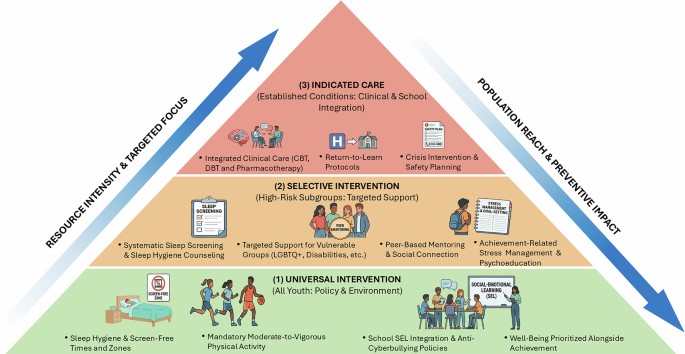
Miguel C, Amarnath A, Akhtar A, Malik A, Baranyi G, Barbui C, et al. Universal, selective and indicated interventions for supporting mental health at the workplace: an umbrella review of meta-analyses. Occup Environ Med. 2023;80:225–36.
Iivari N. Empowering children to make and shape our digital futures – from adults creating technologies to children transforming cultures. Int J Inf Learn Technol. 2020;37:279–93.
Brosnan B, Haszard JJ, Meredith-Jones KA, Wickham S-R, Galland BC, Taylor RW. Screen use at bedtime and sleep duration and quality among youths. JAMA Pediatr. 2024;178:1147–54.
Singh B, Olds T, Curtis R, Dumuid D, Virgara R, Watson A, et al. Effectiveness of physical activity interventions for improving depression, anxiety and distress: an overview of systematic reviews. Br J Sports Med. 2023;57:1203–9.
Morgan H. Using performance assessments instead of high-stakes tests: A promising strategy for a better future. Policy Futures Educ. 2025;23:1275–90.
Cipriano C, Strambler MJ, Naples LH, Ha C, Kirk M, Wood M, et al. The state of evidence for social and emotional learning: A contemporary meta-analysis of universal school-based SEL interventions. Child Dev. 2023;94:1181–204.
Ng ED, Chua JYX, Shorey S. The effectiveness of educational interventions on traditional bullying and cyberbullying among adolescents: A systematic review and meta-analysis. Trauma Violence Abuse. 2022;23:132–51.
Arango C, Díaz-Caneja CM, McGorry PD, Rapoport J, Sommer IE, Vorstman JA, et al. Preventive strategies for mental health. Lancet Psychiatry. 2018;5:591–604.
Soehner AM, Bertocci MA, Levenson JC, Goldstein TR, Rooks B, Merranko J, et al. Longitudinal associations between sleep patterns and psychiatric symptom severity in high-risk and community comparison youth. J Am Acad Child Adolesc Psychiatry. 2019;58:608–17.
Owens J. Insufficient sleep in adolescents and young adults: an update on causes and consequences. Pediatrics. 2014;134:e921–32.
Lunsford-Avery JR, Bidopia T, Jackson L, Sloan JS. Behavioral treatment of insomnia and sleep disturbances in school-aged children and adolescents. Child Adolesc Psychiatr Clin N Am. 2021;30:101–16.
Abreu RL, Kenny MC. Cyberbullying and LGBTQ youth: A systematic literature review and recommendations for prevention and intervention. J Child Adolesc Trauma. 2018;11:81–97.
Iyanda AE. Bullying victimization of children with mental, emotional, and developmental or behavioral (MEDB) disorders in the United States. J Child Adolesc Trauma. 2022;15:221–33.
Gaffney H, Ttofi MM, Farrington DP. Effectiveness of school-based programs to reduce bullying perpetration and victimization: An updated systematic review and meta-analysis. Campbell Syst Rev. 2021;17:e1143.
Hikmat R, Suryani S, Yosep I, Jeharsae R, Pramukti I, Sriati A, et al. The effect of empathy training on bullying behavior in juvenile prisoners: A Quasi experiment. J Multidiscip Healthc. 2024;17:4177–88.
Luthar SS, Kumar NL, Zillmer N. High-achieving schools connote risks for adolescents: Problems documented, processes implicated, and directions for interventions. Am Psychol. 2020;75:983–95.
Lavrijsen J, Soenens B, Vansteenkiste M, Verschueren K. When insecure self-worth drains students’ energy: Academic contingent self-esteem and parents’ and teachers’ perceived conditional regard as predictors of school burnout. J Youth Adolesc. 2023;52:810–25.
Mortimer JT, Zhang L, Wu CY, Hussemann J, Johnson MK. Familial transmission of educational plans and the academic self-concept: A three-generation longitudinal study. Soc Psychol Q. 2017;80:85–107.
Roth JC, Erbacher TA. Developing comprehensive school safety and mental health programs: An integrated approach. New York, NY, US: Routledge/Taylor & Francis Group; 2022.
McCauley E, Berk MS, Asarnow JR, Adrian M, Cohen J, Korslund K, et al. Efficacy of dialectical behavior therapy for adolescents at high risk for suicide: A randomized clinical trial. JAMA Psychiatry. 2018;75:777–85.
Wergeland GJH, Riise EN, Öst LG. Cognitive behavior therapy for internalizing disorders in children and adolescents in routine clinical care: A systematic review and meta-analysis. Clin Psychol Rev. 2021;83:101918.
Albaum C, Irwin SH, Muha J, Schumacher A, Clarissa S, Finkelstein Y, et al. Safety planning interventions for suicide prevention in children and adolescents: A systematic review and meta-analysis. JAMA Pediatr. 2025;179:886–95.
Crockett MA, Núñez D, Martínez P, Borghero F, Campos S, Langer ÁI, et al. Interventions to reduce mental health stigma in young people: A systematic review and meta-analysis. JAMA Netw Open. 2025;8:e2454730.
Tougas AM, Houle AA, Leduc K, Frenette-Bergeron É, Marcil K. School reintegration following psychiatric hospitalization: A review of available transition programs. J Can Acad Child Adolesc Psychiatry. 2022;31:75–92.
Warren EA, Hendrickson N, Tran A, Smith LH. School-family-hospital communication during youth psychiatric hospitalizations due to suicidal thoughts and behaviors. School Ment Health. 2025;17:1300–14.
Iorfino F, Oliveira R, Cripps S, Marchant R, Varidel M, Capon W, et al. A prognostic model for predicting functional impairment in youth mental health services. Eur Psychiatry. 2024;67:e87.
Halfon N, Newacheck PW. Prevalence and impact of parent‐reported disabling mental health conditions among U.S. children. J Am Acad Child Adolesc Psychiatry. 1999;38:600–9.
Knight T, Steeves T, Day L, Lowerison M, Jette N, Pringsheim T. Prevalence of tic disorders: a systematic review and meta-analysis. Pediatr Neurol. 2012;47:77–90.
Fawcett E, Power H, Fawcett J. Women are at greater risk of OCD than men: A meta-analytic review of OCD prevalence worldwide. J Clin Psychiatry. 2020;81:19r13085.
Koenen KC, Ratanatharathorn A, Ng L, McLaughlin KA, Bromet EJ, Stein DJ, et al. Posttraumatic stress disorder in the World Mental Health Surveys. Psychol Med. 2017;47:2260–74.
Wichstrøm L, Hygen BW, Kuss DJ, Stavropoulos V, Skalická V, Rodríguez-Cano R, et al. Structure and stability of internet gaming disorder from childhood to late adolescence: A 5-wave birth cohort study. Addiction. 2026;121:413–22.