
Household cleaning is often a straightforward, if tedious, task. But some particularly tough spots take more effort. When a stubborn mess needs some extra work, tackling it by combining multiple kinds of cleaning products might seem like a good idea.
But is it dangerous to mix cleaning products? According to one common misconception, doing so could create mustard gas, a toxic synthetic chemical weapon notorious for its use in World War I.
Experts told Live Science that it’s not possible to produce mustard gas from these products, but mixing certain chemicals can harm your health.
Latest Videos FromLive Science
That’s because chemical reactions between some cleaning products can produce gases that irritate parts of the body. For example, mixing bleach with products containing ammonia, such as some glass and stovetop cleaners, produces chloramines. When a person breathes in these compounds, they react with water in the body to form hydrochloric acid. That compound causes burning in the eyes, nose and mucous membranes, said Dr. Mike Chary, an emergency physician at Weill Cornell and co-director of webPoisonControl, a digital platform that guides users faced with poison emergencies.
Ammonia is made up of three hydrogen atoms bound to a central nitrogen atom. When it reacts with bleach, chlorine atoms from bleach can replace one or more of the hydrogen atoms to form chloramines, which are harmful or deadly in high enough concentrations, said Delphine Farmer, an atmospheric chemist at Colorado State University.
“Chloramines are certainly present in a lot of environments,” Farmer told Live Science. “We often see them indoors if you just clean with bleach, or you’ll get them out of pools. But when you actually mix cleaning products, you can make enough chloramines that they can kill you.”
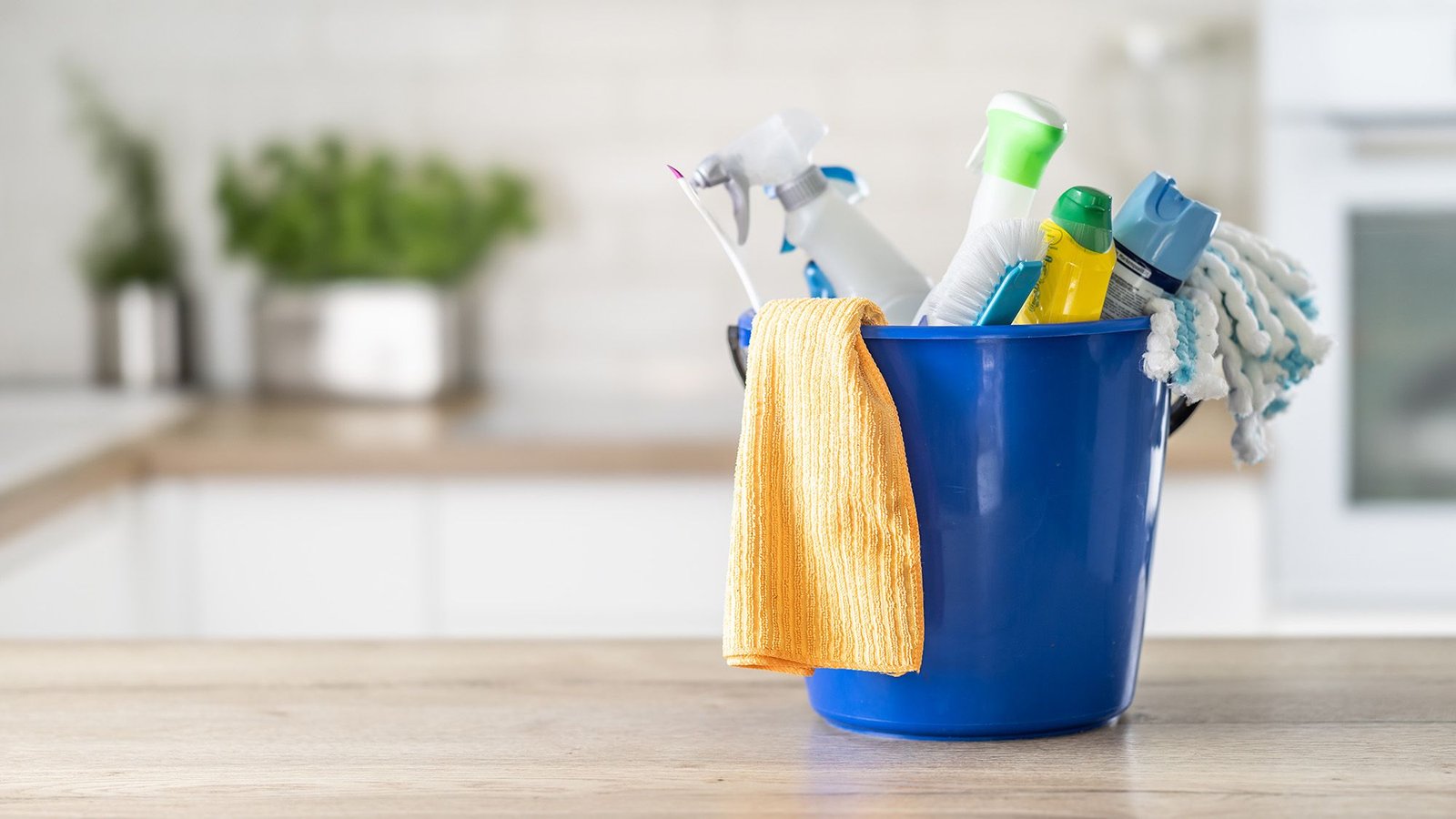
Experts advise not to mix bleach with other cleaning products.
(Image credit: MarioGuti via Getty Images)
Bleach and ammonia aren’t the only compounds that should be kept apart. Mixing bleach with an acid can produce chlorine gas, which irritates the eyes. The gas smells like a swimming pool, Chary said.
Curious about Life’s Little Mysteries?
Feed your curiosity with an exclusive mystery every week, solved with science and delivered direct to your inbox before it’s seen anywhere else.
But it’s not possible to produce mustard gas just by mixing these products. Mustard gas contains sulfur, and although some cleaners have sulfur in them, mustard gas typically doesn’t form at room temperature and pressure, Chary told Live Science.
How dangerous an exposure becomes depends on a few factors, Chary added. The concentration of a hazardous byproduct will be smaller in a larger, well-ventilated room than in a smaller room with no airflow. Existing health conditions, such as asthma or lung disease, could also exacerbate the effects of exposure, Chary said.
Household cleaners also tend to have low concentrations of these chemicals so that any accidental reactions don’t produce as much of the byproduct.
“Household bleach is below a certain concentration,” Chary told Live Science. “That’s primarily designed so that if it gets on you, it isn’t going to cause as much damage as industrial-strength bleach. What that also means is that there’s less of it per unit to undergo chemical reactions.”
If someone mixes any of these chemicals, they typically know right away that there’s a problem. Within a few minutes, they might start coughing, their eyes might begin to water, or they might notice a strong odor.
“Most of these things will elicit an aversive response,” Chary said. “If you feel something’s off, pay attention to that premonition.”
Both Chary and Farmer recommended opening windows and moving outside to fresh air if you accidentally mix cleaning products and notice these effects. Chary noted that if a person requires medical treatment, an exposure to chloramines is usually treated similarly to an asthma attack: Doctors may give medicines such as albuterol to open up the airways, and they’ll monitor patients’ oxygen saturation for signs of lung injuries.
To avoid accidentally mixing chemicals that can create something hazardous, Farmer recommended storing oxidizing cleaners, such as bleach and hydrogen peroxide, separately from other cleaning products. If you must use different kinds of cleaners to tackle a stubborn stain, wait until you can’t smell the first one anymore before using the second, she added .
Sometimes, you don’t need to use heavy-hitting products at all. “I’m a big fan of reducing exposure to those strong oxidants,” Farmer said. “If you can use a simpler compound, that’s better. Simple soap and water is amazing.”
This article is for informational purposes only and is not meant to offer medical advice.
TOPICS