
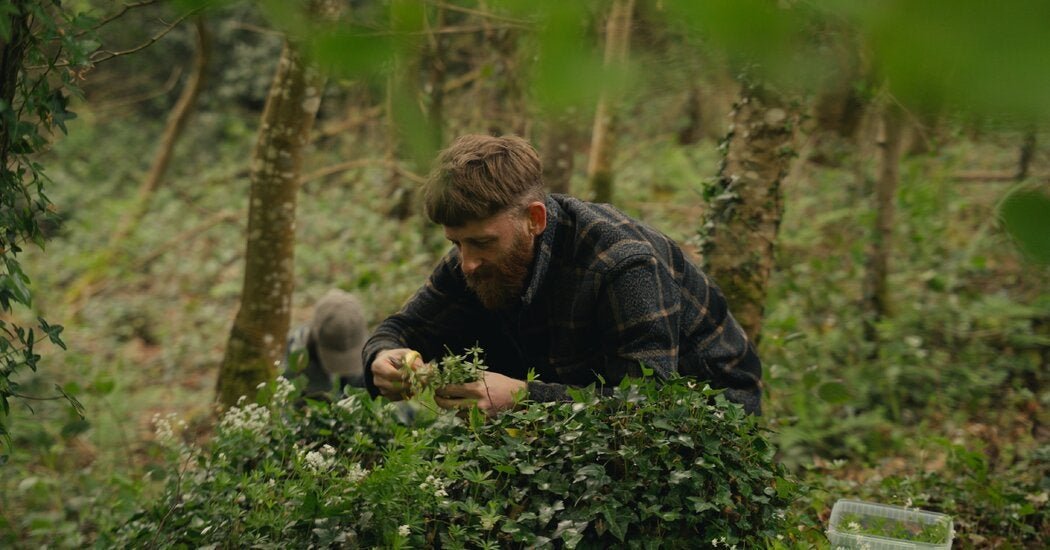
IT’S BEEN MORE than 20 years since the Danish chefs Claus Meyer, René Redzepi and Mads Refslund sailed through sea caves in the Faroe Islands and explored geysers in Iceland in search of culinary inspiration found in natural habitats. Many of their discoveries — sea buckthorn berries that taste like tart oranges, citrusy wild thyme and intensely flavorful seaweed — made their way onto the menu at Noma, which opened in 2003 in Copenhagen and spurred the New Nordic food movement, granting the figure of the chef-forager a kind of exalted status.
Humans, of course, have foraged for food and medicine since the dawn of existence, but during the pandemic many restless home cooks decided they’d try their hand at being hunter-gatherers too. Traffic to Falling Fruit, a crowdsourced online map of edible plants around the world, rose 40 percent from 2019 to 2020, while mushroom picking in state and national parks in the United States has become so popular that it’s now banned in a growing number of places over concerns that a surge of off-trail visitors could cause environmental degradation. The more beneficial approach might be to seek out less-accessible locales, where living off the land has endured as part of everyday life.
Fortunately for wild-food enthusiasts, more and more country hotels, nature retreats and remote restaurants around the world — often the types of places that have featured local ingredients on their menus for years — are offering foraging excursions. The difficulties of the outings vary widely, but some, like those at Cuyama Buckhorn, a 1950s roadside motel turned desert resort in California’s Cuyama Valley, are tailored to more physically ambitious visitors.
Sam Seidenberg, 38, a backcountry expert and the hotel’s head bartender, began leading hikes on private trails next to Los Padres National Forest in 2024 to look for acorns, yerba santa, manzanita berries and wild purple sage. The most challenging involves scrambling over fossil-covered rock walls and maneuvering around spiky vegetation for five hours. “It’s rough country, and you’re gonna bleed a little bit for it and you’re definitely going to sweat,” says Seidenberg, “but if you work for it, some of the most beautiful untouched places I’ve seen in my life are back in that forest.” At the end of each trek, he sets up an alfresco bar and teaches the guests to muddle the fruit and herbs they found to make their own mocktails.