
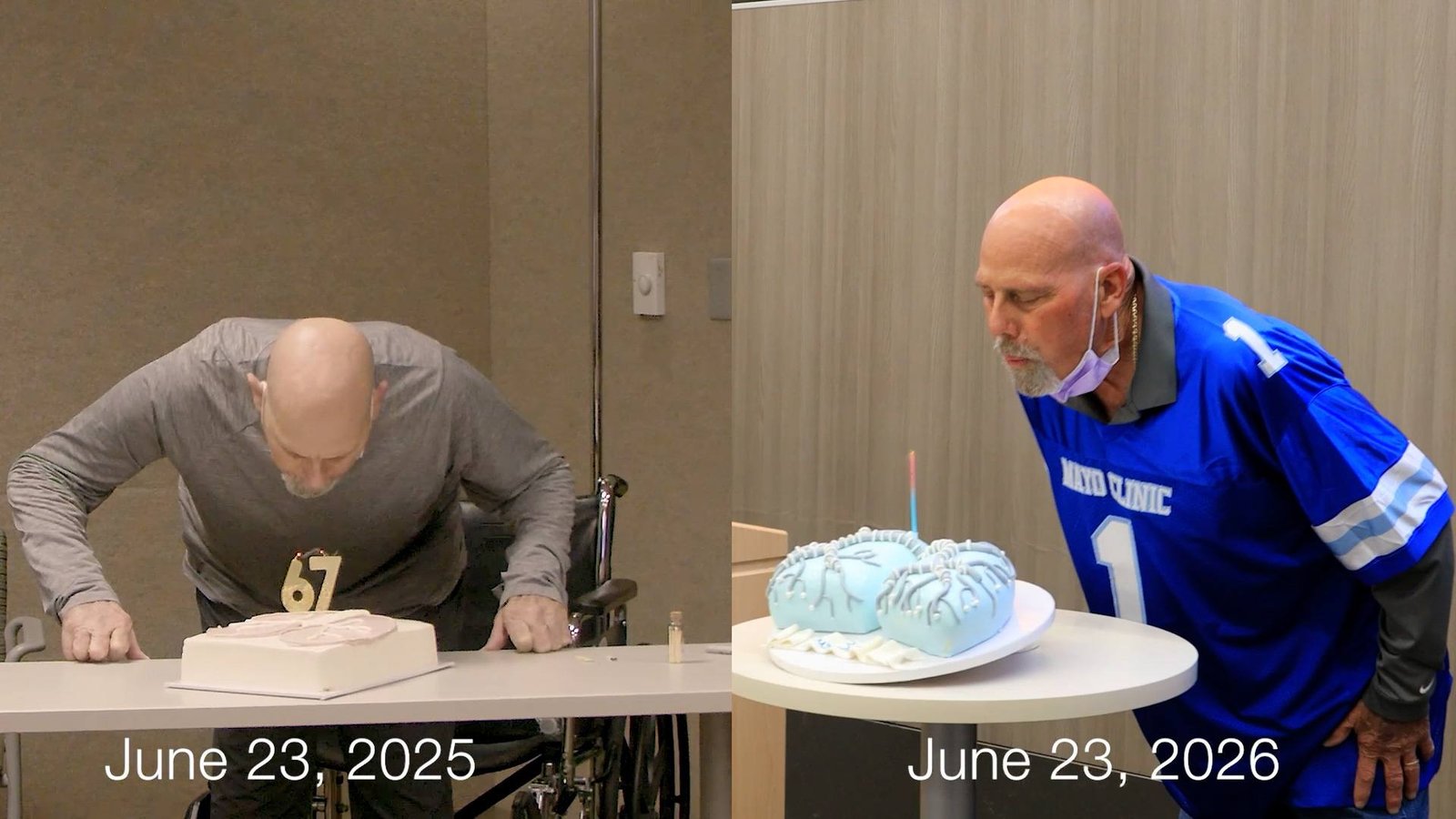
One year ago, Craig Scherer made history. He received a lung transplant and a second chance at life.
On May 30, 2025, the Fountain Hills resident became the first patient to receive a lung transplant through Mayo Clinic’s new Lung Transplant Program. Craig had been living with chronic obstructive pulmonary disease (COPD), a progressive lung condition that affects more than 16 million Americans. Although treatments can help manage symptoms, the disease has no cure and gradually makes breathing more difficult over time.

For Craig, the journey to transplant was years in the making. Barely able to walk 15 feet while using an oxygen tank, Craig’s life had become very limiting.
A former flooring installer, he spent decades working in environments with airborne dust and particles. He also had a family history of COPD. As his disease progressed, everyday activities became increasingly difficult. Breathing became a challenge, and simple tasks required more energy than they once had. Eventually, doctors determined a lung transplant offered the best path forward.
Now, Craig is celebrating more than a milestone. He’s celebrating what he calls his “lung anniversary,” one year since the transplant that allowed him to breathe easier, regain his independence and return to the activities he loves. “I’m back to doing nearly everything I did before COPD,” he says. “I was eager to get back to my life, but getting in shape takes time. I’m happy to say I’ve just started training for the Thanksgiving Turkey Trot.” He’s also now back at work as a handyman and once again doing many of the activities COPD had taken away from him. The moments he now enjoys, whether working, spending time with family or simply staying active, are reminders of how much has changed in a single year.
Journalists: Broadcast-quality sound bites of Craig Schere and Dr. D’Cuhna are available in the downloads at the bottom of the posts. Name super/CG: Jonathan D’Cuhuna, MD/Surgical Director of the Mayo Clinic Lung Transplant Program in Arizona/Mayo Clinic.
Throughout his recovery, Craig says he has remained mindful of the donor whose gift made his transplant possible. “The life I have now is possible because of my donor’s generosity. I celebrate both my birthday and the day of my transplant because what I can do now is remarkable, and it’s only possible because of that gift,” says Craig.
The historic procedure marked not only a turning point in his personal health journey but also a significant milestone for transplant care in Arizona. Some neighboring states do not offer lung transplant programs, meaning patients often must travel far from home, family and support networks to receive care. The Arizona program helps address that gap by allowing more patients to remain closer to home throughout evaluation, transplant surgery and recovery.

While Craig was the first patient in the new program, he is no longer the only one. In its first year, Mayo Clinic’s Arizona lung transplant program brought together a multidisciplinary team of medical and surgical experts to broaden access to care for patients in the region with advanced lung disease.
Dr. Johnathan D’Cunha is the chair of Cardiothoracic Surgery and the surgical director of the Mayo Clinic Lung Transplant Program in Arizona. He performed Craig’s transplant. “Craig is now living out loud because he has so much hope ahead. Mayo Clinic Transplant Center is one of the largest and most comprehensive transplant programs in the world, which allows us to care for the most complex and serious patients. The program’s success reflects the close collaboration of our Arizona team and strong coordination across Mayo Clinic Transplant Center,” Dr. D’Cuhna says.
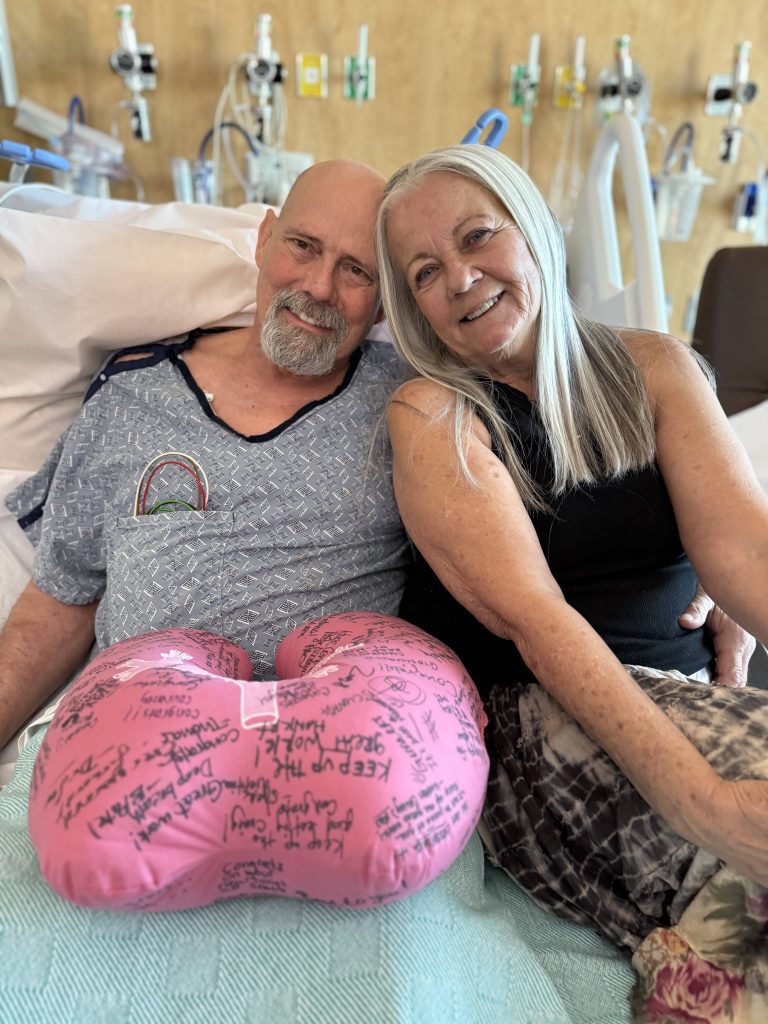
For Craig, however, the anniversary is about gratitude.
“I’m grateful to have this time with my family, my 14 grandchildren and six great-grandchildren, and look forward to what’s next for me,” says Craig. As he celebrates his first lung anniversary, Craig’s story is a reminder of what transplantation makes possible: not just more years of life, but the opportunity to fully live them.
Learn more about lung transplantation.
Related