
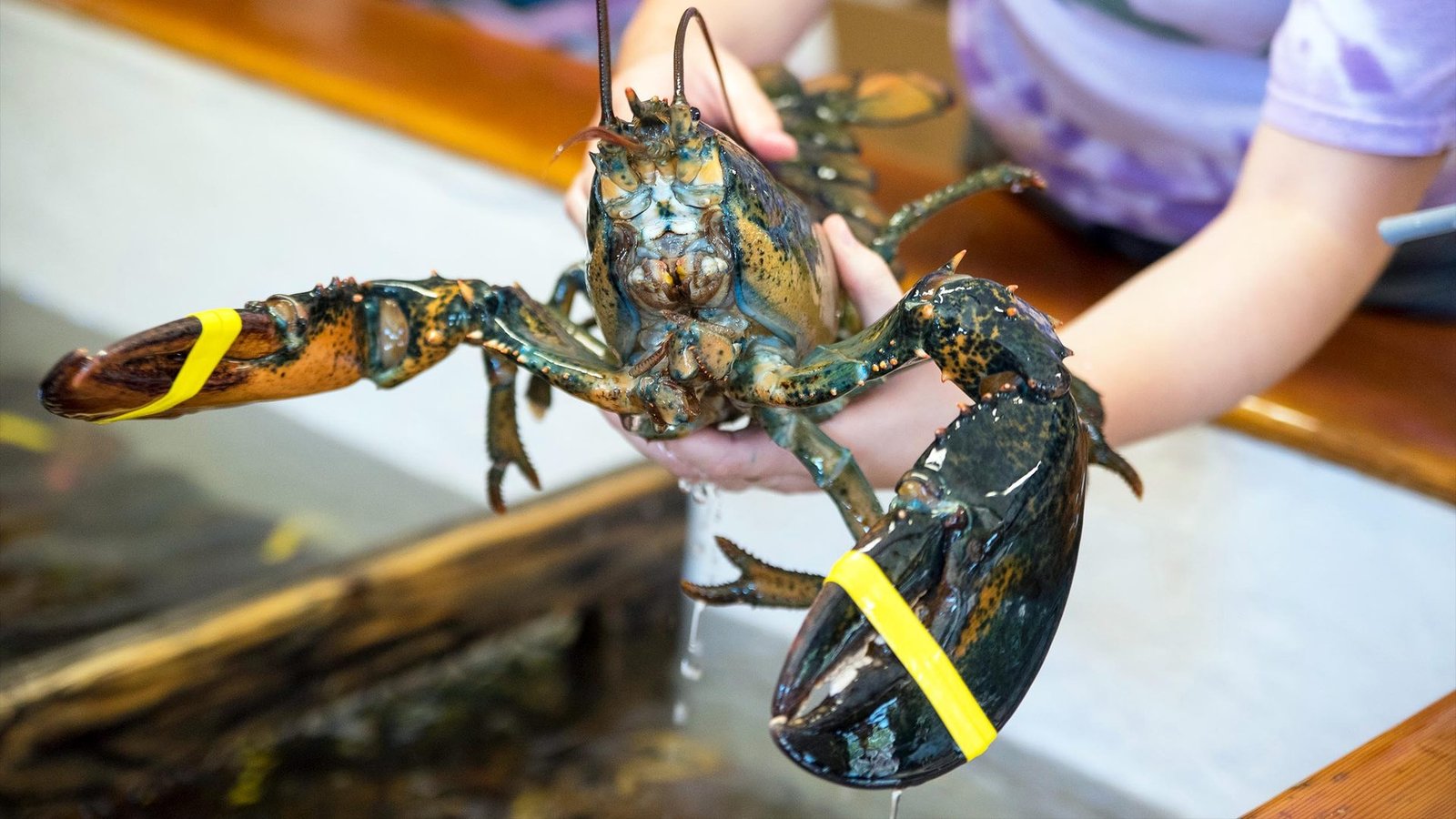
Aspirin and lidocaine cut lobsters’ escape response to electric shock, adding evidence that crustaceans feel pain and raising questions about how we treat them.
Aspirin and lidocaine, two drugs sold for human pain, cut the escape response of Norway lobsters to an electric shock, according to a paper from the University of Gothenburg.
Untreated lobsters flipped their tails about ten times during a ten-second shock. Most of the drugged animals did not flip at all.
The paper appeared in April in Scientific Reports. It is the first published test of aspirin on any decapod crustacean, the group that includes crabs, lobsters, shrimp and crayfish.
Why painkillers count as evidence
Researchers who study animal pain rely on a set of criteria rather than any single test, because no animal can report what it feels. Even horses hide pain well enough that researchers now train software to catch it.
One criterion on the list concerns drugs. When a painkiller that works in humans also reduces an animal’s reaction to something harmful, the reaction most likely involves pain-sensing nerves, not just a motor reflex.
Lynne Sneddon, professor of zoophysiology at the University of Gothenburg and senior author on the new paper, co-wrote the 2014 review that laid out those criteria.
Her lab published a separate study in late 2024 using electrodes on shore crabs. Those recordings picked up brain activity while researchers pressed on soft tissue or applied dilute acetic acid.
That work prompted calls to ban live boiling. It showed a signal arriving in the crab brain. The lobster study tested whether a drug could block the behavior that follows.
What the lobsters did
A commercial supplier north of Gothenburg delivered 105 male Norway lobsters, Nephrops norvegicus, in August 2022. Average weight was about 3.7 ounces (106 grams).
The lab held them for three weeks in tanks at 50°F (10°C), fed them chopped supermarket mussels three times a week, and gave each one a length of PVC pipe to use as a burrow. After that, every lobster moved to its own 24-inch (60-centimeter) tank for a further seven days of settling in.
There were seven groups of 15. One group sat undisturbed as a control. Three groups went through the full handling routine but got no shock, and of those, one had lidocaine in its tank water, and one got an aspirin injection. The remaining three groups received the shock, with no drug, with lidocaine, or with aspirin.
The shock lasted ten seconds. It was 50 Hz alternating current at 9.09 volts per meter, passed between two steel plates in an 11-liter (2.9-gallon) tank. Lidocaine went into the home tank water at 80 milligrams per liter one hour before testing.
Aspirin was injected by needle at the base of a walking leg, at 10 milligrams per kilogram of body weight, also one hour before.
All 13 untreated lobsters in the shocked group flipped their tails. Seven of 13 flipped in the lidocaine group. Three of 13 flipped in the aspirin group, and in both drug groups, most that did flip did so fewer times.
No lobster that skipped the shock flipped even once. Six recordings were corrupt, so the second observer scored 13 animals per group instead of 15.
Aspirin came with side effects
The lidocaine animals groomed a bit more in the first hour after the drug went into their water, and the paper describes that bump as not statistically significant. Their lactate and glucose readings were in line with the controls.
The team settled on 80 milligrams per liter after a pilot run, which the paper does not report in detail, showed lobsters becoming sedated at 120 milligrams per liter and above.
Aspirin-injected animals groomed their legs and claws more than any other group before the shock happened. Two hours after testing, they had more lactate in their hemolymph, the crustacean version of blood. A GABA receptor gene in the abdominal nerve ganglia also showed lower expression in those animals.
The researchers wrote that they cannot separate the drug from the needle or from the ethanol used to dissolve the aspirin, since the study had no vehicle-only injection group. They cited time constraints and listed the missing control as a priority for follow-up.
The shock itself produced no lasting effect that the team could measure. Activity returned to pre-test levels within two hours. Blood glucose did not change in any group. Handling alone, meaning the bucket trip to the shock tank and back, raised activity about as much as the shock did.
The electric stunning question
Norway, New Zealand, Austria, Switzerland and some Australian jurisdictions already ban boiling lobsters alive, according to the paper.
The United Kingdom recognized decapods as sentient in 2022 and is weighing slaughter rules. Processors in those markets have been looking at electric stunning as the replacement for the boiling pot.
The field strength in the Gothenburg experiment, 9.09 volts per meter, is far below what commercial stunners use. The authors cite a 2010 trial on edible crabs that ran 530 volts per meter for the first second and then 170 volts per meter for two minutes.
Their point is that even the weak field excited what looked like pain pathways. A stunner set too low, or one that ramps up slowly, could hurt the animal before it loses consciousness.
Norway lobster, sold as scampi or langoustine, is one of Europe’s most valuable shellfish catches. On the other side of the Atlantic, the American lobster supports a fishery worth roughly two billion dollars a year, already under pressure from warming water.
“Painkillers developed for humans also work on Norway lobsters,” said Sneddon. She said the result is a reason to treat the killing of crustaceans with the same care as the killing of chickens and cows.
Gentler lab work too
The paper also addresses researchers who use decapods in experiments. Campaigns in several countries want these animals covered by the laws that require pain relief for laboratory animals. The Gothenburg team suggests lidocaine in the water as a workable option during invasive procedures.
Decapods show up in a lot of research unrelated to welfare. Recent examples include a study on how crabs came to walk sideways and a museum survey of North America’s largest crayfish. Analgesia is rarely part of protocols like that.
Sneddon told the university’s press office that nobody can yet name the most humane way to kill a crustacean, and that more experiments have to come first if people keep eating them.
Her group wants to record directly from nerves during a shock. It also plans to test field strengths closer to the ones commercial stunners use.
The full study was published in the journal Scientific Reports.
How to get involved
Support Crustacean Compassion if you’re interested in law and retail. The U.K. charity scores seafood companies on decapod welfare and lobbied for the 2022 sentience recognition.
Follow the Shrimp Welfare Project if you want to see stunning technology reach farms. The group buys electrical stunners for shrimp producers in exchange for welfare commitments.
Read the Aquatic Life Institute if you prefer certification work. The institute pushes aquaculture standards bodies to add welfare criteria for crustaceans and other aquatic animals.
Donate to the Humane Slaughter Association if you want to fund the science directly. The association has paid for research into effective stunning methods for crustaceans.
Ask your fishmonger or restaurant how they kill their lobsters and crabs. Retailers often track those questions.
—–
Like what you read? Subscribe to our newsletter for engaging articles, exclusive content, and the latest updates.
Check us out on EarthSnap, a free app brought to you by Eric Ralls and Earth.com.
—–