
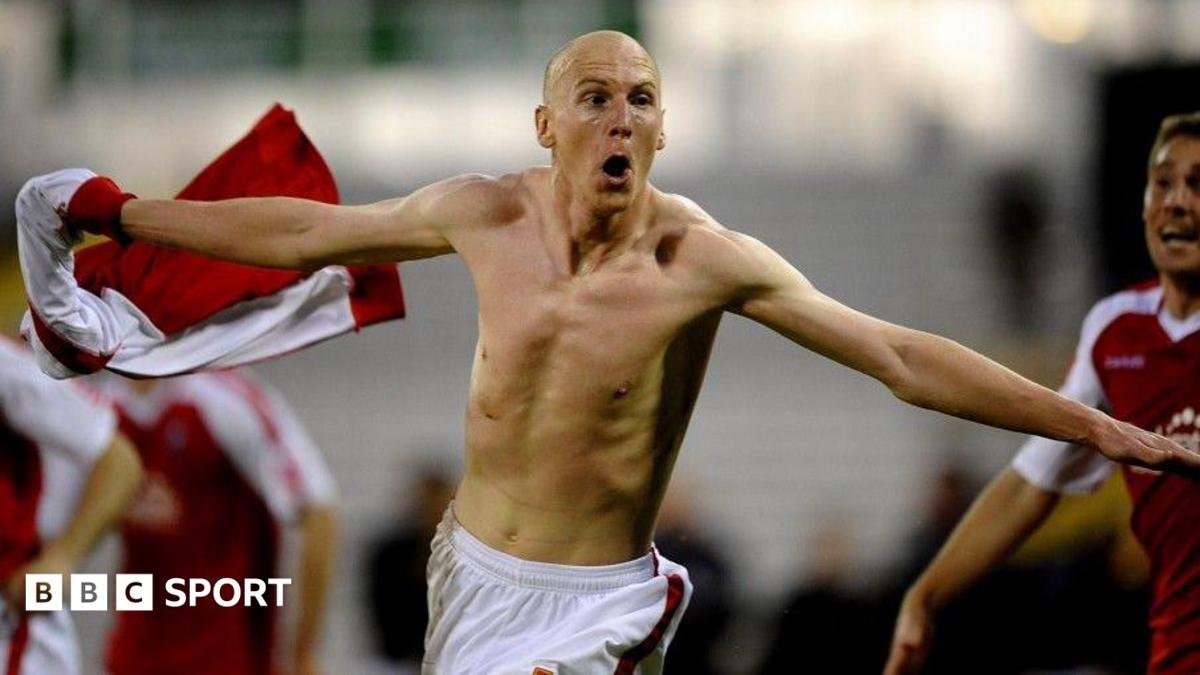
Ellison grew up in the suburb of Anfield, about a five-minute walk from Liverpool’s famous ground. He represented Liverpool schoolboys as a youngster, as well as playing for the club’s centre of excellence alongside Michael Owen and Steven Gerrard.
As a child, he would walk the short distance to Liverpool’s ground on matchdays and stand outside the Kop, waiting for stewards to open the gates 20 minutes from the end of games to allow fans looking to make an early getaway to leave.
“While they were leaving, I’d run into the ground and catch the end of the match,” says Ellison. “I used to love watching John Barnes and Ian Rush.”
He dreamed of playing for the Reds but while Owen and Gerrard were kept on, Ellison was let go at the age of 15.
“I remember receiving the letter from Liverpool,” he recalls. “It just said: ‘thanks for all your effort over the last seven years and good luck in the future.’
“It was heartbreaking, because my first thought was ‘that’s it, I’m never going to make it as a footballer now’.
“My mum said: ‘roll your sleeves up, lad. Keep working hard and your chance will come’. It’s like most things in life; you only get out what you put in, and I never gave up when I was 15.
“That rejection spurred me on and made me want to prove to people that I was good enough to become a professional one day.”
After a spell in Sunday League football, Ellison got a break at Southport, who were then playing in the fifth tier under Ronnie Moore. Aged 18, he made his debut off the bench in a 1-0 home defeat by Telford in March 1997.
Ellison played a further three times before the end of the season and remembers receiving £65 in expenses.
Moves to Chorley and then Conwy United in the League of Wales followed before he started getting noticed for the amount of goals he was scoring at Altrincham – 23 in 54 league games.
“I learned the hard way,” Ellison adds. “I was playing part-time and working full-time on a building site and delivering furniture – three-piece suites, beds, wardrobes, the lot.”
Then, in 2001, came a potentially life-changing move to Leicester, who had won the League Cup the season before under Martin O’Neill.
“They offered me £650-a-week and my agent argued for more,” recalls Ellison.
“He was sent out of the room and I was spoken to alone and told to sign the offer or leave. I got £50 more. My agent argued that I was on similar money working full-time and playing part-time.
“But growing up as a kid in Anfield, all I ever wanted to be a was a full-time player.”