
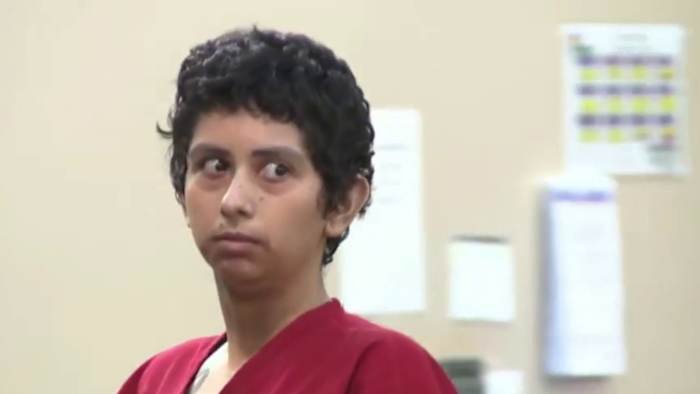
SAN ANTONIO – A newly released Child Protective Services fatality report offers new details about concerns involving Marlene Vidal’s mental health and stability in the year before she was charged with killing her two children and setting a car on fire with them inside.
Aleeza Elena Vidal, 6, and Adrian Akeel Vidal, 5, were found in a burning car in San Antonio on May 15. Police later reported they had been stabbed before being put in the burning car.
The new CPS report includes information from CPS visits and assessments conducted June 5 and June 23 of the previous year. Those assessments followed an incident in which Vidal had what was described as a psychotic breakdown while driving with the children in the car.
She was temporarily hospitalized while the children lived with an aunt, and they were returned to Vidal.
According to the report, Vidal was pulled over in June 2025 and was “observed screaming, crying, whispering, and hyperfocused on God and religion.”
CPS also documented that officers initially believed Vidal may have had drugs on her, but “the K-9 did not find anything.” The report said Vidal admitted to smoking marijuana or synthetic marijuana at times while caring for the children.
Some details in the report mirror what Vidal’s longtime friend, Frances Ramos, told KSAT in an exclusive interview in May, days after the children were found dead.
“She was telling me that she was seeing things, that she would see her daughter possessed,” Ramos said at the time.
The new report also includes a statement from a family member who had spoken with Vidal by phone. According to CPS, Vidal was “screaming” that people were trying to burn down her house and said that “if anyone was going to hurt” the children, “it would be done by her.”
The report includes additional concerns about the children’s well-being. A therapist reported on June 18 that Vidal’s autistic, nonverbal son “appeared malnourished and fatigued” during a session near the end of May.
However, CPS investigators later wrote that the children had “no injuries to their bodies” and that there were no concerns with their hygiene or the condition of the home.
Ramos, who had seen Vidal and the kids days before they were found dead, told KSAT the children looked and seemed healthy despite the fact that Vidal had “deteriorated mentally.”
Another newly released detail from the report involves an outcry made by Vidal’s 6-year-old daughter to an EMS worker during the traffic stop. The report states the child said she had been sexually abused by a family member and that her brother and Vidal were also being abused.
CPS said in its own assessments that month it was not able to confirm the abuse or obtain the same outcry.
After these June assessments, CPS listed the children as “safe” and categorized the family’s risk level as “moderate.” The family was offered additional services and referrals, but the report said Vidal declined them.
KSAT reached out to Vidal’s attorney, Daniel De la Garza, for a response to the newly released report.
His statement Monday said, “The system failed Marlene, Aleeza, and (Adrian) Akeel and we will continue working hard to ensure a fair and just outcome for Marlene — and everyone involved — that includes continuous mental health treatment for the rest of her life.”
KSAT also asked CPS whether the agency had opened a case involving Vidal this year before the alleged murders, after family and friends told KSAT they had made additional outcries and that a new case had been opened.
CPS said it could not confirm that information, saying the fatality report contains everything that is publicly available and that the agency cannot legally comment on investigation details.
Vidal remains charged in connection with her children’s deaths. The criminal case is expected to continue through the court system.
At a hearing in the case Wednesday, prosecutors said they were still uncertain if they’ll seek death penalty.
Anyone struggling with mental health can reach out to the National Alliance on Mental Illness HelpLine by calling 800-950-NAMI (6264), texting NAMI to 62640, emailing helpline@nami.org, or chatting online.
More coverage of this story on KSAT:
Copyright 2026 by KSAT – All rights reserved.