
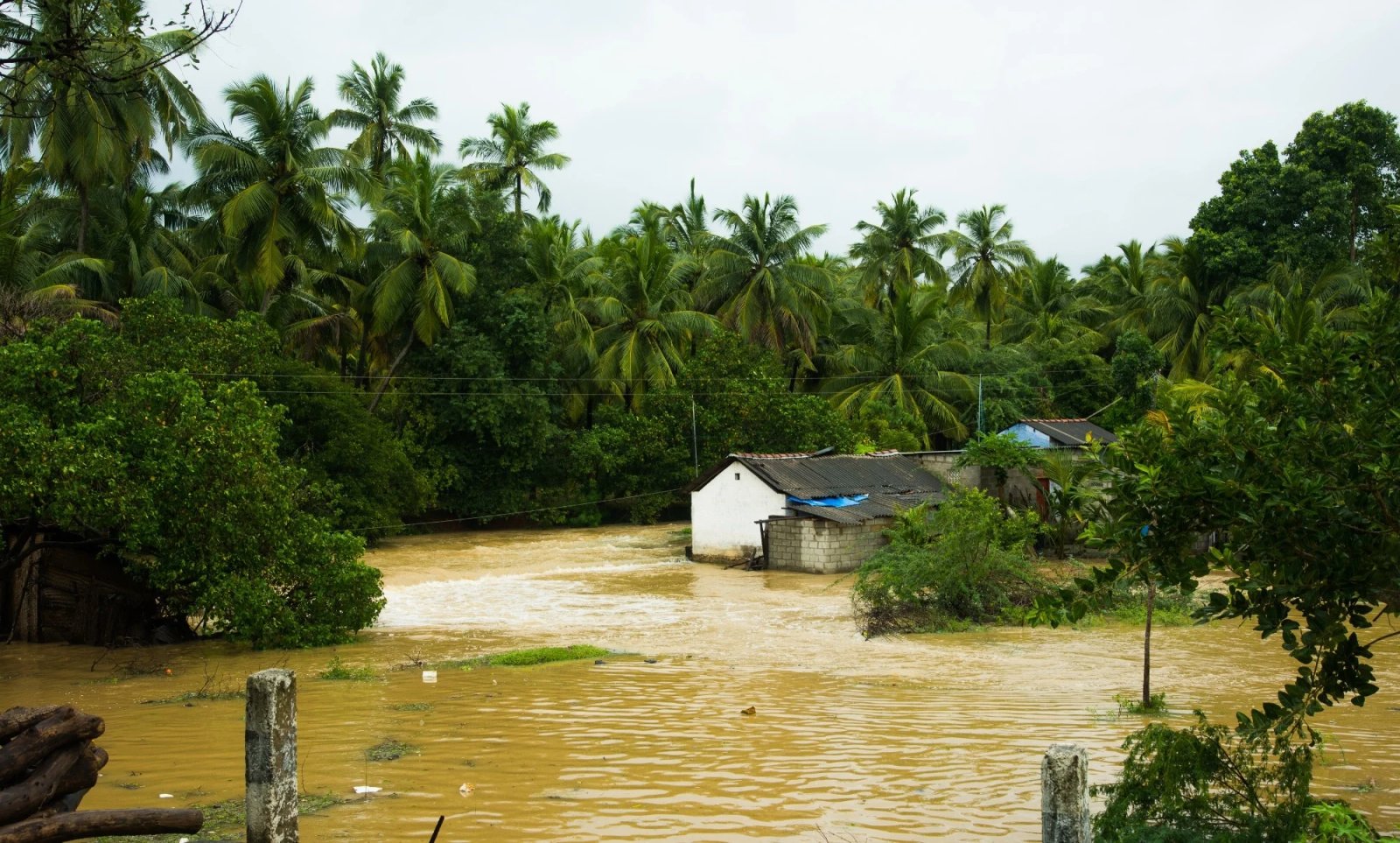
A multi-region study shows that local wind and rainfall thresholds may be critical for detecting the risks of diarrheal disease after tropical cyclones.
Study: Heterogeneous effects of tropical cyclones on diarrheal diseases across multiple Asian regions by cyclone definitions. Image Credit: Alex Alderic Jero / Shutterstock
In a recent article in press in the journal npj Natural Hazards, a group of researchers evaluated how different tropical cyclone exposure definitions influence associations with diarrheal disease mortality and morbidity across multiple Asian regions using harmonized data and standardized analytical methods.
Tropical cyclones affect millions of people in Asia each year, disrupting daily lives due to destructive winds, floods, and heavy rains. In addition to immediate damage, they can contaminate water sources, disrupt sanitation services, and increase the risk of diarrheal diseases, particularly in regions with poor access to water, sanitation, and hygiene (WASH) services.
Although some previous studies have found links between tropical cyclones and diarrheal diseases, differences in cyclone definitions, disease outcomes, and study methods have made comparisons difficult. A better understanding of these variations is essential for developing effective public health preparedness strategies. Further research is needed to identify the most appropriate exposure definitions for different regional settings.
About the study
The researchers analyzed harmonized weekly diarrheal disease data collected through the Climate Change and Enteric Diseases Research Project (ClimED), an international collaborative initiative coordinated by the University of Tokyo. The researchers acquired mortality and morbidity data from ten Asian regions covering the period from 2000 to 2021.
The mortality data came from India, Malaysia, the Philippines, and Thailand, whereas morbidity data came from Bangladesh, China, Japan, South Korea, the Philippines, Thailand, Taiwan, and Vietnam. The spatial resolution of the data differed from region to region depending on available data, ranging from subnational administrative units to national-level data.
Researchers measured tropical cyclone exposure using wind-based metrics, rainfall-based metrics, and combined wind-rainfall metrics. Wind exposure was classified into Tropical Depression (TD), Tropical Storm (TS), and Typhoon (TY) based on Maximum Sustained Wind (MSW). Rainfall exposure was defined using region-specific percentile thresholds from the 85th to the 99th percentile (R85-R99). Combined exposure metrics incorporated both wind intensity and rainfall thresholds.
The researchers estimated associations between tropical cyclone exposure and weekly diarrheal disease outcomes using Two-Way Fixed Effects (TWFE) models while accounting for regional and temporal variation. Sensitivity analyses tested alternative model specifications, rainfall thresholds, and meta-analytic approaches.
Study results
The analysis revealed considerable variation in tropical cyclone exposure across the ten Asian regions. Exposure frequencies differed according to the definition used, with TS exposures occurring more frequently in Japan, South Korea, and Taiwan, whereas TY exposures were higher in Japan, South Korea, Taiwan, and the Philippines than in other regions. Applying rainfall thresholds reduced the number of exposure weeks, particularly for TD events, while combined wind-rainfall definitions identified fewer but more intense exposure periods. Overall, the exposure definition changed the number of tropical cyclone weeks recognized in the different regions.
The associations were not statistically significant in most cases despite showing different outcomes among India, Malaysia, the Philippines, and Thailand for diarrheal disease mortality. The estimates obtained across all tropical cyclone definitions showed wide 95% confidence intervals (CIs), suggesting substantial uncertainty. Based on wind-related definitions, there was a slight reduction in mortality risk with higher cyclone intensity in the Philippines, whereas rainfall-based definitions yielded positive estimates for India but mostly negative for Malaysia, the Philippines, and Thailand. The estimates obtained from the combined wind-rainfall definitions were mostly negative but also statistically non-significant for the Philippines.
The results for morbidity showed higher levels of variability across regions than those for mortality. Significant increases in diarrheal disease risk were observed in China, South Korea, the Philippines, and Taiwan, whereas Bangladesh, Japan, and Thailand showed significant decreases under selected exposure definitions. Wind-based analyses identified significantly higher risks for TS exposure in China and Taiwan and for TY exposure in the Philippines. In contrast, Japan showed significant reductions across all wind-based categories, while Thailand experienced a significant decrease following TS exposure.
Rainfall-based metrics showed that Taiwan experienced an increase in morbidity risks at rainfall thresholds R85, R90, and R95, while Bangladesh, Japan, and Thailand displayed a decrease in risks under selected rainfall thresholds. In addition, combined wind-rainfall metrics also highlighted regional differences, with increased risks under selected TY-rainfall combinations in South Korea, consistently elevated risks across all TY-rainfall definitions in the Philippines, and increased risks across all TD-rainfall definitions in Taiwan.
The examination of various morbidity data sources showed that Taiwan consistently produced much stronger associations with its morbidity statistics based on surveillance and outpatient records than hospitalization data.
Assessment of the annual attributable number (AN) of diarrheal diseases showed minimal and statistically insignificant mortality burdens across all regions. In contrast, morbidity burdens differed markedly, as Taiwan experienced the largest attributable burden across several exposure definitions, particularly rainfall-based and TS-related exposures. Japan recorded mostly reduced attributable morbidity, especially under wind-based definitions, while South Korea showed fluctuations depending on the exposure definition. China and Thailand witnessed low but significant changes, while sensitivity analyses showed largely consistent findings, although morbidity estimates were sensitive to some fixed-effect model choices.
Conclusion
The researchers concluded that associations between tropical cyclones and diarrheal diseases differed substantially across Asian regions and depended on both the tropical cyclone exposure definition and the type of diarrheal outcome evaluated. While mortality associations remained largely insignificant, morbidity results demonstrated considerable regional heterogeneity, with Taiwan showing the greatest attributable disease burden.
This suggests that the use of locally contextualized definitions of tropical cyclone exposure may help to better identify health risks and improve WASH preparedness. These findings support integrating contextual exposure measures into early warning systems, which may contribute to better planning and public health responses across the various regions vulnerable to tropical cyclones.
The study also had several limitations. The use of weekly data may have obscured short-term effects, and assigning gridded exposure data to administrative areas may have introduced exposure misclassification. Data availability also limited some regional analyses, with Bangladesh represented by Dhaka district and Malaysia analyzed at the national level. In addition, diarrheal disease case definitions varied across regions, and the exposure metrics did not directly capture related hazards such as flooding or storm surge.
Journal reference:
- Lin, S. Y., Han, C., Ng, C. F. S., Teyton, A., Letellier, N., Madaniyazi, L., Kim, Y., Jung, C.-R., Phung, V. L. H., Chua, P. L. C., Tai, K. H., Park, J., Yang, Z., Faruque, A. S. G., Otto, C., Huang, C., Phung, D. T., Tantrakarnapa, K., Salazar, M. A., Tajudin, M. A. B. A., Brown, P., Kliengchuay, W., Delfino, R. J. P., Benmarhnia, T., & Hashizume, M. (2026). Heterogeneous effects of tropical cyclones on diarrheal diseases across multiple Asian regions by cyclone definitions. npj Natural Hazards. DOI: 10.1038/s44304-026-00246-z, https://www.nature.com/articles/s44304-026-00246-z