
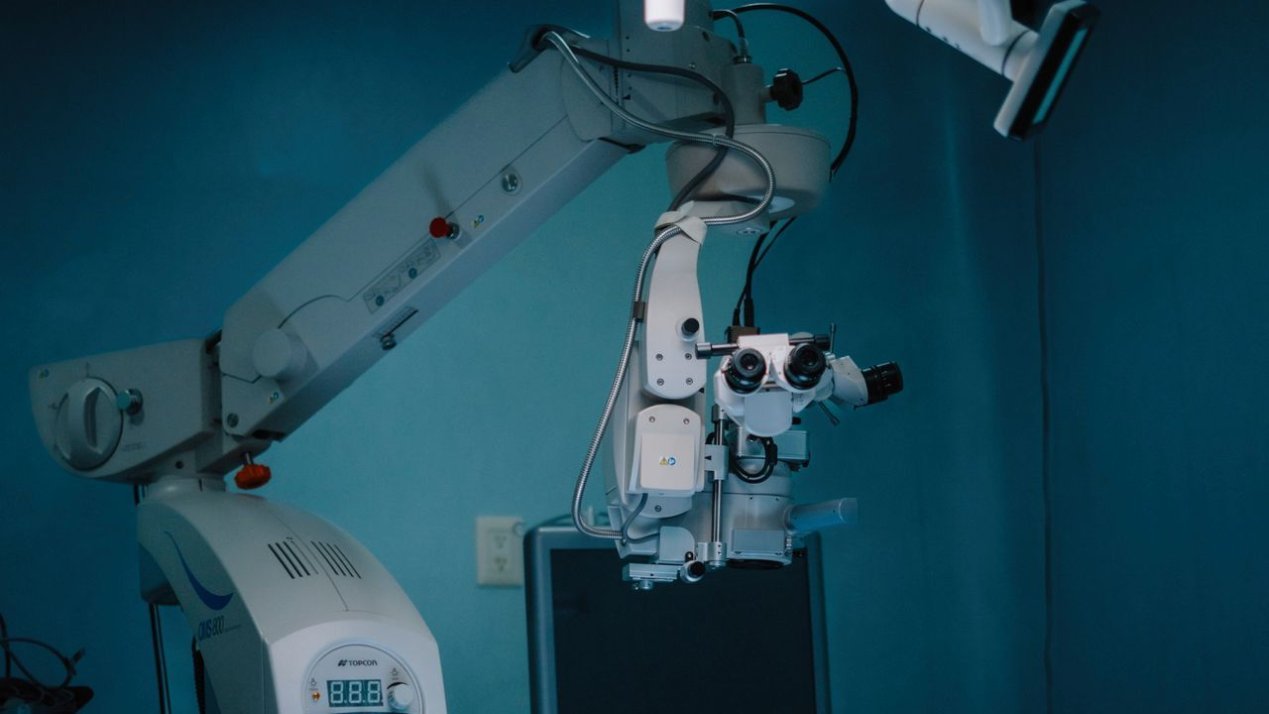
European medical technology primes such as Royal Philips and Siemens Healthineers are leveraging Mexican manufacturing hubs—anchored in Baja California, Nuevo León, and Jalisco—to insulate supply chains from global tariffs while serving both North and South American healthcare markets. Supported by Mexico’s US$22 billion medical device export base, the modernized EU-Mexico Global Agreement eliminating tariffs on 99% of goods, and preferential USMCA market access, European manufacturers are combining transatlantic sub-assemblies with high-precision Mexican production and cold-chain logistics. Simultaneously, regulatory convergence between COFEPRIS, European agencies such as Belgium’s FAMHP, and Brazil’s ANVISA enables companies operating in Mexico to streamline compliance and accelerate commercial distribution across South America.
Facing persistent supply chain volatility, tariff escalations, and rising geopolitical friction, European medical technology primes are fundamentally redesigning their global production footprints.
Rather than supplying the Western Hemisphere exclusively from European or Asian factories, leading continental manufacturers are anchoring advanced production, engineering, and distribution hubs across Mexico. Already ranked as the world’s fifth-largest medical device exporter and Latin America’s top supplier, Mexico shipped approximately US$22 billion in medical devices abroad in 2025, with more than 80% destined for the United States, according to Mexico Business News. By combining preferential USMCA access to North America with expanding trade and regulatory corridors into South America, Mexico has emerged as an indispensable dual-hemisphere launchpad.
For European original equipment manufacturers, regionalizing production close to end-users is no longer a theoretical contingency plan—it is an operational imperative. As analyzed in Latin America Nearshoring Booms in MedTech Supply Chain Shift, competitive labor rates, time-zone alignment, and reduced lead times have accelerated the migration of high-precision medical manufacturing into the region. In Navigating the Challenges of International Trade Under Trump 2.0, Marc Duocastella, General Manager of Philips Mexico, explained how multi-regional manufacturing buffers against trade shocks.
“Global supply chains are always under pressure, and the recent news regarding tariffs in the United States has only complicated issues. Phillips handles these challenges by diversifying our manufacturing with factories all over the world. If one site has an issue, we have other alternatives.”
That sentiment is echoed across European medtech leadership, particularly among firms balancing North American hospital demand with rapidly growing Latin American healthcare systems. Speaking in the same Mexico Business News report, Sergio Arturo Dominguez Miranda, Head of Cardiovascular Care and Interventional Radiology in Latin America for Siemens Healthineers, emphasized the strategic value of expanding regional production capacity.
“There is definitely an opportunity to increase manufacturing here. We have sites in Costa Rica, Brazil, Mexico and other locales around the region, but it’s continuing to grow.”
Trade policy modernization has added decisive momentum to this industrial pivot. Between 2015 and 2024, European manufacturing foreign direct investment in Mexico reached US$46.9 billion, a trajectory reinforced when the European Parliament approved the modernized EU-Mexico Global Agreement in July 2026 to eliminate tariffs on 99% of traded goods, as detailed in EU Manufacturing Investment in Mexico Nears US$47 Billion and Medical Devices Emerge as Top Winner in EU-Mexico Deal. Lower duties on medical equipment, inputs, and components allow European primes to seamlessly integrate specialized European sub-assemblies with high-volume Mexican manufacturing lines. Writing in Belgium and Mexico: Building Resilience in a Fragmented World, Matteo Mollica, Trade and Investment Counselor at the Belgian Embassy’s Agency for Trade and Investment, captured this strategic recalibration.
“For many Walloon companies, Mexico is no longer viewed primarily as an export destination. Increasingly, it is assessed as a strategic industrial platform.”
Across Mexico, specialized regional clusters are tailoring their infrastructure to capture this wave of European capital. In Baja California, Tijuana—whose Otay border crossing processed US$59.98 billion in trade in 2025—is expanding beyond traditional assembly through a proposed Center for Innovation and Development of Medical Devices backed by the Tijuana Economic Development Corporation, adding product design, biomaterials, sensors, software, and sterilization engineering ahead of the 2026 USMCA review, according to Tijuana Pushes Medical Device Industry Toward Innovation and Tijuana Strengthens Logistics and Medical Device Industry. Meanwhile, Week 38: Mexico Trade & Investment Highlights notes that Nuevo Leon is actively courting European industrial manufacturers with its deep engineering workforce and USMCA logistics links, while the Jalisco Medical Cluster has signed cooperation agreements with the Enterprise Europe Network (EEN) Mexico Consortium to accelerate transatlantic technology transfer and supplier matchmaking.
Crucially, regulatory convergence is what enables European firms manufacturing in Mexico to serve both northern and southern markets from a single industrial base. Under Plan México—where the Mexican Association of Medical Device Industries (AMID) outlines up to US$400 million in sectoral investment through 2030, as reported in Beyond Automotive: Pharma and Medtech as Industrial Lighthouses—health regulator COFEPRIS has modernized Good Manufacturing Practice certifications and international reliance pathways. In November 2026, COFEPRIS and Belgium’s Federal Agency for Medicines and Health Products formalized a pact in Mexico, Belgium Formalize Health Regulatory Convergence Pact to standardize inspection protocols and cross-border health supply chain manufacturing. Simultaneously, regulatory alignment between COFEPRIS and Brazil’s ANVISA, documented in Brazil and Mexico: The Benefits of Regulatory Convergence and Regulatory Convergence, Investments Redefine Mexico’s Healthcare, reduces duplicate technical reviews and streamlines market entry into Brazil, Colombia, Peru, and Chile.
High-precision cold-chain logistics complete this pan-American export bridge. As highlighted in Mexico’s Healthcare Logistics Need Ultra-Precise Handling, UPS Healthcare—following its acquisition of Italian healthcare logistics provider Bomi Group and US$50 million in regional infrastructure upgrades—operates temperature-controlled cross-dock facilities in Mexico that connect domestic manufacturing hubs to both the USMCA corridor and South American distribution networks.
Ultimately, European primes are not treating Mexico merely as an export-processing zone; they are embedding clinical and commercial ecosystems locally. As executives from Siemens Healthineers and Royal Philips emphasized at Mexico Health Summit 2026 in The Future of Mexico’s Medical Device Ecosystem, and as demonstrated by Royal Philips Expands Strategic Partnership with IMSS to deploy advanced diagnostic imaging and image-guided therapy across Mexico’s public hospitals, pairing local manufacturing with domestic clinical adoption and university R&D creates a self-reinforcing competitive advantage. By anchoring production in Mexico, European medical technology leaders gain tariff-resilient access to North America’s lucrative hospital systems while building an agile, regulatory-aligned springboard into South America’s fastest-growing healthcare markets.