
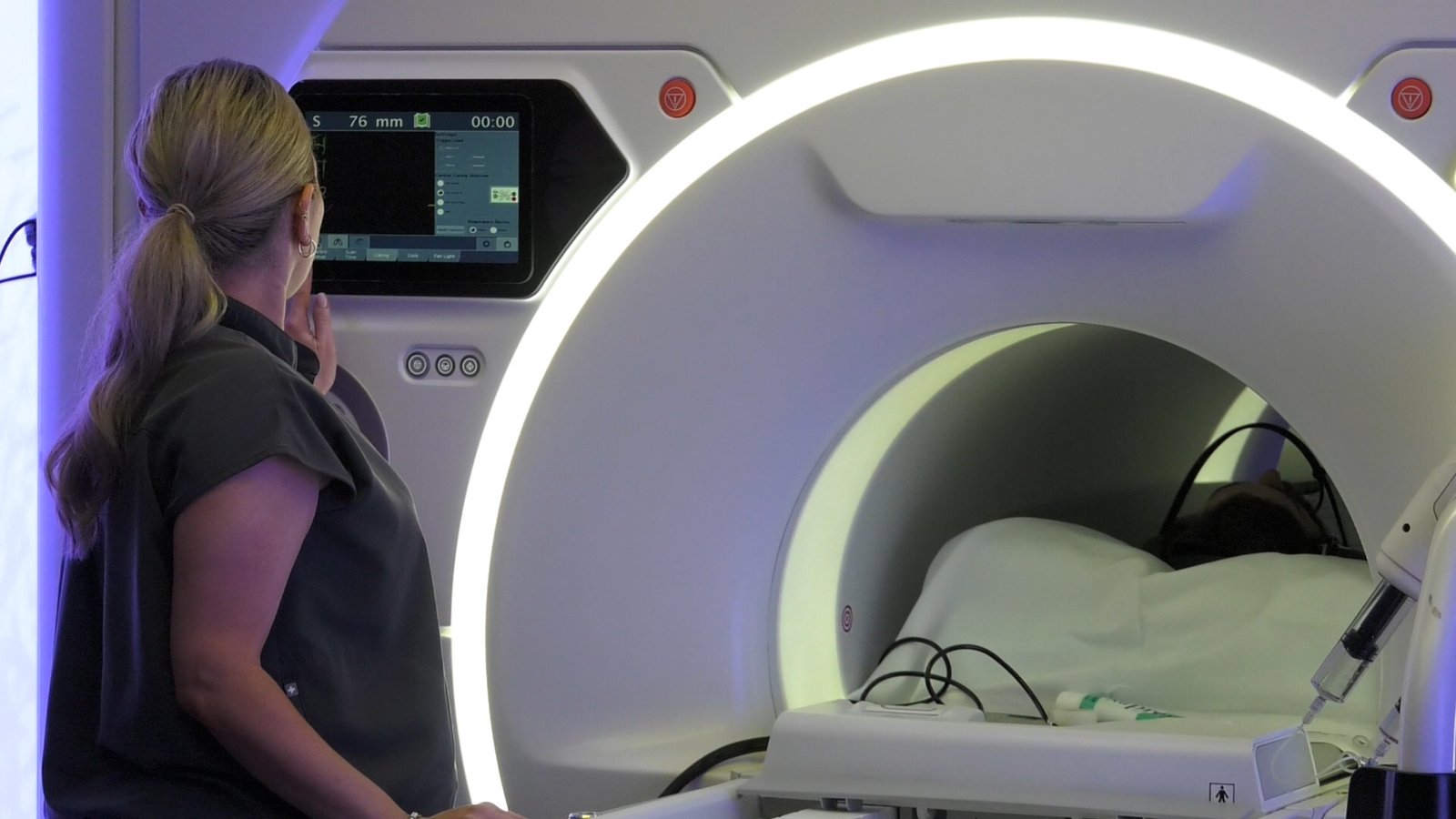
GE Sprint Elite MRI at Intermountain Health 2
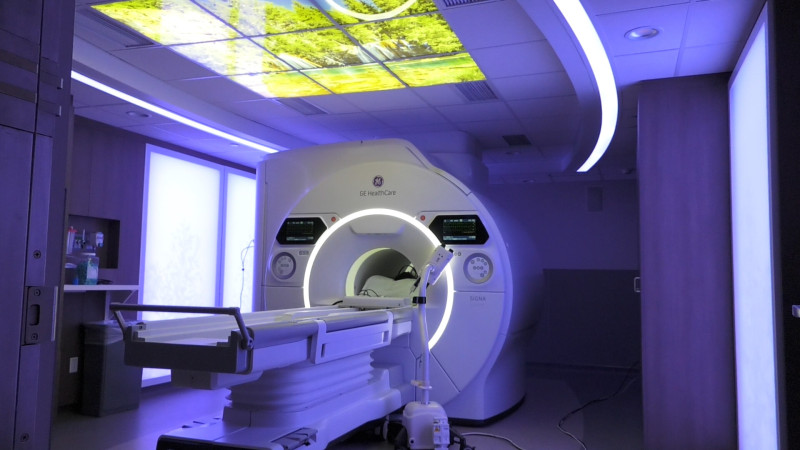
Intermountain Medical Center in Murray is the first hospital in Utah – and only the second in the United States – to use an advanced MRI imaging system currently available to help support doctors improve diagnosis for heart and cancer patients.
GE HealthCare’s SIGNA Sprint Elite MRI is an innovative imaging system that utilizes advanced technology and AI software that can reduce scan times and produce clearer images for doctors to enhance diagnoses for heart and cancer patients.
The new GE HealthCare MRI machine began operation at Intermountain Medical Center earlier this year and is already helping Intermountain doctors improve diagnosis and treatments.
“A moving heart with blood flowing through it is one of the hardest things to get clear images of without taking long periods of time in an MRI machine,” said Brent Wilson, MD, an Intermountain Health cardiologist at Intermountain Medical Center. “These clearer images allow us to use new approaches to mapping out injured areas of heart tissue which improves our treatments. This is a big leap forward in cardiac MRI, and we’re excited to be one of the first in the United States using it.”
This innovative system has built in AI technology that can help reduce signal to noise ratio, which is a level of interference reducing image quality. This technology can help enhance the clarity of MRI images, which was not available on Intermountain Health’s previous MRI machines.
“We’re grateful to collaborate with Intermountain Health to bring SIGNA Sprint Elite MRI to clinicians and patients in Utah,” said Joel Christensen, enterprise client director at GE HealthCare. “Our goal is to help clinicians get the information they need to make timely, confident care decisions for patients facing serious conditions such as heart disease and cancer. This work reflects our shared focus on advancing high-quality, patient-centered care in Utah.”
Because this MRI technology can provide clearer imaging, it has the potential to significantly reduce the time needed for patients to be scanned in the machine, which means the hospital can serve more patients.
“Faster scans mean reduced wait times, and patients don’t have delays in getting the diagnosis and care that they need,” said Amy Warnick, MRI coordinator at Intermountain Medical Center.
Another important benefit for cardiac patients is the ability to take scans without having to have patients hold their breath for extended periods to get a cleaner image, which is what happens now.
“Asking someone to hold their breath doesn’t seem like a big deal, but for a person with heart issues it can be taxing on the body,” said Warnick. “This new machine isn’t just giving us exceptional images but is putting patient comfort as a major focus and we’re already seeing a difference.”
###
‘;
Source Link