
“She told us that she had thoughts of harming the children,” said Musgrove, who was the third defense witness called to testify Monday at her daughter’s murder trial in Plymouth Superior Court.
She said her daughter appeared “very nervous” during the meeting and Patrick Clancy asked “if she meant she couldn’t be alone with them, and she said, ‘No.’”
During cross-examination, Musgrove said she had no concerns for the safety of her beloved grandchildren because she was always at their home, helping take care of them. And, she said, she was in constant contact with her daughter, who was being treated by a number of doctors.
The following month, on Jan. 24, 2023, Lindsay Clancy admittedly strangled all three of her children, 5-year-old Cora, 3-year-old Dawson, and 8-month-old Callan, with exercise bands in the basement of their Duxbury home. She slashed her neck and wrists, then jumped out a second-story window in a failed suicide attempt.
Clancy, 36, a former labor and delivery nurse at Massachusetts General Hospital, has pleaded not guilty to three counts of first-degree murder, asserting an insanity defense. Her attorney, Kevin Reddington, is trying to persuade jurors that she was in the throes of postpartum psychosis and heard a male voice in her head telling her to kill herself and the children.
Prosecutors allege the murders were premeditated and carried out with extreme atrocity and cruelty by Clancy, who wanted to kill herself because she was tired of her life. She decided to take the children with her because she didn’t trust anyone else to care for them.
On Monday, prosecutors rested their case after calling 71 witnesses over 14 days.
Clancy’s lawyer called four witnesses to the stand, her mother, sister, and a nurse who worked alongside her at Massachusetts General Hospital for years, and an emergency room doctor.
Clancy’s mother bolstered the defense’s claim that she was a loving mother, whose mental health steadily declined after she was prescribed over a dozen different medications for postpartum depression, anxiety, and insomnia.
In an early morning text that was sent on Oct. 20, 2022, and read to jurors Monday, Clancy begged her mother to drive up from her home in Connecticut and stay with her for awhile.
“I’m really sick. Something is wrong,” Clancy wrote. “I had horrible insomnia all night and I just don’t know how I’m going to get through the day. I started taking the medicine my doctor prescribed for anxiety and I think it’s made things worse. It’s just really scary and I don’t want to be alone.”
Musgrove told jurors that she immediately packed a bag and drove to her daughter’s home and stayed there for about a week, the first of many overnight stays over the next few months. She said Clancy went to the emergency room for help the same day she sent the text, one of many trips to doctors seeking treatment.
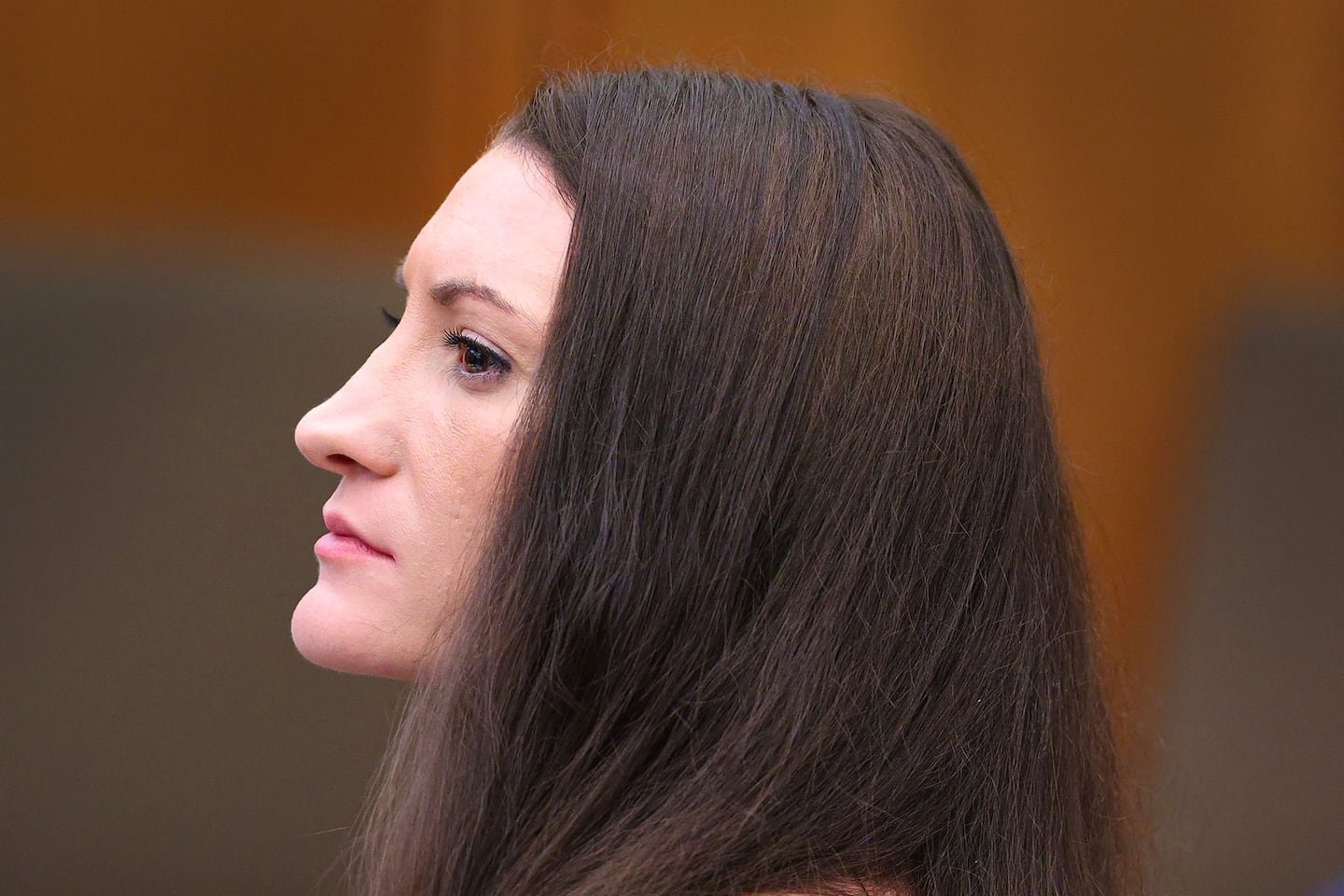
Clancy, who is paralyzed from the waist down from her suicide attempt, sat in her wheelchair, frequently wiping tears from her eyes as her mother testified.
“I loved my grandchildren with all my heart and you never know what it’s like to love a grandchild until you become a grandmother,” Musgrove told jurors. She and her husband, Michael, have attended their daughter’s trial every day.
She described Lindsay as a loving, dedicated, and fun mother.
“She always wanted to be a mother — to have many children” Musgrove said. “I always felt it was the best thing that happened to her.”
Musgrove said she first became aware that her daughter was struggling in October 2022, when she became anxious about returning to work five months after the birth of her third child.
Her mental health continued to decline and at one point, Musgrove recalled, “She was afraid to be alone and she actually asked if she could sleep with me.”
On New Year’s Eve of 2022, Clancy voluntarily committed herself to McLean Hospital, where she stayed for five days.
After her release, Clancy was not improving, Musgrove said. She became paranoid and didn’t want to drive, leaving her husband or Musgrove to pickup the children from preschool.
Clancy said she couldn’t remember anything and “the medication was pretty much destroying her mind,” Musgrove said. At the time, she said her daughter told her, “This isn’t me. I just want to feel better and enjoy my kids again.”
During cross-examination, Assistant District Attorney Jennifer Sprague focused on texts between Musgrove and her daughter. Each day, Musgrove texted asking about the children, Clancy’s mental health, and what she was doing.
Just days before the killings, Clancy’s mother texted her, ”It’s nice to see you’re doing better.”
The prosecutor pushed Musgrove repeatedly on this, suggesting the texts showed that Clancy was improving.
But Musgrove said she continued to have concerns at the time, and meant that text as more encouragement than observation.
“She was making every attempt to feel better,” Musgrove said. “As a mother, I was encouraging her.”
On Monday, jurors also heard from Clancy’s sister, Allison Ozga, who also described watching her sister’s mental health deteriorate, even as she was prescribed various medications for postpartum anxiety and depression.
Ozga said Clancy confided to her in December, the month before the killings, that she was feeling numb, hopeless, and had suicidal thoughts.
She said she asked Clancy if she was safe, and she said that she was, and was receiving treatment from doctors.
Shelley Murphy can be reached at shelley.murphy@globe.com. Follow her @shelleymurph. Sean Cotter can be reached at sean.cotter@globe.com. Follow him @cotterreporter.