
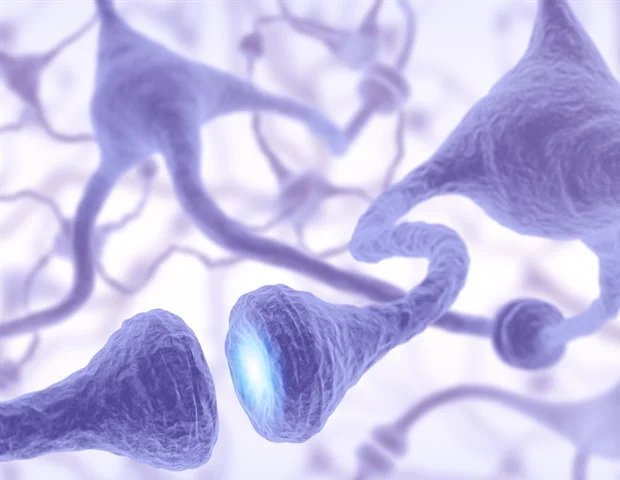
A gene that helps set a neuron’s identity also affects how many inputs it receives from other neurons.
New research led by neuroscientists at King’s College London finds that the molecules neurons use to wire together in the developing mouse brain depend on the role these neurons will play in the adult. The connections these neurons form also depend on how electrically active they are during development.
A gene called Fezf2 plays a key role in deciding the developmental fate of a type of neuron in the brain’s cerebral cortex. This new study now points to a secondary role for this same gene: to help form the circuits needed to balance excitation and inhibition in the developing brain.
As the brain develops, neurons form connections known as synapses. As more connections are made, neural circuits develop that communicate using electrical activity.
Initially, ET pyramidal neurons, which are excitatory neurons that drive electrical activity, dominate. As development continues, inhibitory neurons start to regulate levels of electrical activity in the circuits. This inhibition helps maintain an electrical balance close to that seen in the adult brain, which is fundamental to establishing brain function and behaviour.
Researchers from the Centre for Developmental Neurobiology at the Institute of Psychiatry, Psychology & Neuroscience at King’s worked with colleagues from the Institute of Biomedicine in Valencia and the Institute of Neuroscience in Alicante, to understand how the brain builds a balanced neural circuit.
The new study, published in Nature Neuroscience, found that Fezf2 in mice is responsible for particular inhibitory neurons forming connections to particular excitatory neurons.
These connections depend on electrical activity. If the activity of ET neurons is high, they express more Fezf2. This causes nearby inhibitory neurons to connect to the ET excitatory cells. The new inhibitory connections lower the activity of ET neurons. The researchers say this gives the developing circuit a way to keep high levels of excitation in check.
The developing brain is constantly forming connections and being reshaped by daily experience. When this process is not tightly regulated, circuits mature abnormally, a feature of many neurodevelopmental conditions.
Our work reveals an inseparable link between identity and plasticity in cellular adaptation. It will be exciting to see whether similar mechanisms are at play in other cell types in the developing mammalian brain.”
Professor Beatriz Rico, Professor of Developmental Neurobiology, King’s College London
The gene Fezf2 codes for a type of protein called a transcription factor that helps regulate other genes. Using a method called ribosome-associated mRNA profiling, the researchers looked to see what other genes might be involved in forming inhibitory synapses when the electrical activity in excitatory neurons changes. They identified a gene known to help anchoring neurons to one another, called Cdh22.
Dr Tim Kroon, first author who conducted the research while a researcher at King’s College London said:
“We were surprised to find that Fezf2 is regulated by neuronal activity, given that its role in determining the identity of ET neurons during embryonic development was already well established. It was exciting to discover that it has another role in fine-tuning the connections of these neurons after birth.
“Fezf2 is a protein that regulates processes within the cell itself. Finding that it also regulates Cdh22, which neurons can use to communicate and build connections with other neurons, helped us build a more complete picture of how neurons link activity and connectivity.”
Source:
Journal reference:
Kroon, T., et al. (2026). The identity gene Fezf2 is repurposed postnatally to specify inhibitory input in an activity-dependent manner. Nature Neuroscience. DOI: 10.1038/s41593-026-02515-6. https://www.nature.com/articles/s41593-026-02515-6