
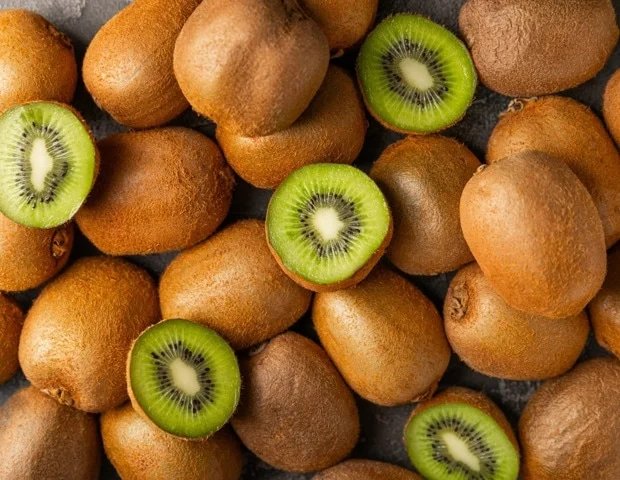
Could a simple dietary change help people struggling with constipation? Researchers examine clinical trials, digestive mechanisms, and how kiwifruit compares with psyllium and prunes.
In a recent narrative review published in the journal Food, Nutrition and Health, researcher Yohei Okawa from the Department of Psychosomatic Medicine at Tohoku University Graduate School of Medicine in Sendai, Japan, evaluated the clinical evidence, underlying mechanisms, effective dietary regimens, and potential applications of kiwifruit in managing functional constipation (FC) and constipation-predominant irritable bowel syndrome (IBS-C).
Background
Constipation is a common gastrointestinal complaint characterized by infrequent bowel movements, hard stools, straining, and incomplete evacuation. FC and IBS-C are distinct constipation-associated gastrointestinal disorders, and both involve altered bowel habits. IBS-C also involves recurrent abdominal pain associated with defecation or changes in stool frequency or form. Dietary interventions, particularly increased fiber consumption, play an important role in managing these conditions.
Kiwifruit has attracted scientific interest because it contains dietary fiber, water, sorbitol, polyphenols, and other bioactive compounds that may support intestinal function. But existing evidence has not fully established its mechanisms, optimal consumption patterns, and effectiveness across different patient populations.
Review methodology
The author searched both PubMed and Web of Science for English-language articles published between January 1984 and June 2026. Search terms included kiwifruit, FC, IBS-C, dietary fibers, gut microbiota, sorbitol, polyphenols, actinidin, and gastrointestinal comfort. Publications from January 1984 until December 2017 were categorized as the earlier evidence base, while publications from January 2018 onward represented the recent evidence. The initial search identified 612 records, of which 147 duplicates were removed.
After screening 465 titles and abstracts and assessing 79 full texts, 33 publications were included in the final narrative synthesis. These comprised clinical trials, mechanistic investigations, reviews, clinical guidelines, and relevant nutritional composition studies. Findings were synthesized thematically rather than statistically because of differences in study populations, interventions, comparators, and outcome measures.
Nutritional composition and mechanisms of action
Kiwifruit is a good source of dietary fiber, vitamin C, potassium, folate, vitamin E, polyphenols, and organic acids. It also has a high water content. Its nutritional composition varies according to cultivar, ripeness, storage, and processing. Green kiwifruit, particularly the Hayward cultivar of Actinidia deliciosa, and gold kiwifruit, generally belonging to Actinidia chinensis var. chinensis, have different nutritional and phytochemical profiles.
Potential gastrointestinal health benefits of kiwifruit may reflect its bulking, gel-forming, and fermentable fiber characteristics. Cell wall polysaccharides contribute to stool mass and provide mechanical stimulation, whereas pectic polysaccharides retain water and help regulate stool consistency.
Fermentable substrates, including oligosaccharides and polyphenol-associated compounds, may influence gut microbiota activity and support the production of short-chain fatty acids. Intrinsic water and sorbitol may further contribute to stool hydration. Some proposed mechanisms are supported mainly by laboratory, animal, and short-term physiological studies.
Actinidin, a cysteine protease predominantly found in green kiwifruit, may facilitate protein breakdown in the digestive system and possibly influence gastric emptying. The independent contribution of actinidin to constipation relief has not been established.
The evidence suggests that actinidin may affect the rate of amino acid appearance rather than total protein absorption after highly digestible protein meals. It is best viewed as a supplementary component of the whole-fruit matrix rather than the primary component that improves bowel function.
Clinical evidence for kiwifruit
Clinical studies suggest that kiwifruit improves bowel function by increasing defecation frequency, stool bulk, and softness while reducing straining. An international multicenter randomized crossover trial involving 184 adults, including 60 with FC, 61 with IBS-C, and 63 healthy controls, compared two green kiwifruits daily with 7.5 g of psyllium.
During kiwifruit treatment, complete spontaneous bowel movements (CSBMs) increased by 1.53 per week in FC and 1.73 per week in IBS-C, alongside improved gastrointestinal comfort in both constipated groups.
Comparative trials reported broadly similar improvements with kiwifruit, psyllium, and prunes, with no significant difference in primary responder rates in one US trial; kiwifruit had fewer adverse events and lower dissatisfaction in that study.
A three-day magnetic resonance imaging study of 14 healthy adults consuming four green kiwifruits daily also indicated increased intestinal water and colonic volume, supporting a possible physiological mechanism rather than demonstrating clinical benefit in constipation.
Comparison with other dietary strategies
Psyllium, derived from Plantago ovata, is a viscous, gel-forming fiber commonly recommended for chronic constipation. It improves stool frequency and consistency, but bloating and abdominal distension may affect tolerability. Prunes provide dietary fiber, sorbitol, and polyphenols and may improve CSBMs, stool softness, and straining. Their fermentable carbohydrate content can aggravate bloating or abdominal discomfort in some individuals with IBS-C.
A diet low in fermentable oligosaccharides, disaccharides, monosaccharides, and polyols (FODMAPs) may help reduce abdominal pain and bloating in IBS. But it is not an established treatment for constipation or stool frequency. Kiwifruit offers a whole-food alternative with favorable acceptability and tolerability, while its effectiveness is broadly comparable to established dietary interventions.
Clinical implications, limitations, and future directions
Current evidence supports consuming two fresh green kiwifruits daily for approximately four weeks as a potential dietary strategy for adults with FC or IBS-C. Individuals can monitor complete spontaneous bowel movements, stool consistency, straining, abdominal discomfort, and adverse effects during this period.
An increase of at least one complete spontaneous bowel movement per week may be clinically meaningful when accompanied by symptom improvement. Kiwifruit may not be suitable for individuals with kiwifruit allergy, oral allergy syndrome, or specific dietary restrictions, including potassium restrictions associated with certain renal conditions. Patients with alarm symptoms, worsening pain, or an inadequate response should seek medical assessment.
The review’s limitations include its narrative design, absence of pooled effect estimates, and lack of formal risk-of-bias assessment. Differences in study populations, cultivars, intervention durations, and outcome measures also limit comparisons. Evidence remains strongest for fresh green kiwifruit; gold varieties, powders, and extracts should not be assumed to have equivalent effects.
Future research should directly compare green and gold cultivars, investigate longer-term adherence, evaluate real-world costs, and identify patient characteristics associated with treatment response, including bowel transit and symptom profiles.
Conclusion
Kiwifruit is a promising whole-food dietary intervention for FC, IBS-C, and associated gastrointestinal discomfort. Its combined fiber properties, intrinsic water, and bioactive compounds may support bowel function. It should complement individualized constipation management rather than replace conventional treatments or specialist dietary care.
Source:
Journal reference: