Sunday, Sept. 27, 2026 | 2 a.m.
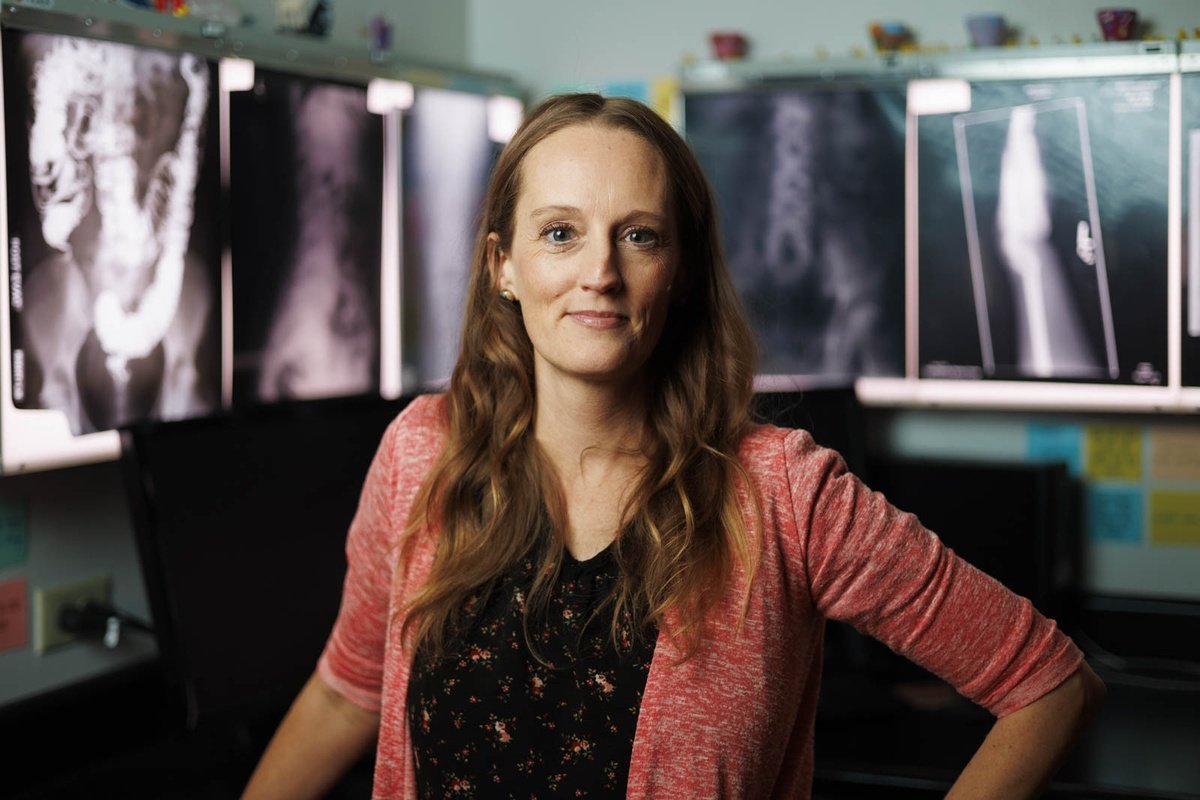
When Heidi Shelton was a UNLV student in 2003, she never imagined that an interest in X-ray images and a life-threatening cancer diagnosis would lead her to the helm of one of the university’s oldest academic programs.
Now, as UNLV’s radiography program celebrates its 65th anniversary, Shelton said she is proud to lead the program, and she plans to stay the course through persistent job shortages in the state.
“(I’m) just feeling really proud of not only being a graduate from the program, but also being here, helping this program continue on,” said Shelton, director of the radiography program and a professor in the School of Integrated Health Sciences.
Radiography and radiology are related fields, but their practitioners serve different roles, Shelton explained.
Radiographers, or registered radiologic technologists, perform the procedures that produce diagnostic images, following specific protocols and using advanced medical technology.
Radiologists are medical doctors who evaluate those scans to determine what may be affecting a patient’s health and deliver a diagnosis.
UNLV’s radiography program was the first of its kind in Southern Nevada and one of the first programs approved at the institution, which was at the time called Nevada Southern University, then a satellite campus of UNR.
In 1960, local radiologists from Southern Nevada Memorial Hospital, now University Medical Center, approached university administrators and urged them to help address a growing shortage of X-ray technicians in Clark County.
At their request, former dean William Carlson established a two-year certificate program to meet the needs of Southern Nevada’s growing population. To do it, according to the university, Carlson exploited a loophole in the university’s bylaws, which required a vote of “all faculty concerned” before any academic program could be added.
Carlson argued that Nevada Southern University’s entire faculty consisted of Herbert Derfelt, one of UNLV’s first full-time faculty members and a professor in the College of Education. That made the decision Derfelt’s alone, which allowed Carlson to avoid going to faculty in Reno and cleared the way for the program.
The Nevada Board of Regents officially approved the radiologic technology program Sept. 9, 1961.
UNLV considers that decision the first domino to fall in the institution’s history, one that eventually led to its independence from UNR.
Former professor Charles Jacobi helped develop the program into a full bachelor’s degree by the time Nevada Southern University became UNLV. The change opened the program to more partnerships with local hospitals, where radiography students could complete clinical rotations.
Over the past 65 years, about 2,000 students have graduated from the program, building a strong pipeline from UNLV to local hospitals and imaging centers. Shelton said each graduating class has about 26 students who spend two years studying medical technology, anatomy, ethics and soft skills like empathy before leaving with a bachelor’s degree in comprehensive medical imaging.
Once they have learned the general skills and basics of radiology, students can become certified and choose to pursue a specialization or “postprimary discipline,” such as mammography or computed tomography (CT) scanning.
“For the past 65 years, our radiography program has provided students with unique, hands-on opportunities that help them become the quality technologists our community needs,” said Steen Madsen, professor and chair of UNLV’s department of health physics and diagnostic sciences. “If you’ve ever had a medical scan taken in a Clark County hospital or medical center, there’s a great chance that you were seen by one of our graduates.”
According to the Nevada Department of Employment, Training and Rehabilitation, 1,530 radiologic technologists and technicians were employed in Nevada in 2024, and the state needed another 687 to reach the national average. Federal estimates project the shortage will grow as more technicians retire or leave for other fields.
Shelton said the program’s application process may be strict, but it’s meant to preserve its 100% five-year job placement rate.
The program supports students through clinical rotations at local medical facilities and offers resources like mentorship to help create “technologists that want to stay in the field, that want to grow in the field and then help others stay in the field as well,” Shelton said.
One alumnus of the program is Vicki Gooss, administrative director of imaging for Sunrise Hospital and Medical Center.
Gooss was hired in November 1980 when she was a UNLV student and has since scanned thousands of patients. They included patients who were brought to Sunrise for care after the fire at the MGM Grand that killed 85 people in 1980. She also worked during the Route 91 Harvest festival shooting Oct. 1, 2017. Gooss credited the extensive clinical experience she gained in the radiography program with preparing her for those emergencies.
Gooss said her team now oversees Sunrise’s main imaging department, its freestanding emergency department in Henderson and an outpatient diagnostic center near the main hospital. Together, they perform an average of about 1,100 exams a day, including CT scans, ultrasounds, X-rays, magnetic resonance imaging (MRI), special procedures and nuclear medicine, she said.
Technology has also changed, speeding the imaging process as the field has moved from film to digital imaging and now to artificial intelligence.
Shelton was in school during the transition from film to digital and remembers the many opinions, good and bad, that circulated at the time.
Digital imaging proved to be a boon, allowing for better analysis of scans. Technologists can use thousands of shades of gray to determine what may be present in an image, such as a large white mass signifying a tumor.
AI is also expected to change the industry as it becomes more integrated into medical technology, Shelton said. Traditionally, technologists have relied on preset computer algorithms that determine what a normal X-ray of a specific body part should look like and adjust the shades of gray accordingly.
Shelton said the technology can be helpful in the field, but she doesn’t “ever want to lose that human interaction with our patients.”
That’s why, even as the program adapts to include modern technology in its 65th year, it will continue training students in empathy, sympathy, effective communication and compassion.
“A lot of people have no idea about health, about the imaging sciences, about anything, and it’s a really scary experience for them, so to just focus on the technological advancements and not focus on patient care is not where I want to be and not where I want my program to go,” Shelton said. “A lot of the technical advances have been amazing … but at the same time, at the end of the day, you still have to be a healthcare provider, and that includes patient care and dealing with patients in a compassionate way.”