
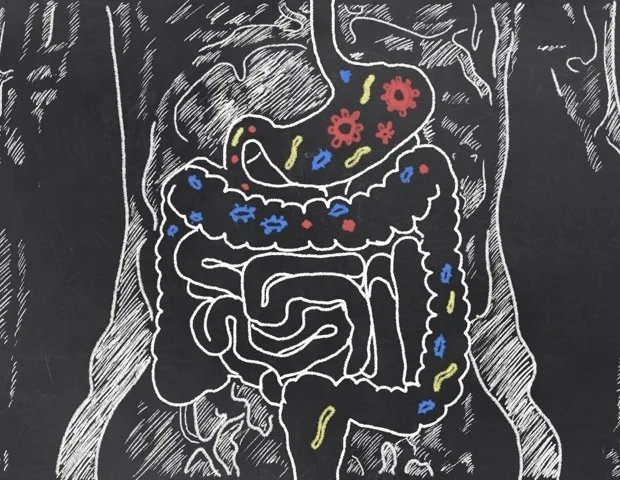
Scientists at the University of Pittsburgh uncovered the unstable immune cells that can cause up to 40% of immunotherapy patients to experience serious side effects and showed that diet and microbiome composition influence the side effect’s severity.
The study, published today in Cell, found that the inflammation can be reversed in mice by shutting off a protein in “fragile” immune cells.
“Immune related adverse events are a huge problem and can greatly impact quality of life for patients. In many cases, it impacts their ability to stay on immunotherapy or benefit from treatment,” said senior author Abigail Overacre-Delgoffe, Ph.D., assistant professor in the Department of Immunology at Pitt’s School of Medicine and member of the Tumor Microenvironment Center at the UPMC Hillman Cancer Center.
There are no U.S. Food and Drug Administration-approved treatments for immune-related adverse events, a serious side effect of immune checkpoint inhibitors, a type of cancer immunotherapy. Up to 25% of patients receiving immune checkpoint inhibitors experience severe adverse events, resulting in hospitalization and ending their treatment. Their variability makes them challenging to study in humans, and animal models have so far failed to replicate the complexity of human immune-related inflammation.
“Most existing mouse models relied on genetically modified mice or experimental conditions that didn’t really capture the variability we see in patients,” said lead author Dipyaman Patra, Ph.D., a postdoctoral associate in Overacre-Delgoffe’s lab. “This got us thinking about whether common lifestyle factors, particularly diet and the gut microbiome, could influence the host immune system even before immunotherapy begins.”
Overacre-Delgoffe led a research team in creating a mouse model of immune-related adverse events. Produced by feeding mice a special human-like diet before and during immune checkpoint inhibitor treatment, the model replicates many immune and microbiome characteristics of the adverse events in humans.
We were able to generate the first of its kind preclinical mouse model of adverse events that didn’t require full gene knockouts. By combining this novel preclinical model alongside patient data, we were able to identify a very new mechanism of adverse events that hopefully will result in new targeted therapies, allowing more cancer patients to stay on treatment and out of the hospital.”
Abigail Overacre-Delgoffe, Ph.D., assistant professor, Department of Immunology, Pitt’s School of Medicine
Immune checkpoint inhibitors work by removing the brakes from immune cells called T cells, enabling them to better fight cancer. But taking the brakes off T cells impacts other tissues as well, which in some patients results in overactive immune cells attacking healthy tissue. Depending on the type of immune checkpoint inhibitor, 20% to 40% of patients experience these adverse events, which can be severe enough to disrupt treatment.
Overacre-Delgoffe suspected that the answer to creating an animal model could be found in the gut. Her previous work showed that diet and the gut microbiome can influence cancer patient outcomes and response to immunotherapy.
The researchers fed mice a “Western style” diet low in fiber and high in fat and processed carbohydrates, beginning two weeks before immune checkpoint inhibitor therapy.
The mice were not only susceptible to adverse events during immunotherapy but also showed signs of regulatory T cell fragility, which occurs when regulatory T cells, which suppress excessive immune response, become unstable due to stress. Researchers then observed the same fragility in regulatory T cells collected from immunotherapy patients with severe immune-related adverse events but not in those without the side effect.
Restoring the cells’ stability significantly reduced the severity of immune-related adverse events, suggesting that regulatory T cell fragility is a major underlying cause of the side effect. The research team was able to restore stability by blocking an immune signaling protein specifically on regulatory T cells as well as by switching the mice to a high fiber diet or giving them metabolite supplementation.
Mice on the Western-style diet also exhibited microbiome changes similar to those seen in humans with immune-related inflammation. Fecal microbiome transfers from Western diet-fed mice to mice on a regular (high fiber) diet caused gut inflammation. Fecal transfers from male mice, which are less susceptible to severe adverse events, to female mice reduced the severity of their inflammation, suggesting the microbiome influences the severity of immune-related adverse events. Additionally, fecal microbiome transfers from patients consuming a Western-style diet to germ-free mice led to increased severity of immune-related adverse events, showing that diet and the gut microbiome is responsible for these toxic side effects.
The new mouse model will serve as a platform for researchers to investigate why some patients experience severe adverse events and help identify markers that may predict who is most susceptible.
“We now have some potential targets that we’re going after that seem to limit immune-related adverse events without negatively impacting immunotherapy, which would be the first of its kind and is quite exciting” Overacre-Delgoffe said.
Future research will explore potential tissue-specific drug targets that limit or eliminate the side effect, without disrupting immunotherapy. Metabolite supplementation also shows promise as an intervention to reduce susceptibility to immune-related adverse events without interfering with the microbiome.
Additional authors on the current study were Dipyaman Patra, Ph.D., Katelyn Wolfgang, Chenxian Ye, Lora Rigatti, V.M.D., Kelsey Ertwine, Kristin M Morder, Jessica Jana, Ishita Baral, Ph.D., Drew Hurd, Kaitlin Bossong, Steven Mullett, Yingtong Dou, Stacy Gelhaus, Ph.D., Dario Vignali, Ph.D., Diwakar Davar, M.D., Anthony Cillo, Ph.D., and Greg Delgoffe, Ph.D., all of Pitt, UPMC Hillman Cancer Center or both.
Source:
Journal reference:
Patra, D., et al. (2026). Lifestyle-induced regulatory T cell fragility primes adverse events after immune checkpoint blockade. Cell. DOI: 10.1016/j.cell.2026.09.055. https://www.cell.com/trends/endocrinology-metabolism/fulltext/S1043-2760(26)00241-9