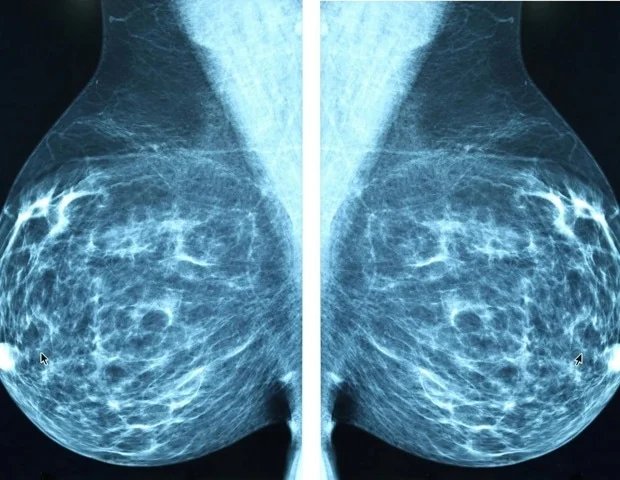
A new molecular map of breast cancer has identified novel forms of the disease and provides a foundation for selecting personalized treatments guided by a tumor’s molecular characteristics rather than standard pathology alone.
In a study published Nov. 3 in Cell Reports Medicine, researchers at Vanderbilt-Ingram Cancer Center generated one of the largest transcriptomic maps of breast cancer ever assembled, integrating data from more than 7,600 tumors across 22 independent studies. The “transcriptome” is the complete set of RNA molecules produced by a tumor; it reveals biological details about gene expression and other molecular characteristics.
The breast cancer atlas provides an unprecedented view of the disease’s molecular diversity and reveals distinct tumor populations associated with different clinical outcomes, biological characteristics and therapeutic vulnerabilities. By analyzing thousands of tumors together, we uncovered previously hidden forms of breast cancer that differ in prognosis, biology and treatment sensitivity.”
Brian Lehmann, PhD, corresponding author, Research Associate Professor of Medicine at Vanderbilt Health
Breast cancer is traditionally classified and treated based on the presence – or absence – of hormone (estrogen, progesterone) and HER2 receptors. Transcriptomic profiling has further defined some molecular subtypes, but clinical responses to the same subtype are varied, and other subtypes noted by pathologists remain undefined.
The work builds upon earlier studies by Lehmann and Jennifer Pietenpol, PhD, Chief Scientific and Strategy Officer and Executive Vice President for Research at Vanderbilt Health, who helped define molecular subtypes of triple-negative breast cancer. Their research demonstrated that different triple-negative breast cancer subtypes display distinct sensitivities to therapeutic agents, and these insights have guided clinical trials for targeted treatments of triple-negative breast cancer.
For the new study, the investigators expanded their approach to include transcriptomic data across all types of breast cancer.
One of the long-standing challenges in cancer genomics has been the difficulty of comparing datasets generated across different studies, sequencing platforms and analytical methods, Lehmann noted. To overcome these barriers, the researchers adapted computational approaches originally developed for single-cell genomics, enabling the integration of thousands of breast cancer transcriptomes into a unified analytical framework.
The resulting atlas groups breast cancers into interconnected clusters that share common molecular features, treatment responses and clinical outcomes. When visualized as a map, the atlas resembles an archipelago, with biologically related tumor populations occupying distinct “islands” within a broader molecular landscape. Researchers envision that a patient’s tumor could eventually be positioned on this map to identify the most appropriate therapies and to improve treatment selection for clinical trials.
Highlights of the study’s findings:
- The atlas reveals substantial biological diversity within traditional breast cancer categories, demonstrating that current classifications do not fully capture clinically relevant differences among tumors.
- Estrogen receptor-low breast cancers behave more like ER-negative disease (not ER-positive as they are traditionally treated) and may require different treatment considerations.
- The atlas identifies subsets of HER2-positive tumors that are most dependent on HER2 signaling and could benefit from specific types of HER2 kinase inhibitors.
- The study uncovers a hidden neuroendocrine form of breast cancer associated with worse outcomes following standard chemo-endocrine therapy and points to FGFR1 as a potential therapeutic target.
- The atlas defines a biologically distinct aggressive basal-luminal progenitor subtype of triple-negative breast cancer with potential vulnerabilities to RTK/MAPK-targeted and anti-angiogenic therapies.
“Some of the most important findings came from tumors hiding in plain sight,” Lehmann said. “We identified patient populations with poor outcomes that are not routinely recognized in current classification systems and uncovered potential therapeutic opportunities that may help address unmet clinical needs.”
In addition to developing the atlas, the researchers also created a tool that can assign tumors to subtypes using standard bulk RNA sequencing data to guide future research studies and clinical trials.
“The next critical step is prospective testing to determine whether treatment decisions guided by these transcriptional subtypes improve patient outcomes,” Lehmann said. “Our goal is to match patients to therapies based on the biology of their tumors. This atlas provides both a road map and a practical framework for achieving that vision.”
Beyond breast cancer, the researchers said the computational approach can be applied to integrate transcriptomic, proteomic and other large-scale molecular datasets across a wide range of diseases.
Xin Sun, PhD, a postdoctoral fellow in the Department of Medicine at Vanderbilt Health, is the study’s first author. Co-authors are Justin Balko, PharmD, PhD; Hanbing An, PhD; Paula Gonzalez-Ericsson, MD; Hailing Jin; Violeta Sanchez; Quanhu Sheng, PhD; Maksim Chapman; Thomas Stricker, MD, PhD; Vandana Abramson, MD; Ingrid Meszoely, MD, MMHC; and Melinda Sanders, MD.
The research was supported by the Department of Defense Breast Cancer Research Program, National Institutes of Health (grants P50CA098131, P30CA068485), Susan G. Komen, and Breast Cancer Research Foundation. Pietenpol, Ingram Professor of Cancer Research, holds the Brock Family Directorship in Career Development.