
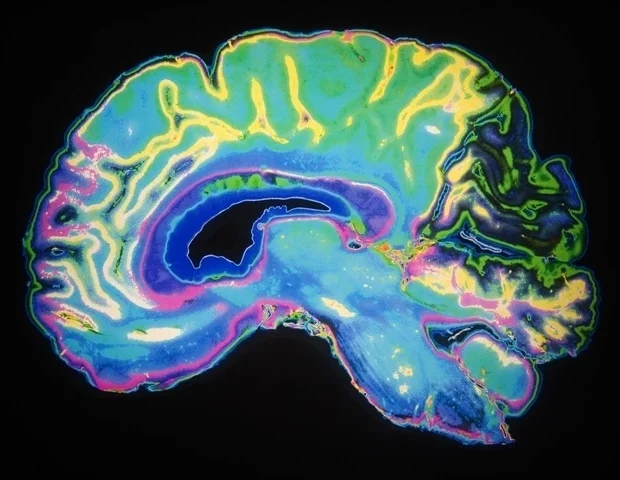
Adolescence is often described as a turbulent period of life marked by growing independence, changing social relationships and unpredictable shifts in behavior. According to researchers, tweens’ and teens’ behavioral changes reflect a brain that is still actively developing, yet scientists know surprisingly little about the neural mechanisms that shape social behavior during this critical stage of life.
Studying how the adolescent brain develops has become increasingly important, especially because many psychiatric disorders first emerge during the teenage years.
“We don’t know much about the adolescent brain. If we compare it to early postnatal life, or infant development, we know so much about that. But adolescence, well, we’re still trying to get it,” said Laurence Coutellier, an associate professor of behavioral neuroscience in The Ohio State University Department of Psychology.
New mouse study findings from Coutellier’s lab suggest that a brain pathway known as the prefrontal cortex–ventral striatum (PFC-vSTR) circuit undergoes important development during adolescence and may play a key role in social motivation. The circuit sends signals from the prefrontal cortex – the brain’s command center – to the ventral striatum, a region associated with reward processing, motivation and pleasure.
Lead author Katrina Lin, a doctoral candidate and graduate research assistant in Coutellier’s lab, recently presented preliminary findings on a poster at Neuroscience 2026, the annual meeting of the Society for Neuroscience. The study showed that mice whose activity in this pathway was temporarily inhibited during adolescence were less motivated to socialize as adults. The same intervention in adult mice did not produce this effect.
Previously, Coutellier’s lab hypothesized that age-specific changes in this circuit could relate to changes in social motivation. For this study, the researchers wanted to know if adolescence represents a particularly sensitive period for development of the pathway, and whether disrupting that process would have lasting effects on behavior.
Coutellier’s lab has studied the prefrontal cortex, the brain region associated with functions like working memory, attention, decision-making, impulse control and social behavior, for more than a decade. “What’s interesting with this region is that it’s the last brain region to mature,” she said. When an adolescent acts impulsively or displays inflexible thinking patterns, it’s normal, because the prefrontal cortex doesn’t fully mature until around age 25, she explained.
Unlike humans, whose adolescence lasts for the better part of a decade, mice have a short adolescence of about three weeks, which allows researchers to study social activity patterns across the animal’s lifespan.
To establish a baseline of behavior in mice by age, Coutellier’s team first ran a social interaction test, placing two mice that hadn’t met before in the same cage and filming their interactions.
“I always say it’s like two dogs in a park. They start sniffing each other. They’re careful at first, and then they go into a different type of sniffing behavior,” she said. The researchers predicted that adolescent mice would show more social motivation than adult mice, and that’s exactly what they found.
“In humans it’s the same,” Coutellier said. “A teenager loves to hang out with their friends, and they will seek this interaction. As adults, we will be more careful. We don’t approach a stranger just like that, and we’ll be more cautious about the way we interact. There’s still a strong social motivation, which is necessary for us to have social relationships, but there is less of it.”
In other words, the drive to seek out meaningful relationships with peers appears to be hard-wired in the adolescent brain.
Coutellier emphasized that animal studies can’t fully replicate human behavior, but allow researchers to manipulate specific brain circuits and see how changes affect behavior.
To test whether the PFC-vSTR circuit drives social development, the team used a technique to turn specific neurons on or off in both male and female mice. When researchers quieted activity in the circuit during adolescence, the mice grew up to be less socially motivated as adults. By contrast, quieting the same circuit in adult mice caused only a temporary dip in social investigation while the intervention was active, suggesting that adolescence may be a uniquely important period for wiring social behavior.
“We found that actually, yes, if we prevent the maturation of the frontal circuit to the striatum, when mice reach adulthood they have impaired social motivation,” Coutellier said.
Learning how these circuits typically develop could help researchers better understand what happens when their development deviates. Many psychiatric disorders, including depression and schizophrenia, first appear during adolescence, Coutellier said, and they often present with social challenges or withdrawal.
She’s especially interested in examining specific environmental factors that may influence how brain circuits mature. For example: “We can try to study what happens when our mice don’t get to socialize, and we can think about what happened during COVID-19, when teenagers were told to stay home and stop socializing to be safe. How did that impact this developmental trajectory of the social circuits?” she said.
In addition, the lab has been studying behavior in mice that resembles traits observed in people with schizophrenia.
“Mice do not have schizophrenia. Mice do not have depression. But there are some symptoms that we can try to assess,” she said. “Like social withdrawal or cognitive deficits. We’re trying to understand what genetic and environmental factors can make these symptoms arise at the time of adolescence – not before, and not in adulthood, but during that sensitive period of development.”
This research was supported by a Whitehall Foundation Grant.
Source: