
The body’s internal circadian clock helps us feel sleepy at night and wake up in the morning. Using fruit flies, researchers at the Korea Advanced Institute of Science and Technology (KAIST) have discovered that a cellular quality control process that removes defective proteins during protein synthesis helps regulate the pace of the circadian clock. The findings could offer new insights into sleep and circadian rhythm disturbances associated with aging and neurodegenerative diseases, potentially paving the way for new approaches to addressing these conditions.
On November 25, KAIST (President Choongsik Bae) announced that a research team led by Research Professor Jongbin Lee from the KAIST Stem Cell Center and Professor Chunghun Lim from the Department of Biological Sciences had discovered that the removal of incomplete proteins produced during protein synthesis plays a key role in maintaining circadian rhythms in fruit flies.
The circadian clock is an internal timekeeping system that regulates sleep-wake cycles, body temperature, hormone secretion, and metabolism on an approximately 24-hour cycle. In fruit flies, circadian rhythms are maintained through the rhythmic accumulation and degradation of a key clock protein called PERIOD (PER).
Previous studies have focused primarily on when and how much of a clock protein is produced and degraded. The research team took a different approach, investigating how cells manage errors that occur during protein synthesis.
Inside cells, ribosomes read genetic instructions and assemble proteins. Multiple ribosomes can move along the same genetic template as they produce proteins. When a ribosome stalls, another ribosome moving behind it may collide with it.
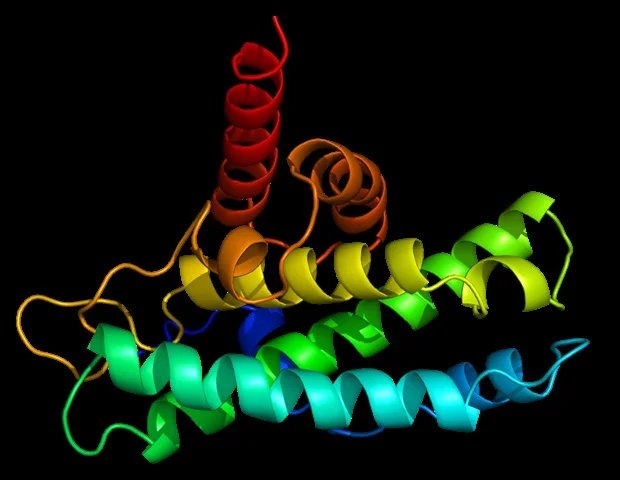
Such collisions trigger a quality control system that resolves stalled ribosomes and removes the incomplete proteins they produce. This process is known as ribosome-associated quality control (RQC). Two proteins, Caliban (CLBN) and Listerin (LTN1), play important roles in clearing these defective proteins.
When the researchers suppressed the expression of the Caliban or Listerin gene in clock neurons of the fruit fly brain, the flies showed weaker daily activity rhythms and longer circadian periods. In particular, loss of CLBN delayed the accumulation of the key clock protein PER, showing that disruptions to cellular quality control can alter circadian timing.
However, not all clock neurons responded in the same way. Impaired quality control disrupted the function of certain neurons that actively produce PER, while other neurons showed no noticeable changes. This suggests that the quality control process may be particularly important in neurons with high levels of PER protein synthesis.
In cell-based experiments, the loss of CLBN led to a marked increase in incomplete PER protein fragments, consistent with impaired clearance of prematurely terminated translation products. These findings suggest that quality control during protein synthesis is essential for the proper production of clock proteins and the maintenance of circadian rhythms.
The study demonstrates that the cellular machinery responsible for clearing defective proteins also plays a role in regulating animals’ daily activity rhythms. It reveals a previously unrecognized mechanism of circadian regulation: accurate timekeeping depends not only on how much clock protein is produced and degraded, but also on how effectively cells manage errors during protein synthesis.
Keeping the circadian clock running on time requires not only producing enough clock proteins but also ensuring that they are produced correctly.”
Jongbin Lee, Research Professor, KAIST
He added that the findings highlight the importance of protein quality control, particularly in neurons with high levels of protein synthesis.
“Humans have a protein quality control system similar to that found in fruit flies,” said Professor Chunghun Lim. He added that, if the same mechanism is confirmed in humans, the findings could help researchers better understand and potentially address sleep disturbances associated with aging and neurodegenerative diseases.
This study identifies a novel mechanism of circadian regulation through experiments in fruit flies and cells. Further research is needed to determine whether the same mechanism operates in humans and whether restoring protein quality control could help improve circadian rhythms.
Source:
Journal reference:
Geisseova, T. K., et al. (2026). Co-translational surveillance of nascent polypeptides times circadian rhythms in Drosophila. PNAS. DOI: 10.1073/pnas.2513188123. https://www.pnas.org/doi/10.1073/pnas.2513188123.