Cancer is the second leading cause of death in Germany. In the search for new therapeutic approaches that target the uncontrolled growth of tumor cells, a class of enzymes known as cyclin-dependent kinases (CDKs) has come into focus. This is because this family of enzymes plays a fundamental role in gene expression and cell division. An overview of the current state of research on the transcriptional regulation of CDKs and the prospects for cancer treatment was compiled by Prof. Matthias Geyer of the University Hospital Bonn and the University of Bonn in collaboration with Prof. Robert P. Fisher of the Icahn School of Medicine at Mount Sinai, New York, and has now been published in Nature Reviews Drug Discovery.
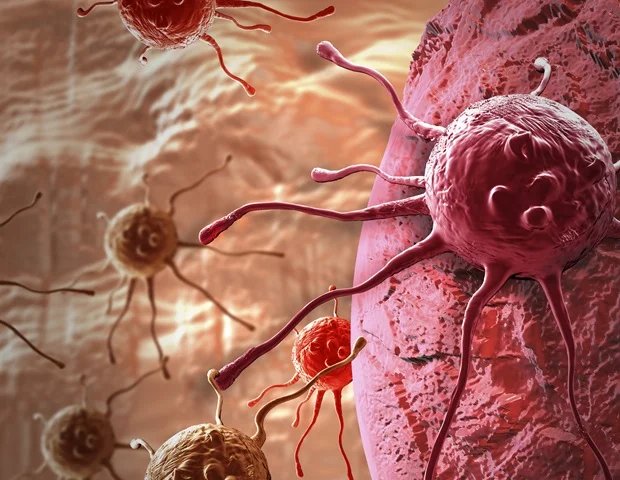
The development of cancer is often accompanied by a change in gene expression, the process by which the cell’s genetic material is made usable. The central step in this process is carried out by RNA polymerase II, which transcribes the information on the genetic material carrier, DNA, into messenger RNA, which serves as a blueprint for protein synthesis. The activity of RNA polymerase II is highly regulated to ensure that each cell in the body produces precisely the proteins necessary for its function. When these regulatory mechanisms become disrupted and operate in an uncoordinated manner, cells can become malignant, leading to the development of cancer.
Selective inhibition of cancer cell growth
Cyclin-dependent kinases (CDKs) control gene activity in our cells by influencing RNA polymerase II and general transcription factors through the attachment of phosphate groups. Inhibiting individual CDKs can reduce gene expression and also disrupt the processing of the resulting messenger RNA. The inhibition of transcription-regulating CDKs is therefore increasingly regarded as a promising target for new cancer therapies. Cancer cells are often particularly dependent on specific genetic programs that ensure their growth and survival. This is precisely where new drugs come into play: They specifically block those CDKs that drive pathological genetic programs and can thus affect tumor cells more effectively than healthy tissue. The authors show that such approaches hold great potential, particularly for aggressive tumor types such as leukemias, breast, lung, or ovarian cancer. “There are already four different active substances targeting the kinases CDK4 and CDK6 that are used in the treatment of the HR+/HER2-negative breast cancer subtype,” says Prof. Dr. Matthias Geyer of the Institute of Structural Biology at the UKB. “But their efficacy in prostate cancer is also currently being investigated in clinical trials.”
Hope for approvals of new drugs in the coming decade
Together with his colleague Prof. Robert P. Fisher from the Department of Oncological Sciences at the Icahn School of Medicine at Mount Sinai in New York, Prof. Geyer – who is a member of the Cluster of Excellence ImmunoSensation3 and the Transdisciplinary Research Area (TRA) “Life & Health” at the University of Bonn – provides a comprehensive overview of modern strategies for developing new CDK agents. In addition to classic inhibitors, innovative technologies will also be presented, including so-called PROTACs and “molecular glues”, which can specifically degrade disease-relevant proteins or rewire cellular signaling pathways. Particularly exciting is the possibility of combining such substances with existing therapies – such as immunotherapies or PARP inhibitors, which block DNA repair in tumor cells – to further increase efficacy. However, the authors also emphasize the challenges: Since CDKs perform essential functions in healthy cells, new drugs must act with high precision so that these cells are largely spared, thereby minimizing side effects. Opportunities to therapeutically influence the transcriptional machinery may also arise in other conditions, such as the inflammatory joint disease rheumatoid arthritis. Prof. Geyer highlights how advances in structural biology, chemistry, and cancer research are converging to open new therapeutic avenues against cancer and inflammatory diseases.
Source:
Journal reference: